





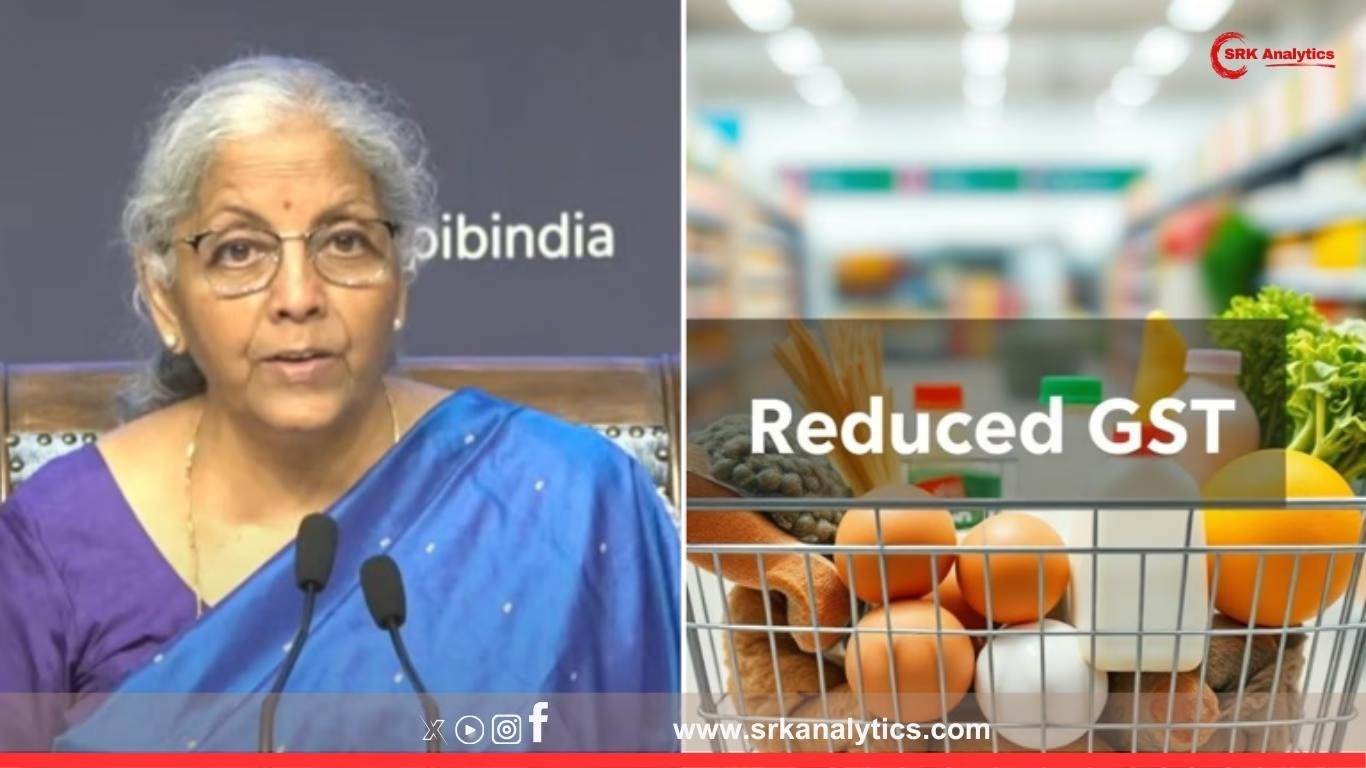
In a landmark decision, the GST Council has approved a major overhaul of India’s Goods and Services Tax structure, slashing rates across a wide range of goods and services. Effective from September 22, 2025, the new framework consolidates the existing four-tier system into a simplified two-slab structure of 5% and 18%, with a special 40% rate for luxury and sin goods. The move is aimed at boosting domestic consumption, simplifying compliance, and offsetting the impact of global trade disruptions.
Union Finance Minister Nirmala Sitharaman announced the changes following the 56th GST Council meeting, which saw unanimous support from all states. The revised rates coincide with the start of Navaratri, signaling a festive boost for consumers and businesses alike.
🧭 New GST Structure at a Glance
| Slab Rate | Applicable Items | Previous Rate Range |
|---|---|---|
| 0% | UHT milk, paneer, roti, pizza bread, plain chapati | Previously 5% |
| 5% | Hair oil, soap, toothpaste, bicycles, kitchenware | Previously 12% or 18% |
| 18% | Refrigerators, TVs, air conditioners, small cars | Previously 28% |
| 40% | Luxury vehicles, tobacco, alcohol substitutes, casinos | Previously 28% + cess |
The Council has also exempted life and health insurance policies from GST, making term insurance, ULIPs, and senior citizen health plans more affordable.
🔍 Key Highlights from the 75 FAQs Shared by the Government
| FAQ Topic | Summary of Clarification |
|---|---|
| Effective Date | New rates apply from September 22, 2025 |
| Registration Threshold | No change under CGST Act, 2017 |
| Rate Notification | Will be published on CBIC website |
| Time of Supply Rules | Tax rate depends on payment date, not invoice date |
| Input Tax Credit (ITC) | Existing ITC remains valid; reversal required for exempt items |
| Imports | IGST follows new domestic rates unless exempt |
| E-way Bills | No change; existing bills remain valid |
| Refunds for Inverted Duty | Not applicable if input/output are same goods |
| Stock Held on Sept 22 | Taxed at time of supply, not purchase |
These clarifications aim to ease the transition for businesses and ensure smooth implementation across sectors.
📉 Sector-Wise Impact of GST Rate Rationalisation
| Sector | Key Items Affected | Impact on Pricing |
|---|---|---|
| FMCG | Hair oil, soaps, toothpaste | Cheaper by 7–13% |
| Dairy & Bakery | Milk, paneer, roti, pizza bread | Now tax-free |
| Consumer Durables | TVs, refrigerators, ACs | Lowered from 28% to 18% |
| Automobiles | Small cars taxed at 18%, large SUVs at 40% | Mixed impact |
| Insurance | Life and health policies | Fully exempt |
| Pharmaceuticals | Medicines and devices | Standardized at 5% |
| Entertainment | IPL tickets, casinos | Moved to 40% slab |
The reclassification is expected to reduce prices for over 99% of items previously under the 12% slab and 90% of items under the 28% slab.
🔥 What Gets Cheaper, What Stays the Same
| Item Category | New GST Rate | Previous Rate | Change (%) |
|---|---|---|---|
| Toothpaste | 5% | 18% | –13% |
| UHT Milk | 0% | 5% | –5% |
| Refrigerators | 18% | 28% | –10% |
| Term Insurance | 0% | 18% | –18% |
| Small Cars (Petrol) | 18% | 28% | –10% |
| Large SUVs | 40% | 28% + cess | +12% |
| IPL Tickets | 40% | 28% | +12% |
Essential items are now more affordable, while luxury and sin goods face steeper levies.
🧠 Expert Commentary and Industry Sentiment
| Expert Name | Role | Comment |
|---|---|---|
| Meera Iyer | Tax Policy Analyst | “The simplification will ease compliance and boost consumption.” |
| Rajiv Bansal | Retail Sector Consultant | “Lower rates on FMCG and insurance will benefit middle-class households.” |
| Dr. Rakesh Sinha | Economic Strategist | “The 40% slab is a smart move to consolidate cess-heavy categories.” |
Industry leaders have welcomed the move, calling it a “GST 2.0” moment that aligns with Prime Minister Narendra Modi’s Independence Day promise of next-generation tax reforms.
📦 Implementation Guidelines for Businesses
- Update Billing Systems: Ensure POS and ERP systems reflect new rates from September 22.
- Review Contracts: Reassess pricing and tax clauses in ongoing supply agreements.
- Communicate with Vendors: Align on input tax credit and rate changes.
- Train Staff: Educate finance and sales teams on new compliance rules.
- Monitor Notifications: Follow CBIC updates for sector-specific clarifications.
Businesses are advised to prepare early to avoid disruptions and ensure accurate tax filings.
📌 Conclusion
The GST rate cuts effective September 22 mark a transformative shift in India’s indirect tax regime. By streamlining the structure into two primary slabs and exempting essential items, the government aims to stimulate consumption, simplify compliance, and reduce inflationary pressures. With 75 FAQs answered and clear guidelines issued, businesses and consumers alike can look forward to a more efficient and equitable tax system.
—
Disclaimer: This article is based on publicly available government notifications and media reports as of September 4, 2025. It is intended for informational purposes only and does not constitute financial, legal, or tax advice.