


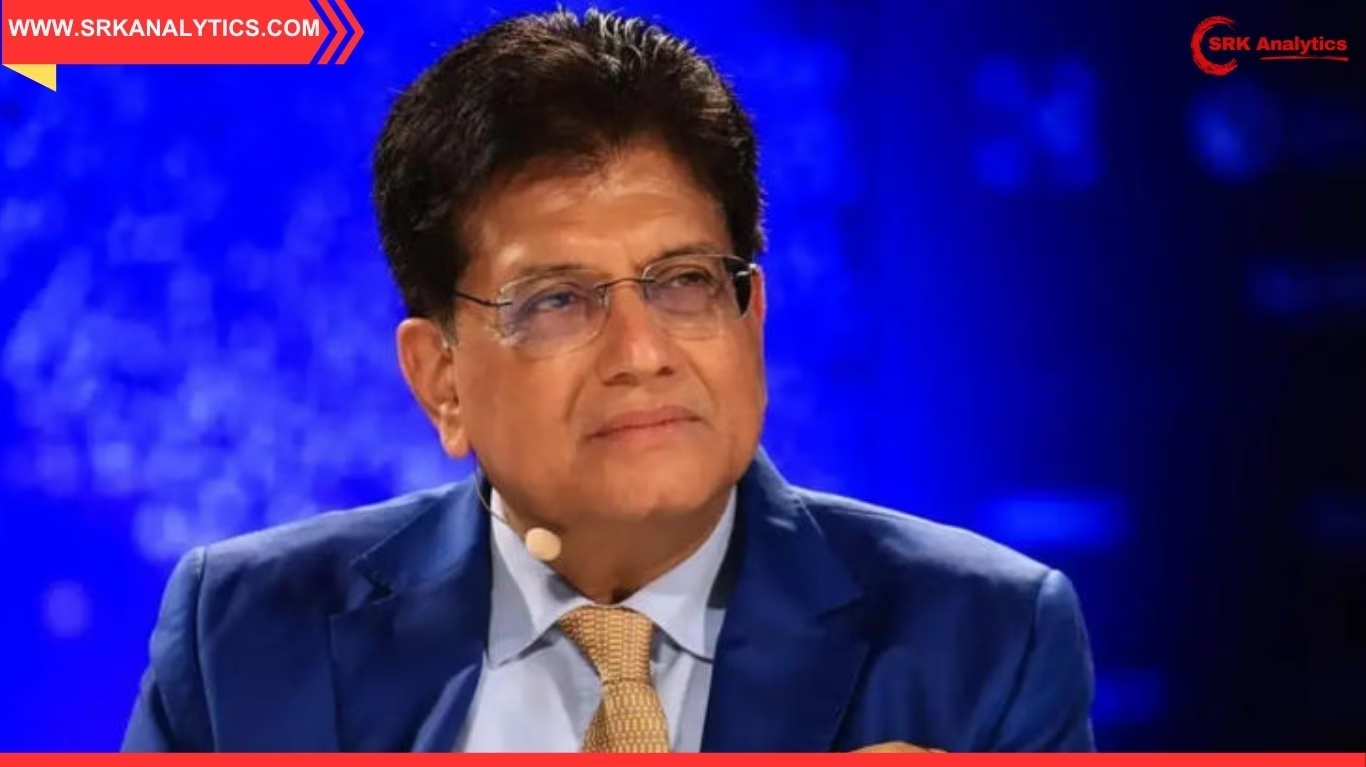
Union Commerce and Industry Minister Piyush Goyal’s high-stakes visit to Brussels on October 27–28, 2025, marks a pivotal moment in the ongoing negotiations for the India-European Union Free Trade Agreement (FTA). With the self-imposed deadline to finalize the deal by the end of 2025 fast approaching, Goyal’s meetings with European Commission Executive Vice-President and Trade Commissioner Maroš Šefčovič are expected to inject crucial political momentum into the 15-year-old negotiation process.
The visit follows the 14th round of formal negotiations held earlier this month and is aimed at resolving key sticking points, including market access, rules of origin, intellectual property rights, and regulatory cooperation. Both sides are under pressure to bridge remaining gaps and conclude a “comprehensive, balanced, and mutually beneficial” trade agreement that could redefine India-EU economic relations for the next decade.
Strategic Importance of the Visit
| Objective of Goyal’s Visit | Expected Outcome |
|---|---|
| Provide political impetus | Accelerate resolution of contentious issues |
| Review negotiation progress | Identify areas of convergence and divergence |
| Engage with EU leadership | Build trust and strategic alignment |
| Push for deadline-based closure | Reinforce commitment to conclude deal by Dec 2025 |
Goyal’s presence in Brussels signals India’s seriousness in concluding the FTA and leveraging the EU’s position as its second-largest trading partner.
India-EU Trade Snapshot
| Trade Metric | Value (FY 2024–25) |
|---|---|
| Total Bilateral Trade | USD 136.53 billion |
| India’s Exports to EU | USD 70.2 billion |
| India’s Imports from EU | USD 66.3 billion |
| EU’s Rank in India’s Trade | Largest goods trading partner |
| Key Sectors | Machinery, pharma, textiles, IT, chemicals |
The FTA is expected to significantly boost trade volumes by reducing tariffs, easing regulatory barriers, and enhancing investment flows.
Key Issues on the Negotiation Table
| Issue Area | India’s Position | EU’s Position |
|---|---|---|
| Market Access | Seeks lower tariffs on textiles, pharma | Demands access for wines, dairy, automobiles |
| Rules of Origin | Flexible norms to support MSMEs | Stricter rules to prevent third-country routing |
| Intellectual Property | Balanced IP regime for generics | Stronger IP enforcement and patent protection |
| Data Protection | Sovereign control over data | Alignment with GDPR standards |
| Investment Protection | Seeks investor-state dispute mechanism | Prefers EU-style investment court system |
Bridging these differences will require political will and creative diplomacy from both sides.
Timeline of Negotiations
| Milestone | Date/Period | Significance |
|---|---|---|
| Talks Initiated | 2007 | Negotiations launched but stalled in 2013 |
| Talks Resumed | 2022 | Relaunched with renewed political backing |
| 14th Round of Talks | October 6–10, 2025 | Focused on technical convergence |
| Goyal’s Brussels Visit | October 27–28, 2025 | High-level push to resolve outstanding issues |
| Target Deal Conclusion | December 2025 | Deadline to finalize and sign the agreement |
The current phase is considered the most intense and decisive since talks resumed.
Strategic Benefits of the FTA
| Benefit Area | Impact on India |
|---|---|
| Export Growth | Boost to textiles, leather, pharma, IT sectors |
| Investment Inflows | Greater FDI from EU in manufacturing, green tech |
| Regulatory Alignment | Improved standards and compliance |
| Supply Chain Diversification | Reduced dependence on China |
| Geopolitical Leverage | Stronger ties with EU amid global realignments |
The FTA is also expected to support India’s ambition to become a global manufacturing hub under the “Make in India” initiative.
Stakeholder Reactions
| Stakeholder Group | Reaction Summary |
|---|---|
| Indian Exporters | Hopeful for tariff relief and market access |
| EU Businesses | Keen on regulatory predictability and IP rights |
| Indian Farmers | Concerned about dairy and agricultural imports |
| Civil Society | Demanding transparency and labor safeguards |
| Policy Analysts | Cautiously optimistic about deal prospects |
Balancing domestic sensitivities with global ambitions remains a key challenge for negotiators.
Political and Economic Context
Goyal’s visit comes at a time when both India and the EU are recalibrating their global trade strategies. For India, the FTA is part of a broader push to sign high-quality trade deals with key partners, including the UK, Canada, and the Gulf Cooperation Council. For the EU, securing access to India’s vast market is critical amid supply chain disruptions and geopolitical tensions with China and Russia.
| Contextual Factor | Relevance to FTA Talks |
|---|---|
| India’s G20 Presidency | Showcased India’s global leadership credentials |
| EU’s Indo-Pacific Strategy | Seeks deeper engagement with India |
| China+1 Strategy | EU firms looking to diversify sourcing |
| Green Transition Goals | EU wants alignment on sustainability standards |
The FTA could serve as a cornerstone of a broader India-EU strategic partnership.
What’s at Stake if the Deal Fails
| Risk Area | Potential Consequence |
|---|---|
| Trade Diversion | EU may prioritize deals with other partners |
| Investment Hesitation | Regulatory uncertainty may deter EU investors |
| Strategic Drift | Missed opportunity for deeper geopolitical ties |
| Domestic Criticism | Political backlash over missed economic gains |
Failure to conclude the deal could undermine years of diplomatic and economic engagement.
Next Steps After Goyal’s Visit
| Action Item | Timeline | Responsible Party |
|---|---|---|
| Technical Working Groups | November 2025 | Trade negotiators from both sides |
| Ministerial Review | Early December 2025 | Goyal and Šefčovič |
| Legal Scrubbing | Mid-December 2025 | Legal teams from India and EU |
| Deal Signing Ceremony | Late December 2025 | Heads of State and Trade Ministers |
The coming weeks will be critical in determining whether the FTA crosses the finish line.
Conclusion
Piyush Goyal’s visit to Brussels is more than a diplomatic formality—it is a decisive moment in India’s quest to secure a landmark trade agreement with the European Union. As negotiators race against time to resolve complex issues, the political will demonstrated during this visit could be the catalyst that transforms a decade-long negotiation into a transformative economic partnership. With stakes running high and the clock ticking, the world is watching whether India and the EU can seize this historic opportunity.
Disclaimer: This article is based on publicly available government statements and media reports. It does not constitute official policy advice or endorsement. All views expressed are for informational purposes only.


ремонт принтера hp москва свао [url=http://hp-servis-msk.ru/]ремонт принтеров hp москва сао[/url]