






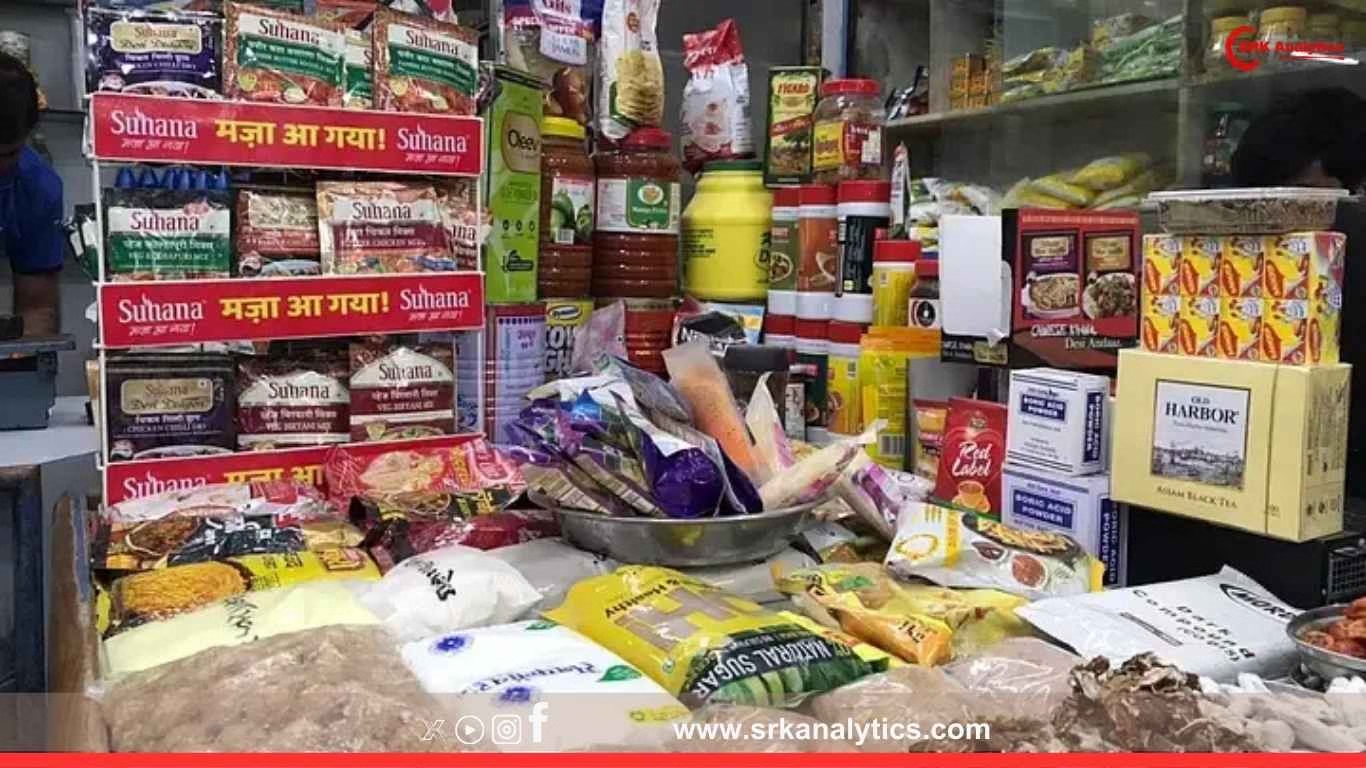
In a major relief to manufacturers, importers, and retailers, the Government of India has extended the deadline for declaring revised Maximum Retail Prices (MRPs) on packaged goods till March 31, 2026. The move comes in response to industry concerns over the implementation of GST 2.0, which introduces sweeping tax rate reductions across hundreds of consumer goods and services starting September 22, 2025.
The Ministry of Consumer Affairs issued a fresh circular on September 18, waiving off the earlier requirement to repackage, re-label, or re-sticker existing inventory. Companies are now permitted to use pre-GST 2.0 packaging materials until the end of the current fiscal year, provided they inform distributors and retailers about the revised prices through circulars and digital communication channels.
Key Highlights of the MRP Declaration Extension
| Parameter | Revised Guideline |
|---|---|
| MRP Declaration Deadline | Extended to March 31, 2026 |
| Packaging Material Usage | Old wrappers allowed till deadline |
| Repackaging/Re-labelling | Not mandatory |
| Consumer Notification | Circulars to distributors/retailers; no newspaper ads required |
| Communication Channels | Electronic, print, and social media encouraged |
The extension is aimed at easing the transition to GST 2.0 and preventing wastage of packaging inventory worth thousands of crores.
GST 2.0: What’s Changing from September 22
The GST Council’s latest overhaul simplifies the indirect tax structure by replacing the existing four-tier system (5%, 12%, 18%, 28%) with a dual slab model. Essential goods will be taxed at 5%, while standard goods and services will attract 18%.
| Product Category | Old GST Rate | New GST Rate |
|---|---|---|
| Butter, Cheese, Confectionery | 12% | 5% |
| Chocolates, Biscuits, Cornflakes | 18% | 5% |
| Coffee, Ice Cream, Hair Oil | 18% | 5% |
| Soaps, Toothpaste | 18% | 5% |
| Footwear & Apparel ≤ ₹2,500 | 12% | 5% |
| Footwear & Apparel > ₹2,500 | 18% | 18% |
| Lifesaving Drugs (36 items) | 5–12% | 0% |
The new rates are expected to reduce consumer prices and boost demand across FMCG, pharma, and retail sectors.
Industry Concerns and Govt Response
Industry bodies had flagged concerns over the mandatory re-labelling of unsold inventory, citing logistical challenges and financial losses. Many companies were holding months’ worth of stock with old pricing and grammage, which would have become unsellable without regulatory relief.
| Concern Raised | Govt Response |
|---|---|
| Inventory with old MRP | Allowed till March 31, 2026 |
| Cost of re-labelling | Waived off |
| Newspaper ad requirement | Removed |
| Consumer awareness | Circulars and digital outreach mandated |
The government’s decision to extend the deadline and relax compliance norms has been widely welcomed by industry stakeholders.
Legal Framework and Compliance Guidelines
The extension aligns with the Legal Metrology (Packaged Commodities) Rules, 2011, which govern MRP declarations. The Ministry clarified that while re-labelling is not mandatory, companies must ensure that consumers are informed about revised prices through all possible channels.
| Legal Provision | Compliance Requirement |
|---|---|
| Rule 6(3), Legal Metrology Rules | Revised MRP must be communicated |
| DoCA Circular (Sept 18, 2025) | No re-labelling required |
| Consumer Protection Act, 2019 | No profiteering allowed |
| GST 2.0 Implementation Date | September 22, 2025 |
Manufacturers, packers, and importers are advised to update billing systems, ERP platforms, and point-of-sale terminals to reflect new tax rates.
Impact on Retail and Distribution
Retailers and distributors will play a key role in ensuring that consumers benefit from the GST rate cuts. The government has urged businesses to sensitise their supply chain partners and avoid profiteering practices.
| Stakeholder | Role in Transition |
|---|---|
| Manufacturers | Issue circulars, update systems |
| Distributors | Pass on revised pricing to retailers |
| Retailers | Display correct MRP, avoid overcharging |
| Consumers | Verify MRP and GST rate on purchase |
Large retail chains are expected to adapt quickly due to integrated tech platforms, while smaller kirana stores may require support in updating systems.
Sector-Wise Impact of GST 2.0
| Sector | Expected Benefit |
|---|---|
| FMCG | Price reduction, higher volumes |
| Pharmaceuticals | Cheaper lifesaving drugs |
| Apparel & Footwear | Boost in budget segment sales |
| Packaged Foods | Increased consumption |
| Personal Care | Lower prices on soaps, toothpaste, hair oil |
The dual slab system is designed to make essential goods more affordable while maintaining revenue neutrality for the government.
Conclusion: A Pragmatic Step Toward GST 2.0 Success
By extending the MRP declaration deadline and relaxing compliance norms, the government has demonstrated a pragmatic approach to implementing GST 2.0. The move balances consumer interest with industry feasibility, ensuring that the benefits of tax cuts reach end-users without disrupting supply chains.
As businesses recalibrate their pricing strategies and update systems, the next six months will be crucial in determining the success of India’s most significant indirect tax reform since 2017.
—
Disclaimer: This article is based on publicly available government circulars, verified news reports, and official GST Council announcements. It is intended for informational purposes only and does not constitute legal, financial, or tax advice. All compliance guidelines and deadlines are subject to change based on future notifications.




топ 10 сео продвижение топ 10 сео продвижение .