



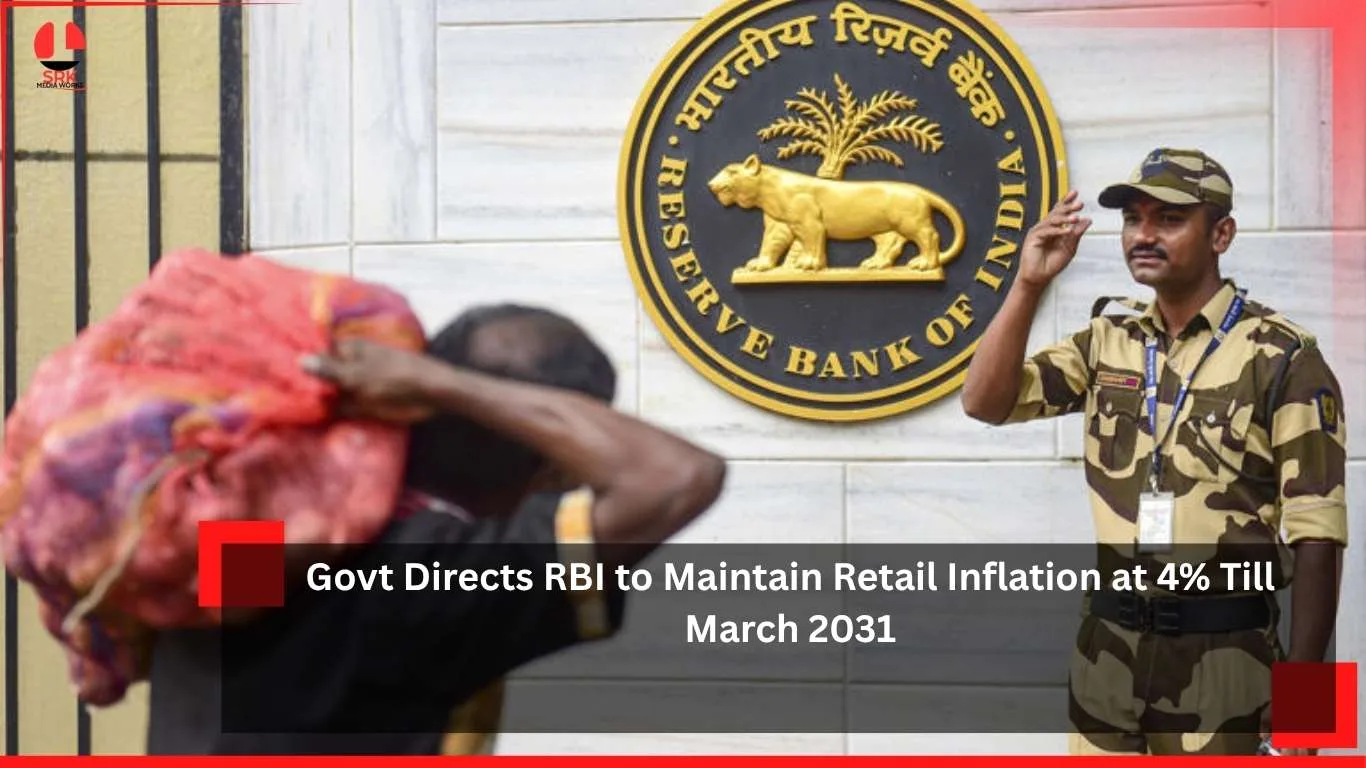
The Government of India has formally asked the Reserve Bank of India (RBI) to maintain retail inflation at 4% with a tolerance band of ±2% until March 2031. This long-term directive underscores the country’s commitment to price stability, economic resilience, and sustainable growth. By extending the inflation target for five more years, policymakers aim to anchor expectations, stabilize markets, and provide clarity to investors and households.
What Does the Directive Mean?
Retail inflation, measured by the Consumer Price Index (CPI), is a critical indicator of economic health. The government’s decision to extend the 4% target reflects:
- Price Stability Commitment: Ensuring inflation remains predictable and manageable.
- Investor Confidence: A stable inflation outlook attracts foreign investment.
- Household Security: Consumers benefit from reduced volatility in food and fuel prices.
- Policy Continuity: RBI’s monetary policy framework remains consistent, avoiding uncertainty.
Why 4% Inflation Target Matters
- Balanced Growth: Too low inflation risks stagnation, while too high inflation erodes purchasing power.
- Global Benchmarking: Many economies target inflation around 2–4%, aligning India with international standards.
- Fiscal Discipline: Anchoring inflation helps the government manage debt and borrowing costs.
- Monetary Policy Effectiveness: RBI can adjust interest rates with a clear inflation benchmark.
Historical Context
India adopted the inflation-targeting framework in 2016, with the first mandate running until March 2021, later extended to March 2026. The new extension to March 2031 signals confidence in the framework’s success.
| Period | Inflation Target | Tolerance Band | Status |
|---|---|---|---|
| 2016–2021 | 4% | ±2% | Achieved with volatility |
| 2021–2026 | 4% | ±2% | Extended mandate |
| 2026–2031 | 4% | ±2% | Newly announced |
Impact on RBI’s Monetary Policy
The RBI will continue to use tools like repo rate, reverse repo, and open market operations to maintain inflation within the band.
- Repo Rate Adjustments: Interest rates will be aligned with inflation trends.
- Liquidity Management: RBI will balance money supply to avoid overheating.
- Forward Guidance: Clear communication will anchor market expectations.
Sectoral Implications
| Sector | Impact of Inflation Target | Outlook |
|---|---|---|
| Banking | Stable lending environment | Predictable credit growth |
| Manufacturing | Input cost stability | Encourages investment |
| Agriculture | Food price management | Reduced volatility |
| Retail | Consumer confidence | Stronger demand |
| Infrastructure | Lower borrowing costs | Boost to long-term projects |
Challenges Ahead
While the directive is clear, achieving the target consistently will be challenging.
- Global Energy Prices: Oil and gas volatility can push inflation higher.
- Food Inflation: Weather shocks and supply chain disruptions remain risks.
- Geopolitical Uncertainty: Global conflicts can affect commodity prices.
- Domestic Demand: Rising consumption may pressure prices.
Comparative Global Inflation Targets
| Country | Inflation Target | Band/Range |
|---|---|---|
| India | 4% | ±2% |
| USA | 2% | Flexible |
| Eurozone | 2% | Symmetric |
| UK | 2% | ±1% |
| Japan | 2% | Flexible |
India’s 4% target is higher than advanced economies but reflects the realities of an emerging market with higher growth and structural inflation.
Long-Term Benefits
- Economic Stability: Predictable inflation supports sustainable growth.
- Investor Attraction: Foreign investors prefer stable economies.
- Household Welfare: Consumers benefit from reduced price shocks.
- Policy Credibility: RBI strengthens its role as a trusted monetary authority.
Conclusion
The government’s directive to the RBI to maintain retail inflation at 4% till March 2031 is a landmark decision in India’s economic policy framework. It provides clarity, stability, and confidence to markets, businesses, and households. While challenges remain, the long-term benefits of anchored inflation expectations will support India’s growth trajectory and global competitiveness.
Disclaimer
This article is for informational purposes only and does not constitute financial advice. Readers should consult professional advisors before making investment or policy decisions. Economic conditions and inflation trends are subject to change, and the analysis reflects perspectives as of March 2026.