

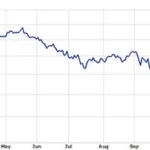



Union Minister Piyush Goyal affirmed this week that the Indian government maintains a strict policy of non-interference regarding the country’s exchange rates, even as the rupee faces significant downward pressure in global currency markets. Speaking to stakeholders, Goyal emphasized that the administration prioritizes market-driven valuation, leaving the Reserve Bank of India (RBI) to manage volatility only to ensure stability rather than targeting a specific exchange rate level.
The Context of Currency Depreciation
The rupee’s recent decline has triggered widespread concern among policymakers, institutional investors, and domestic businesses that rely on imported raw materials. This trend is largely attributed to a strengthening U.S. dollar, rising global oil prices, and shifting geopolitical dynamics that have prompted capital outflows from emerging markets.
Historically, the RBI has utilized its foreign exchange reserves to intervene during periods of extreme volatility. However, the current government stance reaffirms a commitment to a floating exchange rate regime, which is intended to absorb external economic shocks naturally.
Economic Implications for Industry
For Indian businesses, the weakening rupee presents a double-edged sword. While export-oriented sectors such as information technology and textiles may see a boost in competitiveness due to favorable conversion rates, the manufacturing sector faces mounting inflationary pressure.
Data from the Ministry of Commerce highlights that industries heavily dependent on imported energy and machinery are seeing profit margins squeezed. As the cost of dollar-denominated imports rises, companies are increasingly forced to pass those costs onto consumers, potentially fueling persistent domestic inflation.
Expert Perspectives on Market Dynamics
Financial analysts suggest that the government’s hands-off approach signals confidence in the resilience of the domestic economy. According to recent reports from global credit rating agencies, India’s strong foreign exchange reserves provide a sufficient buffer against short-term currency fluctuations.
Economists note that the focus remains on long-term macroeconomic stability rather than short-term currency management. By allowing the market to set the rate, the government aims to maintain its attractiveness to foreign direct investment (FDI), which favors transparent, market-determined pricing mechanisms.
Future Outlook and Monitoring
Observers are now closely watching upcoming RBI monetary policy meetings for signals on interest rate adjustments that could indirectly support the currency. The critical metric to monitor in the coming quarter will be the trade deficit, as sustained pressure on the rupee could force a shift in fiscal priorities if import bills continue to outpace export earnings significantly.
As global interest rate cycles shift, industry leaders are advised to bolster their hedging strategies to mitigate risks associated with future currency volatility. The ability of the economy to sustain domestic demand in the face of elevated import costs will be the primary indicator of economic health for the remainder of the fiscal year.