



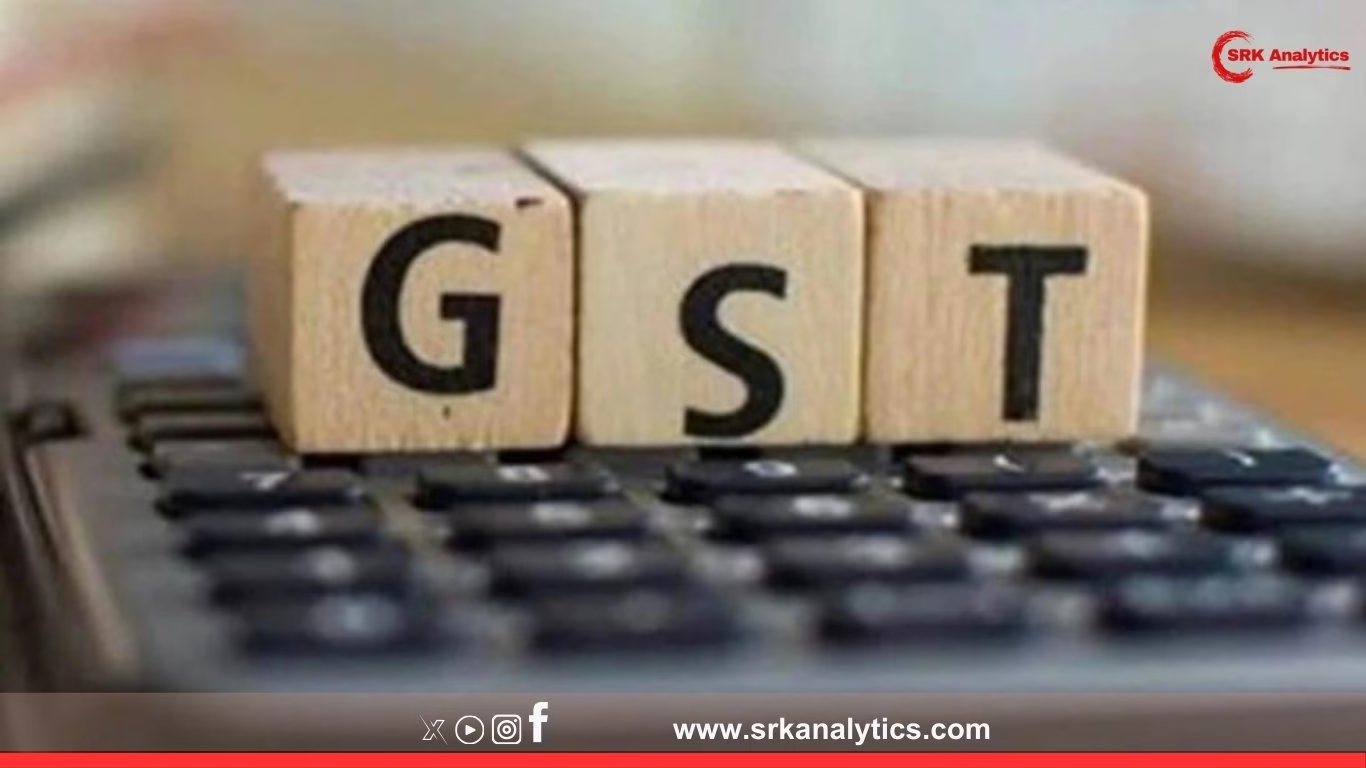
The Group of Ministers (GoM) on Goods and Services Tax (GST) is expected to meet next week to deliberate on some of the most crucial reforms in the indirect tax system since its implementation in 2017. With several long-pending proposals awaiting consensus, the meeting comes at a time when both the Centre and states are facing mounting pressure to finalize changes before the next GST Council meeting.
The tight timeline underscores the urgency of ironing out differences, as reforms under discussion include rate rationalization, compliance simplification, dispute resolution, and inclusion of key sectors like petroleum and real estate under the GST ambit. The Council’s nod will be critical to pushing through measures that can shape the next phase of India’s tax evolution.
Key Reforms Under Consideration
- Rate Rationalization
- The GoM is expected to review multiple slabs in the GST structure. Currently, GST has four major slabs—5%, 12%, 18%, and 28%, along with special rates for precious metals.
- A proposal under study is merging the 12% and 18% slabs into a single median rate to simplify the tax system and reduce classification disputes.
- Taxing Petroleum and Real Estate
- Bringing petroleum products under GST has been a long-standing debate. States, however, have expressed reservations given the revenue dependence on fuel taxes.
- Similarly, the inclusion of real estate (especially land and stamp duty) is being pushed to improve transparency and curb tax evasion in property transactions.
- Online Gaming and Casinos
- Another contentious issue is the taxation of online gaming, casinos, and horse racing. The Council had earlier fixed a 28% GST on the full face value, but the sector has sought relief. The GoM may review the impact of this decision before giving a final recommendation.
- Dispute Resolution Mechanism
- The GoM is also likely to finalize the structure of a national-level dispute resolution tribunal to address conflicts between states and taxpayers. This is expected to significantly reduce litigation.
- Compliance Simplification
- Simplified return filing systems, easing of e-invoicing norms for MSMEs, and rationalization of input tax credit provisions are expected to be discussed.
Why the Timeline is Tight
The GST Council is scheduled to meet in the last week of August or early September 2025, leaving the GoM with limited time to finalize its recommendations. Since many proposals require consensus among states, reaching an agreement in a week-long window is a daunting challenge.
Moreover, with general elections just months away, policymakers are keen to avoid populist resistance or revenue shocks. Thus, the urgency is to finalize reforms that balance revenue stability, ease of doing business, and state autonomy.
State vs Centre Concerns
| Issue | Centre’s Position | States’ Concerns |
|---|---|---|
| Petroleum inclusion | In favor (uniform taxation) | Fear of losing revenue from VAT |
| Real estate under GST | In favor (curbing black money) | States worry about stamp duty revenue |
| Online gaming tax | Wants higher tax to prevent addiction | States divided; some want lower tax to boost startups |
| Rate rationalization | Pushes for fewer slabs | States fear loss of fiscal flexibility |
This table highlights the negotiation complexity the GoM must navigate before presenting a final report to the Council.
Revenue Implications of Reforms
According to government estimates, rationalizing rates could have both short-term revenue implications and long-term gains:
| Reform Proposal | Short-Term Revenue Impact | Long-Term Impact |
|---|---|---|
| Merging 12% & 18% slabs | Possible revenue dip | Boosts compliance, reduces litigation |
| Petroleum inclusion | Loss of VAT revenues for states | Higher compliance, unified market |
| Real estate inclusion | Transition challenges | Increased transparency, higher tax base |
| Online gaming tax review | Minor dip in immediate revenue | Encourages sector growth, expands taxable pool |
Expert Views
- Tax experts argue that simplifying slabs will help reduce classification disputes that have led to thousands of cases in appellate tribunals.
- Economists believe that bringing petroleum under GST is essential to achieve a truly unified tax system, though it requires a compensatory mechanism for states.
- Industry bodies are pushing for relief in online gaming taxation, claiming that high rates could kill startups and push users toward illegal platforms.
Political Dynamics
The timing of the GoM meeting is politically sensitive. With state governments eyeing elections, revenue autonomy remains a non-negotiable demand for many. Any attempt to bring petroleum under GST is likely to face pushback from states like Maharashtra, Kerala, and Tamil Nadu, which rely heavily on VAT collections.
The Centre, however, is pushing for reforms to project GST as a success story in cooperative federalism and as a business-friendly tax regime that boosts investments.
Potential Impact on Businesses and Consumers
- Businesses – A simplified GST rate structure would reduce compliance costs, litigation, and classification issues. It could also improve investment climate, especially in manufacturing and services.
- Consumers – Rate rationalization could lead to price adjustments in daily-use products. If slabs merge, items currently taxed at 18% may see relief, but those at 12% might face a slight hike.
- Digital Economy – The decision on online gaming taxation will determine whether India’s booming digital entertainment industry grows sustainably or faces a slowdown.
What Happens Next?
- The GoM report is expected to be finalized by next week and circulated to states for final comments.
- The GST Council meeting, scheduled soon after, will deliberate and vote on recommendations.
- If consensus is achieved, some reforms could be rolled out as early as FY2025-26, with others phased in gradually.
Conclusion
The upcoming GoM meeting on GST reforms represents a crucial turning point for India’s indirect tax regime. The stakes are high—balancing state revenue interests, improving compliance, and creating a truly unified market. While the timeline is tight, the urgency reflects the importance of addressing long-pending reforms before the GST Council meets.
Whether it’s rate rationalization, petroleum inclusion, real estate under GST, or online gaming taxation, the decisions taken in the next few weeks will shape India’s tax ecosystem for years to come.
Disclaimer: This article is based on policy discussions, expert opinions, and reports about the upcoming GoM meeting on GST reforms. Final outcomes will depend on official announcements by the GST Council and the Government of India.