

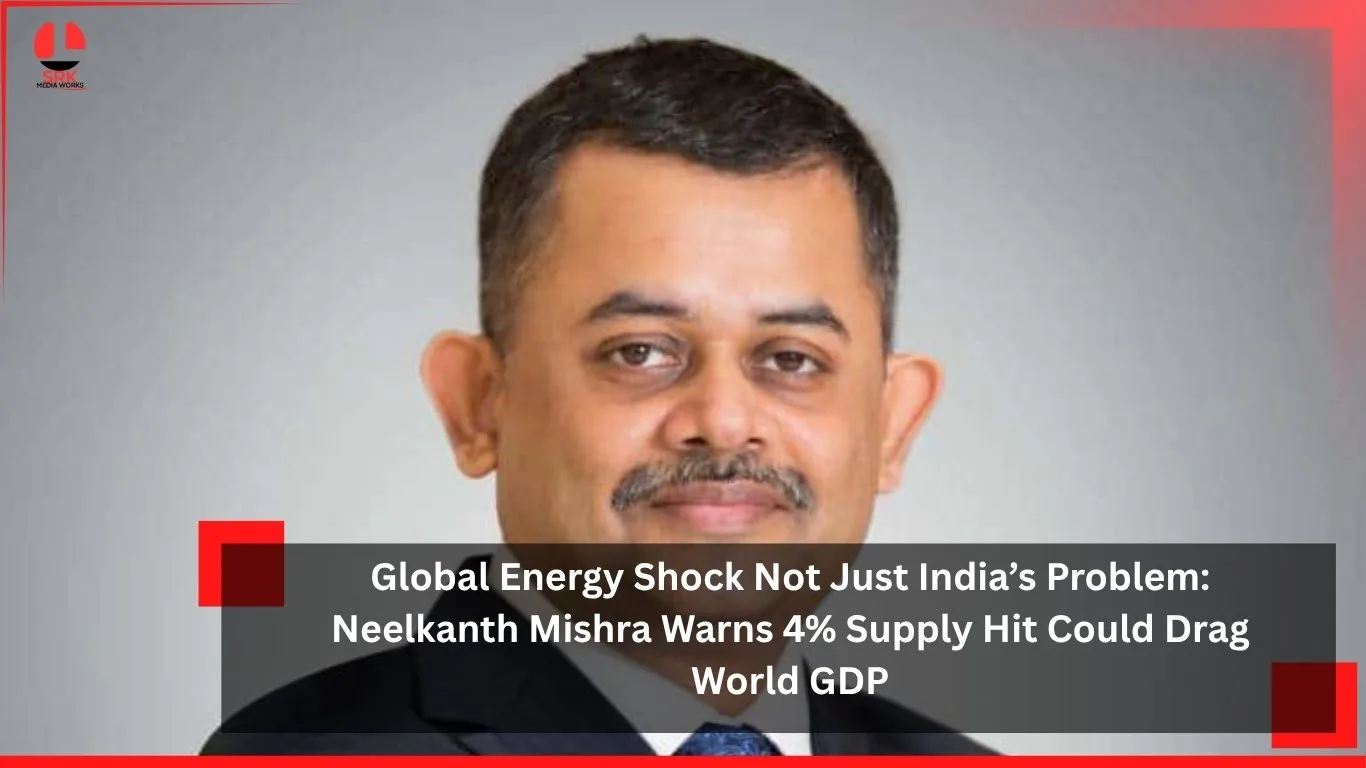
The global economy is entering a precarious phase where energy shocks are no longer confined to one region or country. Neelkanth Mishra, a prominent economist and policymaker, has warned that a 4% disruption in global energy supply could drag down world GDP significantly, underscoring that this is not just India’s problem but a challenge for every nation interconnected through trade, finance, and energy markets.
Why Energy Shocks Matter Globally
Energy is the backbone of modern economies. A sudden supply hit, even as small as 4%, can ripple across industries, financial markets, and households. Mishra’s analysis highlights:
- Global Interdependence: Energy supply chains are deeply integrated, meaning disruptions in one region affect all.
- Inflationary Pressures: Reduced supply drives up prices, fueling inflation worldwide.
- Growth Slowdown: Higher energy costs reduce consumer spending and corporate profitability.
- Geopolitical Risks: Energy shocks often coincide with geopolitical tensions, amplifying uncertainty.
India’s Position in the Energy Shock
India, as one of the fastest-growing economies, is highly vulnerable to energy disruptions.
- Import Dependency: India imports nearly 85% of its crude oil needs.
- Inflation Risks: Rising energy costs directly impact food and transport prices.
- Fiscal Strain: Subsidies and government interventions increase fiscal pressure.
- Industrial Impact: Manufacturing and infrastructure sectors face higher input costs.
Global GDP Impact of a 4% Supply Hit
Mishra’s warning is based on historical data and current market dynamics.
| Scenario | Energy Supply Disruption | Estimated Global GDP Impact |
|---|---|---|
| Minor Shock | 1% | -0.5% |
| Moderate Shock | 2% | -1.2% |
| Severe Shock | 4% | -2.5% |
| Extreme Shock | 6% | -4% |
This table illustrates how even a relatively small supply hit can drag global GDP by more than 2%, affecting both developed and emerging economies.
Sector-Wise Breakdown of Impact
| Sector | Impact of Energy Shock | Global Outlook |
|---|---|---|
| Energy | Price volatility | Continued instability |
| Manufacturing | Rising input costs | Slower production growth |
| Transport | Higher fuel costs | Reduced mobility and logistics efficiency |
| Agriculture | Fertilizer and fuel costs | Food inflation risks |
| Services | Indirect inflationary impact | Slower demand growth |
Why It’s Not Just India’s Problem
Mishra emphasized that energy shocks are global by nature.
- Europe: Dependent on imports, especially natural gas, making it vulnerable to supply disruptions.
- US: Though energy independent in many respects, global price volatility affects inflation and monetary policy.
- China: Heavy industrial base means energy shocks directly impact growth.
- Emerging Markets: Currency depreciation and capital flight worsen the impact of higher energy costs.
Investor and Market Reactions
Markets respond sharply to energy shocks:
- Equities: Volatility increases, especially in energy-intensive sectors.
- Currencies: Emerging market currencies weaken against the dollar.
- Commodities: Oil and gas prices spike, while gold rises as a safe haven.
- Bonds: Yields fluctuate as central banks adjust monetary policy.
Strategic Recommendations
Neelkanth Mishra’s insights suggest several strategies for policymakers and investors:
- Diversify Energy Sources: Countries must invest in renewable energy and diversify import partners.
- Strengthen Reserves: Strategic petroleum reserves can cushion short-term shocks.
- Policy Coordination: Global cooperation is essential to manage supply disruptions.
- Investor Caution: Focus on safe-haven assets and long-term diversification.
Comparative Analysis of Regional Vulnerability
| Region | Dependency on Imports | Vulnerability to Shock | Policy Response |
|---|---|---|---|
| India | High | Severe | Subsidies, diversification |
| Europe | Very High | Severe | Energy transition, LNG imports |
| US | Moderate | Medium | Strategic reserves, monetary policy |
| China | High | Severe | Industrial slowdown, diversification |
| Emerging Markets | High | Severe | Currency depreciation, inflation |
Long-Term Implications
- Energy Transition: Accelerated push toward renewables and green energy.
- Global Cooperation: Greater need for coordinated policies among major economies.
- Resilient Supply Chains: Investments in infrastructure to reduce vulnerability.
- Investor Strategy: Shift toward defensive sectors and long-term sustainable assets.
Conclusion
Neelkanth Mishra’s warning is a reminder that energy shocks are global challenges. A 4% supply hit may seem small, but its ripple effects can drag down world GDP, destabilize markets, and strain economies. India, while vulnerable, is not alone—every nation must prepare for the consequences of energy volatility. The path forward lies in diversification, resilience, and global cooperation.
Disclaimer
This article is intended for informational purposes only and does not constitute financial advice. Readers should consult professional advisors before making investment or policy decisions. Market conditions and geopolitical developments can change rapidly, and the analysis reflects perspectives as of March 2026.