





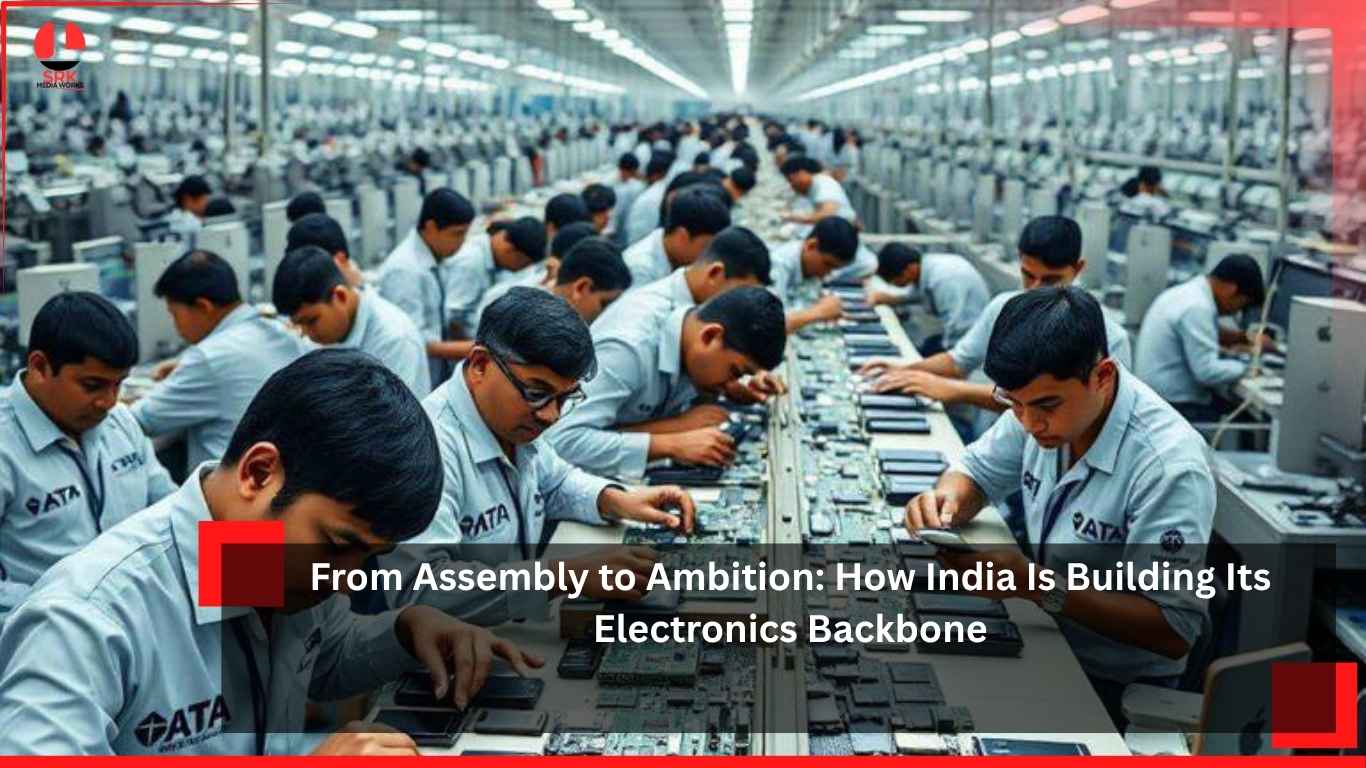
India’s electronics industry is undergoing a remarkable transformation, moving beyond simple assembly lines to building a robust backbone for innovation, manufacturing, and global competitiveness. Once seen primarily as a hub for low-cost labor and assembly operations, India is now positioning itself as a key player in the global electronics supply chain. With government initiatives, private investments, and rising domestic demand, the country is steadily shifting from “assembly to ambition.”
Background of India’s Electronics Journey
For decades, India’s electronics sector was dominated by imports, with domestic firms focusing largely on assembly. However, rising demand for smartphones, consumer electronics, and industrial equipment, coupled with geopolitical shifts in supply chains, has created an opportunity for India to expand its role. The government’s Production-Linked Incentive (PLI) schemes, infrastructure investments, and focus on semiconductor manufacturing are central to this transformation.
Key Highlights of India’s Electronics Push
- PLI Schemes: Incentives for electronics manufacturing, semiconductors, and component production.
- Semiconductor Mission: Focus on building domestic chip fabrication facilities.
- Global Partnerships: Collaborations with U.S., Japan, and Taiwan to strengthen supply chains.
- Domestic Demand: Rising middle-class consumption driving growth in smartphones, laptops, and consumer electronics.
- Export Potential: India aims to become a global hub for electronics exports by FY2030.
Comparative Analysis of India’s Electronics Growth
| Year | Focus Area | Industry Status | Global Position |
|---|---|---|---|
| 2015 | Assembly & imports | Heavy reliance on imports | Limited presence |
| 2020 | Smartphone assembly | Growing domestic demand | Emerging hub |
| 2026 | Semiconductors & innovation | Building backbone | Rising global player |
This comparative view shows India’s steady evolution from assembly to innovation-driven manufacturing.
Sector-Wise Impact of Electronics Backbone Development
| Sector | Impact Level | Key Benefits |
|---|---|---|
| Smartphones | Very High | Boosted domestic assembly and exports |
| Semiconductors | Very High | Reduced import dependence, strategic autonomy |
| Consumer Electronics | High | Affordable products for domestic market |
| Automotive | High | Growth in EV components and electronics |
| Defense & Aerospace | Medium | Indigenous electronics for strategic needs |
Analytical Pivot
| Year | Government Initiative | Industry Response | Global Impact |
|---|---|---|---|
| 2022 | PLI for smartphones | Surge in assembly plants | India as assembly hub |
| 2024 | Semiconductor mission | Investments in fabs | Global supply diversification |
| 2026 | Electronics backbone strategy | Expansion into innovation | India as rising electronics power |
This pivot analysis highlights how government initiatives have progressively strengthened India’s electronics ecosystem.
Challenges Ahead
- Semiconductor Capacity: Building fabs requires massive investment and skilled workforce.
- Supply Chain Gaps: Dependence on imports for critical components remains.
- Global Competition: Competing with established hubs like China, Taiwan, and South Korea.
- Skilling Workforce: Need for advanced training in electronics design and manufacturing.
International Reactions
- Global Analysts: See India as a potential alternative to China in electronics supply chains.
- Investors: Increasing interest in India’s semiconductor and electronics startups.
- Trade Partners: Countries like the U.S. and Japan are strengthening collaborations with India.
Possible Scenarios
- Rapid Growth: India becomes a global hub for electronics exports by FY2030.
- Moderate Expansion: Focus remains on smartphones and consumer electronics, with slower semiconductor progress.
- Strategic Autonomy: India achieves partial independence in critical electronics and defense components.
Future Outlook
India’s electronics backbone is expected to grow rapidly in the next decade, supported by government incentives, private investments, and global partnerships. The country’s ambition to move beyond assembly into innovation and semiconductor manufacturing could reshape global supply chains. If successful, India will not only meet domestic demand but also emerge as a major exporter of electronics and technology solutions.
Conclusion
India’s journey from assembly to ambition reflects a broader vision of self-reliance and global competitiveness. By building its electronics backbone, the country is positioning itself as a critical player in the global supply chain. While challenges remain, the combination of policy support, industry investment, and rising demand ensures that India’s electronics sector is on a path of transformation and growth.
Disclaimer
This article is intended for informational purposes only. The content reflects current economic and industrial developments based on publicly available information. Readers should not interpret this as financial or investment advice. Market conditions may change, and independent verification or consultation with experts is recommended before making decisions.