




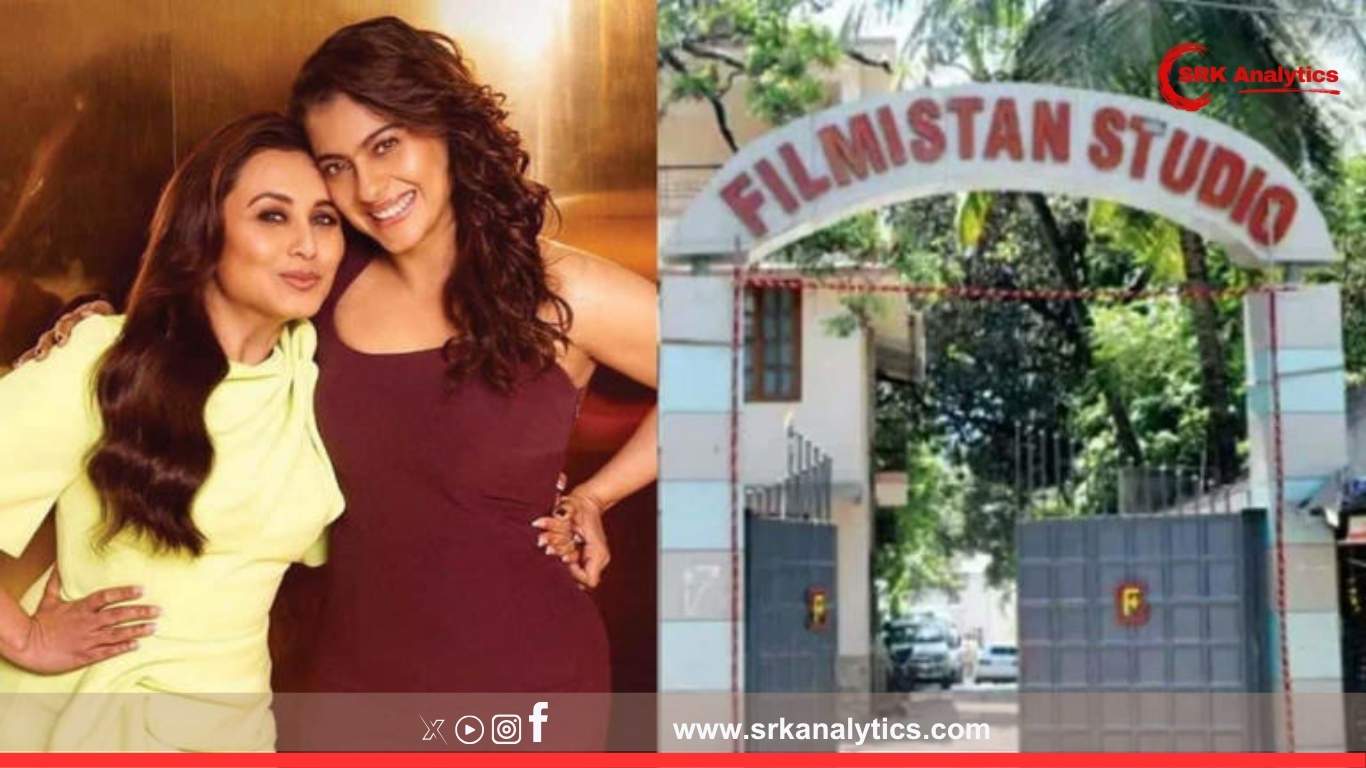
In a historic transaction reflecting Mumbai’s evolving film and real estate landscape, Filmistan Studios, one of India’s oldest and most iconic film studios, has been sold for a whopping ₹183 crore. Founded by Sashadhar Mukherjee, grandfather of Bollywood stars Kajol and Rani Mukerji, Filmistan has been central to India’s cinematic journey for over seven decades.
A brief history of Filmistan Studios
Established in 1943 by Sashadhar Mukherjee, who was among the pioneers shaping Hindi cinema, Filmistan Studios was known for its state-of-the-art setup during its inception years. Located in Goregaon, Mumbai, it emerged as a major production hub through the 1940s-60s, producing hits like:
- Anarkali (1953)
- Nagin (1954)
- Jagriti (1954)
- Munimji (1955)
- Tumsa Nahin Dekha (1957)
Filmistan Studios became the workplace for legends such as Dilip Kumar, Dev Anand, and Madhubala and housed multiple sound stages, recording rooms, and editing suites. Over time, as the Mukherjee family diversified into Filmalaya Studios and other ventures, Filmistan’s production wing slowed down but the premises continued as a major shooting and dubbing location.
Details of the sale
As per information from industry insiders:
- Buyer: A leading Mumbai-based real estate and production conglomerate (name not disclosed officially)
- Sale value: ₹183 crore
- Land area: Approximately 5 acres in Goregaon (West), a prime film and residential hub
- Purpose: Redevelopment into a mixed-use space with provisions for film shooting floors and real estate assets
This deal marks the end of a direct Mukherjee family ownership era but retains prospects of the Filmistan brand continuing as a shooting studio under the new owners.
Why was Filmistan sold?
Film industry observers note that multiple factors contributed to the sale:
- Rising operational costs: Maintaining large studios in Mumbai’s high-cost zones is financially challenging, especially when digital and outdoor shoots have reduced dependency on traditional studios.
- Family diversification: The Mukherjee family has for decades moved into individual film production, acting, and related businesses, reducing the strategic necessity to own a full studio.
- High real estate value: Goregaon’s land rates, driven by metro connectivity, IT parks, and high-end residential demand, make such sales lucrative for reinvestment in newer businesses.
- Changing production landscape: Studios are now evolving into mixed-use commercial and hospitality spaces to remain profitable amid film industry slowdowns.
Strategic importance of Filmistan’s location
| Aspect | Details |
|---|---|
| Neighbourhood | Goregaon (West), close to Film City, Yash Raj Studios, corporate offices, and the Western Express Highway |
| Connectivity | Proximity to Ram Mandir station, Goregaon station, and upcoming Metro lines |
| Market rate in area | ₹30,000-₹45,000 per sq ft for commercial redevelopment projects |
Real estate consultants highlight that the ₹183 crore deal reflects both the studio’s brand value and strategic land potential for future integrated developments.
Who was Sashadhar Mukherjee?
Sashadhar Mukherjee was among the founding pillars of Bombay Talkies before he set up Filmistan Studios with partners like Ashok Kumar. He is considered the patriarch of the Mukherjee-Samarth film family, which includes:
- Kajol (granddaughter) – Leading actress of the 90s and 2000s
- Rani Mukerji (granddaughter) – Prominent Bollywood actress
- Joy Mukherjee (son) – Popular actor of the 1960s
- Shomu Mukherjee (son) – Film director and Kajol’s father
- Tanuja (daughter-in-law) – Veteran actress and Kajol’s mother
The studio was built to provide an integrated platform for production, processing, and distribution – a pioneering model in pre-independence India’s film industry.
Current use of Filmistan before sale
In recent years, Filmistan was used predominantly for:
- Television reality show shoots
- Web series sets
- Ad film shoots
- Editing and dubbing projects
Its large indoor floors and convenient city location continued to attract production houses despite competition from modern studios in Film City and Naigaon.
Implications of the sale
The acquisition marks yet another chapter in the decline of independent, family-owned studios in Mumbai, as market pressures and digital shifts redefine the film production ecosystem. However, it is expected that:
- At least two shooting floors will be retained post-redevelopment to continue Filmistan’s cinematic legacy
- New owners may develop commercial towers, residential complexes, or a film-tech hub on the property
- The Filmistan brand name might be retained for studio operations, similar to redevelopment models of Mehboob Studio or Famous Studios
Challenges in preserving heritage studios
- Balancing profitability and preservation: Studios like Filmistan hold historic value but commercial viability drives redevelopment decisions.
- Government policy gaps: There are no current cultural heritage incentives to preserve old studios in Mumbai unlike global models seen in Hollywood or Pinewood Studios.
- Family legacy transitions: With newer generations pursuing individual careers, collective asset management often leads to sales.
Industry voices on the sale
“Filmistan is not just a piece of land; it is part of Indian film history. It produced pathbreaking cinema and gave jobs to thousands. It is vital the new owners keep its heritage alive,” said a senior film trade analyst.
Producers and technicians who worked at Filmistan have also shared nostalgic memories on social media, calling it a temple of cinema where countless artists took their first steps in the industry.
The future of Filmistan under new ownership
The buyer has not released an official redevelopment blueprint, but preliminary indications suggest a multi-tower integrated project with dedicated studio floors, production offices, and commercial leasing spaces. Urban policy experts suggest that if designed sustainably, it can become a flagship media-tech hub while honouring Filmistan’s cinematic roots.
Conclusion
The sale of Filmistan Studios for ₹183 crore underscores the ongoing transformation in Mumbai’s film industry and urban geography. For Bollywood, it marks the end of an era of traditional family-owned studios, while for Mumbai’s real estate sector, it signals another milestone in the city’s vertical expansion.
Disclaimer: This news article is for informational purposes only. Readers are advised to verify official announcements before making any business, investment, or property decisions based on the information provided herein.