




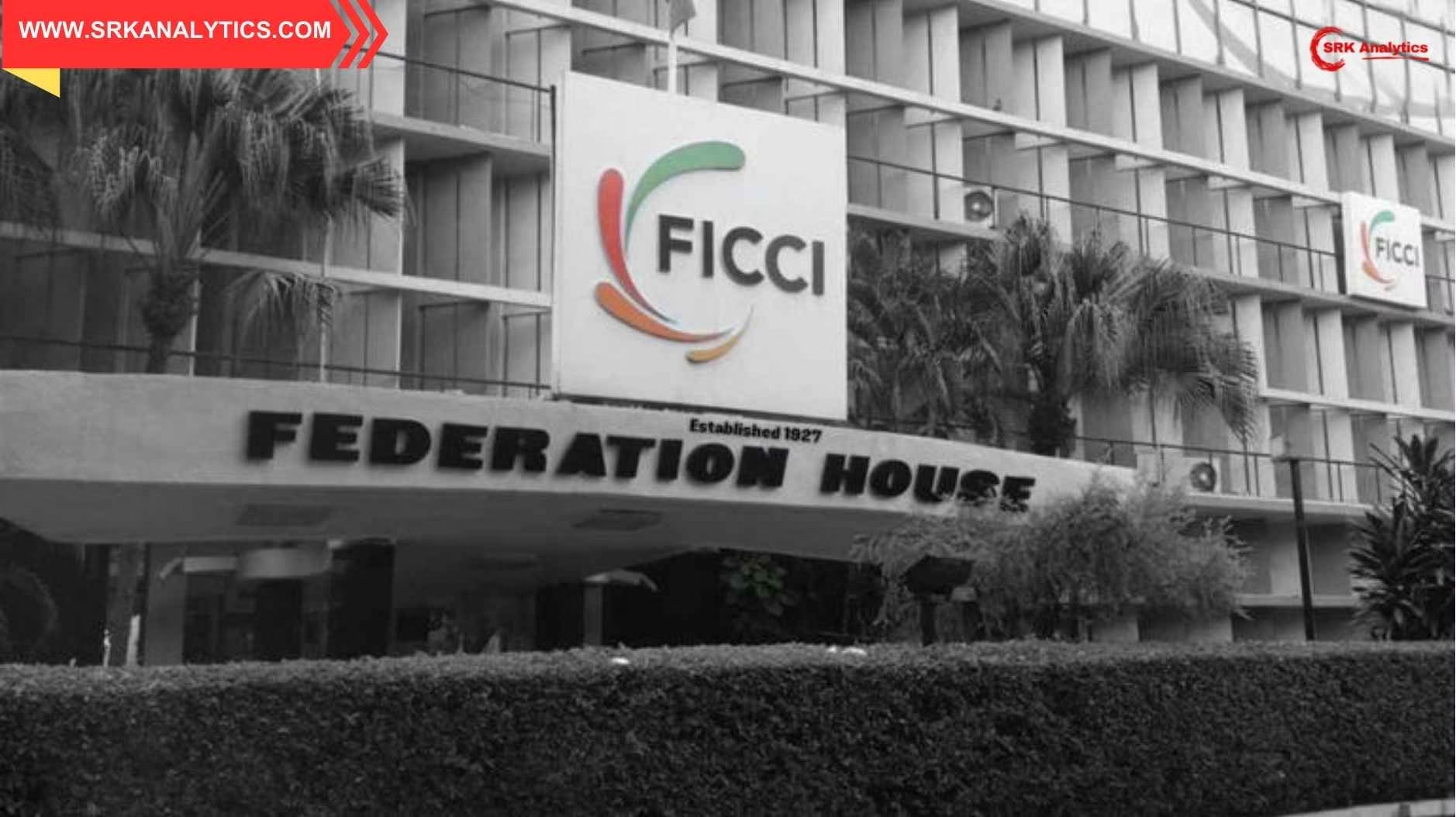
The Federation of Indian Chambers of Commerce and Industry (FICCI) has strongly advocated for the creation of a dedicated electronics park in India as part of the upcoming Union Budget 2026-27. The proposal aims to accelerate India’s ambitions of becoming a global hub for electronics manufacturing, reduce import dependency, and strengthen the country’s position in the global supply chain.
Background of the Proposal
- India’s electronics sector has grown rapidly in recent years, driven by rising domestic demand, government incentives, and global supply chain diversification.
- Despite progress, India continues to rely heavily on imports of semiconductors, components, and high-end electronics.
- FICCI’s proposal for an electronics park is designed to provide integrated infrastructure, policy support, and innovation ecosystems to attract both domestic and foreign investors.
- The initiative aligns with the government’s Make in India and Digital India programs, as well as the Production Linked Incentive (PLI) schemes.
Key Highlights
| Indicator | Details |
|---|---|
| Proposal By | FICCI |
| Initiative | Establishment of Electronics Park |
| Target Year | Budget 2026-27 |
| Objective | Boost electronics manufacturing, reduce imports, attract investments |
| Broader Impact | Strengthens India’s role in global supply chains |
Electronics Park Proposal vs Sectoral Impact
| Factor | Electronics Park Proposal | Current Scenario | Implication |
|---|---|---|---|
| Infrastructure | Dedicated clusters with modern facilities | Fragmented manufacturing units | Enhances efficiency |
| Investment | Attracts FDI and domestic capital | Limited global participation | Boosts investor confidence |
| Innovation | R&D hubs and incubation centers | Scattered efforts | Strengthens ecosystem |
| Employment | Generates skilled jobs | Limited opportunities | Expands workforce |
| Global Competitiveness | Positions India as electronics hub | Heavy reliance on imports | Reduces dependency |
Why This Story Matters
- Economic Growth: Electronics manufacturing is a key driver of GDP growth and exports.
- Strategic Autonomy: Reducing import dependency enhances India’s self-reliance.
- Global Supply Chains: Positions India as an alternative hub amid geopolitical shifts.
- Investor Confidence: Dedicated parks provide clarity and stability for investors.
- Employment Generation: Creates opportunities for skilled and semi-skilled workers.
Objectives of the Electronics Park
- Integrated Infrastructure: Provide state-of-the-art facilities for manufacturing, testing, and logistics.
- Innovation Ecosystem: Establish R&D centers, incubation hubs, and partnerships with universities.
- Policy Support: Offer tax incentives, subsidies, and simplified compliance for investors.
- Export Promotion: Create dedicated zones for electronics exports to boost foreign exchange earnings.
- Skill Development: Train workforce in advanced electronics and semiconductor technologies.
Challenges Ahead
- Capital Requirements: Establishing large-scale parks requires significant investment.
- Global Competition: Competing with established hubs like China, Taiwan, and South Korea.
- Technology Access: Ensuring availability of advanced semiconductor technologies.
- Supply Chain Risks: Managing raw material availability and logistics.
- Policy Implementation: Effective execution of incentives and infrastructure projects.
Expert Opinions
- Industry Analysts: Believe electronics parks can transform India’s manufacturing landscape.
- Economists: Highlight the potential for boosting exports and reducing trade deficits.
- Policy Experts: Stress the importance of aligning with global standards.
- Investors: Express optimism about long-term returns but caution about execution risks.
Opportunities for India
- Global Supply Chain Integration: Position India as a reliable partner for electronics manufacturing.
- Export Growth: Increase share of electronics in India’s export basket.
- Technology Transfer: Collaborate with global firms for advanced technologies.
- Employment Generation: Create millions of jobs across skill levels.
- Regional Development: Establish parks in Tier-2 and Tier-3 cities to spread growth.
Broader Context of Electronics Manufacturing
- Global electronics demand continues to rise, driven by smartphones, IoT devices, and AI applications.
- Countries are diversifying supply chains to reduce dependence on single hubs.
- India’s large consumer base and policy support make it an attractive destination.
- Electronics parks can provide the scale and efficiency needed to compete globally.
Sectoral Breakdown of Impact
| Sector | Impact | Strategic Importance |
|---|---|---|
| Manufacturing | Boosts domestic production | Reduces import dependency |
| Exports | Expands electronics share | Strengthens trade balance |
| Technology | Encourages R&D and innovation | Enhances competitiveness |
| Employment | Generates skilled jobs | Supports socio-economic growth |
| Investment | Attracts FDI and domestic capital | Builds investor confidence |
Media Coverage
- Headlines emphasized FICCI’s push for electronics parks in Budget 2026-27.
- Analysts debated feasibility and execution challenges.
- Coverage highlighted alignment with government initiatives like Make in India.
- The proposal continues to dominate discussions in industry and policy circles.
Conclusion
The FICCI proposal for establishing an electronics park in Budget 2026-27 represents a bold step toward transforming India into a global electronics manufacturing hub. By providing integrated infrastructure, policy support, and innovation ecosystems, the initiative can reduce import dependency, attract foreign investment, and generate employment. While challenges remain, the proposal aligns with India’s long-term vision of self-reliance and global competitiveness. The coming budget will be crucial in determining how this vision translates into actionable policy.
Disclaimer
This article is intended for informational purposes only and does not constitute financial or investment advice. Policy decisions, industry proposals, and economic conditions are subject to change based on evolving circumstances. Readers are encouraged to follow official updates for accurate information. The author and publisher are not responsible for any decisions made based on this article.