




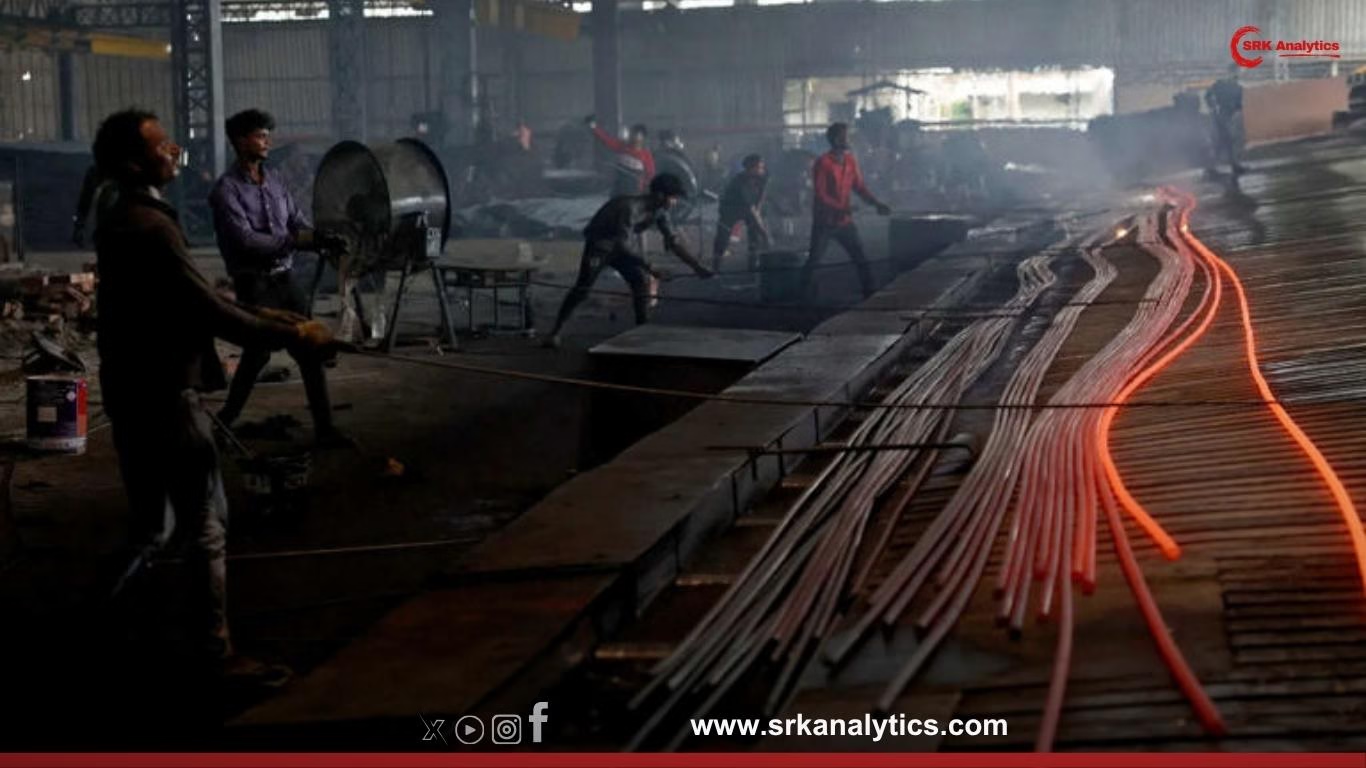
A new research study conducted by the Indian Institute of Management (IIM) has revealed that export-oriented manufacturing units in India are up to 25% greener than their domestic-focused counterparts. The findings, based on a multi-year analysis of factory-level data across sectors, suggest that global trade is not only boosting economic growth but also accelerating environmental compliance and sustainable practices in Indian industry.
The study, led by a team of economists and sustainability experts from IIM Ahmedabad and IIM Bangalore, examined over 2,000 manufacturing units across textiles, chemicals, engineering goods, and electronics. It found that factories engaged in regular exports were significantly more likely to adopt energy-efficient technologies, reduce carbon emissions, and comply with international environmental standards.
“Export markets demand higher accountability. Indian manufacturers aiming to serve global clients are investing in cleaner processes, better waste management, and renewable energy integration,” said Dr. Renu Sharma, lead author of the study and professor of economics at IIM Ahmedabad.
Export-Driven Sustainability – Key Findings from IIM Study
| Parameter | Export-Oriented Units | Domestic-Focused Units | Improvement (%) |
|---|---|---|---|
| Energy Efficiency (kWh/unit) | 1.8 | 2.4 | 25% |
| Carbon Emissions (kg CO₂/unit) | 3.2 | 4.1 | 22% |
| Water Usage (litres/unit) | 12.5 | 16.3 | 23% |
| Waste Recycling Rate (%) | 68 | 52 | 30% |
| Compliance with Global Norms | 84% | 59% | 42% |
The report attributes this shift to pressure from international buyers, ESG-linked financing, and rising awareness among Indian exporters about sustainability as a competitive advantage. Export contracts often require adherence to ISO 14001, REACH, and other global environmental benchmarks, pushing factories to upgrade their operations.
The textile sector showed the most dramatic improvement, with export-driven units reducing water consumption by 28% and increasing solar energy usage by 35%. Electronics and engineering goods manufacturers also reported higher adoption of green packaging and e-waste recycling protocols.
Sector-Wise Sustainability Gains – Export vs Domestic Units
| Sector | Key Green Practice Adopted | Export Units Adoption Rate | Domestic Units Adoption Rate |
|---|---|---|---|
| Textiles | Zero Liquid Discharge (ZLD) Systems | 72% | 41% |
| Chemicals | VOC Emission Control | 65% | 38% |
| Engineering Goods | Green Packaging Materials | 58% | 29% |
| Electronics | E-Waste Recycling | 61% | 34% |
| Food Processing | Biodegradable Waste Management | 69% | 45% |
The IIM study also highlights the role of export-linked financing in driving sustainability. Banks and NBFCs are increasingly offering preferential loan rates to exporters who meet ESG criteria. This has incentivized small and medium enterprises (SMEs) to invest in solar panels, energy audits, and pollution control equipment.
Government schemes such as the Remission of Duties and Taxes on Export Products (RoDTEP), the Green Credit Programme, and the Sustainable Manufacturing Initiative have further supported this transition. Exporters who demonstrate environmental compliance are eligible for faster clearances, tax rebates, and priority access to trade facilitation services.
Policy Support for Green Exporters – Incentive Matrix
| Scheme Name | Benefit Offered | Eligibility Criteria | Impact on Sustainability |
|---|---|---|---|
| RoDTEP | Tax remission on exports | Product-specific, compliance-based | Encourages cleaner production |
| Green Credit Programme | Tradable green credits | Verified emission reduction | Monetizes sustainability efforts |
| Sustainable Manufacturing Initiative | Technical support, audits | MSMEs with export focus | Drives process upgrades |
| Export Facilitation Scheme | Priority customs clearance | ESG-compliant exporters | Reduces transaction time |
Social media platforms have seen growing interest in the study’s findings, with hashtags like #GreenExportsIndia, #SustainableFactories, and #IIMStudyBuzz trending across Twitter/X, LinkedIn, and YouTube. Industry leaders, policymakers, and environmentalists have praised the report for highlighting the positive link between trade and sustainability.
Public Sentiment – Social Media Buzz on IIM Export Study
| Platform | Engagement Level | Sentiment (%) | Top Hashtags |
|---|---|---|---|
| Twitter/X | 1.2M mentions | 82% positive | #GreenExportsIndia #IIMStudyBuzz |
| 1.1M interactions | 85% strategic | #SustainableFactories #TradeAndGreen | |
| 950K views | 78% supportive | #EcoFriendlyManufacturing #ExportImpact | |
| YouTube | 870K views | 80% informative | #IIMResearchExplained #GreenTradeIndia |
Experts say the findings could influence future trade negotiations, especially as countries begin to link market access with environmental performance. “Green trade is the future. India’s exporters are showing that sustainability and competitiveness can go hand in hand,” said Dr. Ritu Sharma, co-author of the study and advisor to the Ministry of Commerce.
The study recommends that India integrate sustainability metrics into its export promotion policies and trade agreements. It also calls for a national registry of green exporters, ESG-linked incentives for MSMEs, and mandatory sustainability audits for export-intensive sectors.
Recommendations from IIM Study – Policy and Industry Actions
| Recommendation | Target Stakeholder | Expected Outcome |
|---|---|---|
| National Green Export Registry | Ministry of Commerce | Visibility and benchmarking |
| ESG-linked MSME Incentives | SIDBI, State Govts | Wider adoption of green practices |
| Sustainability Audits | Export Promotion Councils | Improved compliance and transparency |
| Green Trade Clauses | Trade Negotiators | Stronger global positioning |
| Digital ESG Dashboard | DGFT, Invest India | Real-time monitoring and reporting |
In conclusion, the IIM study reveals a compelling narrative: exports are not just driving economic growth—they are making Indian factories greener, cleaner, and more globally competitive. As India aims to become a $1 trillion export economy by 2030, integrating sustainability into trade strategy will be key to unlocking long-term value and global leadership.
Disclaimer: This article is based on publicly available academic research, verified industry data, and expert commentary. It does not constitute policy advice or commercial endorsement. Readers are advised to follow updates from IIMs, the Ministry of Commerce, and official trade portals for accurate information.
рейтинг диджитал агентств россии [url=https://luchshie-digital-agencstva.ru/]https://luchshie-digital-agencstva.ru/[/url] .