






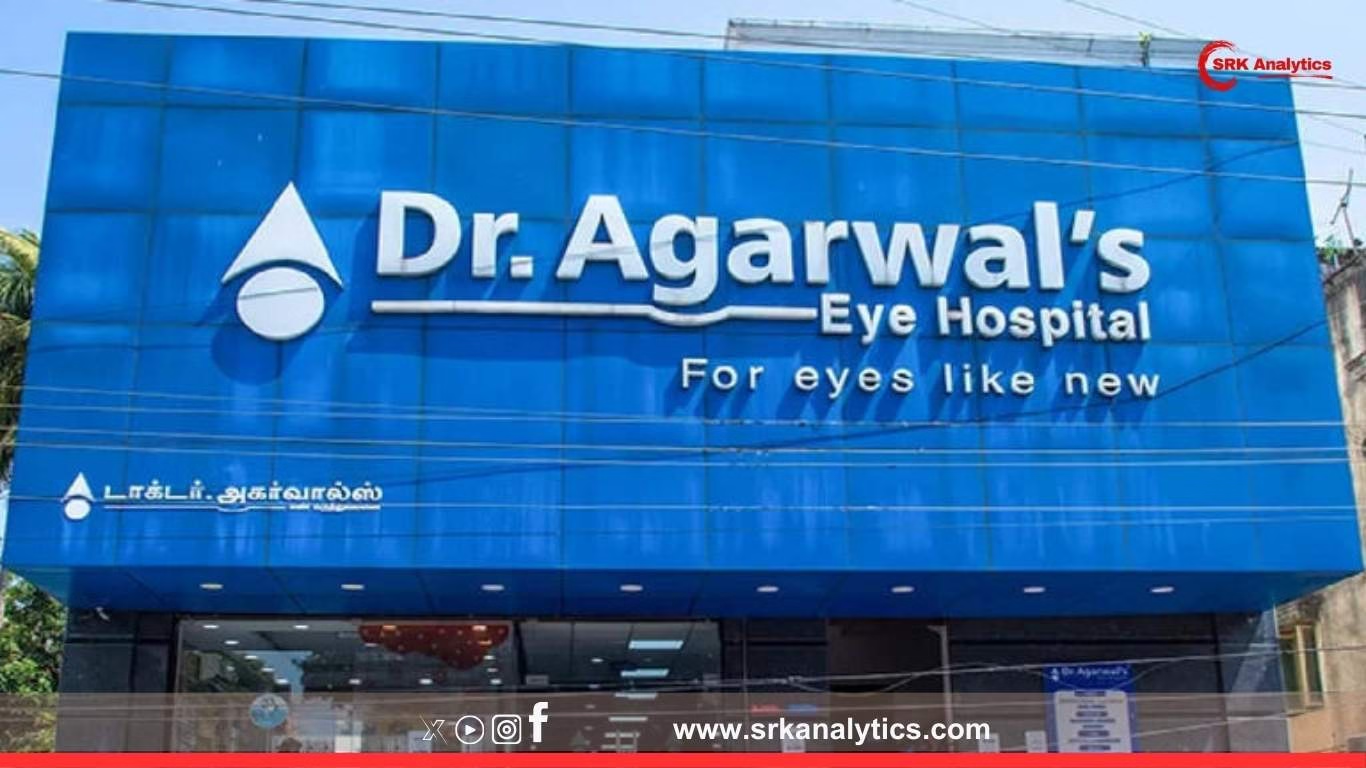
In a significant development for the Indian healthcare sector, Dr Agarwal’s Eye Hospital shares nosedived by nearly 18% after the company’s board approved its merger with Dr Agarwal’s Healthcare. The decision, which is seen as a step towards organizational restructuring and consolidation, has sparked mixed reactions in the stock market, with investors showing concern over valuation and integration challenges.
The announcement comes at a time when the healthcare and hospital industry in India is witnessing rapid growth, consolidation, and heightened investor interest. However, the sharp decline in share price indicates that the market is still digesting the implications of this merger.
Details of the Merger
The merger of Dr Agarwal’s Eye Hospital with Dr Agarwal’s Healthcare is expected to create a stronger integrated healthcare entity with expanded service offerings.
Key Aspects of the Merger:
- Objective: Consolidation of operations to improve efficiency, scale, and financial flexibility.
- Structure: Dr Agarwal’s Eye Hospital will merge into Dr Agarwal’s Healthcare, creating a single entity.
- Rationale: Unified corporate structure, enhanced growth opportunities, and improved capital utilization.
- Impact: Larger presence across India and abroad, better synergies in ophthalmology and allied healthcare services.
While the merger is strategic from a business standpoint, the market reacted negatively, with investors worried about valuation dilution and integration costs.
Stock Market Reaction
Immediately after the announcement, Dr Agarwal’s Eye Hospital shares plummeted by 18%, erasing a significant portion of recent gains.
| Date | Stock Price (₹) | % Change | Reason |
|---|---|---|---|
| Previous Close | 620 | – | Market steady |
| Announcement Day Open | 610 | -1.6% | Pre-merger sentiment cautious |
| Post Announcement Intraday Low | 508 | -18% | Merger approval shock |
| Closing Price | 515 | -17% | Negative investor sentiment |
The steep decline reflects investors’ skepticism about the merger structure and potential earnings dilution in the short term.
Why Did Investors React Negatively?
Despite the strategic intent behind the merger, investors highlighted multiple concerns:
- Valuation Concerns – Shareholders worry that merging with Dr Agarwal’s Healthcare could dilute existing equity value.
- Integration Challenges – Combining two large operations may lead to short-term inefficiencies.
- Debt and Funding – Speculation around funding requirements for expansion raised fears of higher debt.
- Unclear Synergy Benefits – Market participants expect clarity on how ophthalmology-focused operations will align with broader healthcare services.
Strategic Rationale Behind the Merger
From a business perspective, the merger could yield long-term benefits for the group:
- Unified Branding – Stronger brand positioning under a consolidated entity.
- Operational Efficiency – Shared resources, staff, and infrastructure.
- Geographic Expansion – Larger hospital and clinic network across India and international markets.
- Attracting Investors – A bigger, diversified healthcare entity may attract global institutional investors.
Comparison with Other Healthcare Consolidations
India has seen multiple hospital and healthcare group consolidations in recent years.
| Merger / Acquisition | Year | Value (₹ Crore) | Market Reaction |
|---|---|---|---|
| Apollo Health & Lifestyle merges units | 2022 | 1,200 | Positive |
| Manipal Hospitals acquires Columbia Asia | 2021 | 2,100 | Neutral to Positive |
| Fortis Healthcare restructuring | 2020 | – | Mixed |
| Dr Agarwal’s Eye Hospital + Healthcare | 2024 | NA | Negative (-18%) |
This shows that while consolidation is generally viewed positively in healthcare, the immediate negative market reaction in this case is driven by valuation uncertainty.
Growth Outlook for Indian Healthcare
The long-term prospects of the Indian healthcare industry remain strong, driven by rising demand for specialized care, expanding insurance coverage, and increasing medical tourism.
Healthcare Sector Projections
| Year | Market Size (US$ Billion) | CAGR |
|---|---|---|
| 2020 | 190 | – |
| 2023 | 280 | 12% |
| 2025 (Projected) | 370 | 14% |
| 2030 (Projected) | 650 | 16% |
Ophthalmology is a fast-growing segment due to rising cases of cataracts, myopia, and lifestyle-related vision disorders. The merger could position Dr Agarwal’s group strongly in this segment.
Expert Views
- Market Analyst: “The stock fall was expected as investors always react sharply to restructuring moves. The real impact of the merger will be visible in financials over the next 12–18 months.”
- Healthcare Consultant: “Consolidation will help the company in scaling faster and improving capital efficiency. However, integration costs could weigh on earnings in the near term.”
- Investor Sentiment: “The fall is more about uncertainty than fundamentals. Long-term investors may see this as an opportunity.”
Potential Benefits for Patients and Stakeholders
The merger could create a one-stop healthcare ecosystem where patients can access specialized eye care along with other healthcare services under the same umbrella.
Key Benefits:
- Expanded Services – Eye care, diagnostics, and allied healthcare.
- Technology Adoption – Integration of advanced AI-based diagnostic tools.
- Improved Reach – Wider presence in Tier-2 and Tier-3 cities.
- Global Standards – Potential collaborations with international healthcare institutions.
Risks and Challenges
While the merger has long-term advantages, risks remain:
- Cultural Integration – Aligning workforce and management practices.
- Execution Delays – Regulatory and operational hurdles.
- Profitability Pressure – Increased short-term expenditure.
- Competition – Apollo, Narayana Health, and other major players remain aggressive.
Road Ahead
The merged entity of Dr Agarwal’s Eye Hospital and Dr Agarwal’s Healthcare is expected to:
- Expand into more than 30 new locations in the next 5 years.
- Raise additional funding for growth and digital health initiatives.
- Leverage AI and robotics in surgeries and diagnostics.
- Focus on medical tourism, especially in ophthalmology.
Conclusion
The 18% drop in Dr Agarwal’s Eye Hospital stock highlights the market’s cautious approach towards mergers in the healthcare sector. While investors have raised short-term concerns, industry experts believe the consolidation will eventually strengthen the company’s market positioning.
In the long term, this move could unlock significant synergies, improve operational efficiency, and establish Dr Agarwal’s group as a formidable force in both eye care and overall healthcare. However, investor trust will only return once financial clarity and integration benefits become visible.
Disclaimer: This article is for informational purposes only and does not constitute investment advice. Investors should seek professional financial guidance before making investment decisions.


seoshift.click – Loved the layout today; clean, simple, and genuinely user-friendly overall.
ranktarget.click – Found practical insights today; sharing this article with colleagues later.
searchpilot.click – Color palette felt calming, nothing distracting, just focused, thoughtful design.
linkladder.click – Navigation felt smooth, found everything quickly without any confusing steps.