



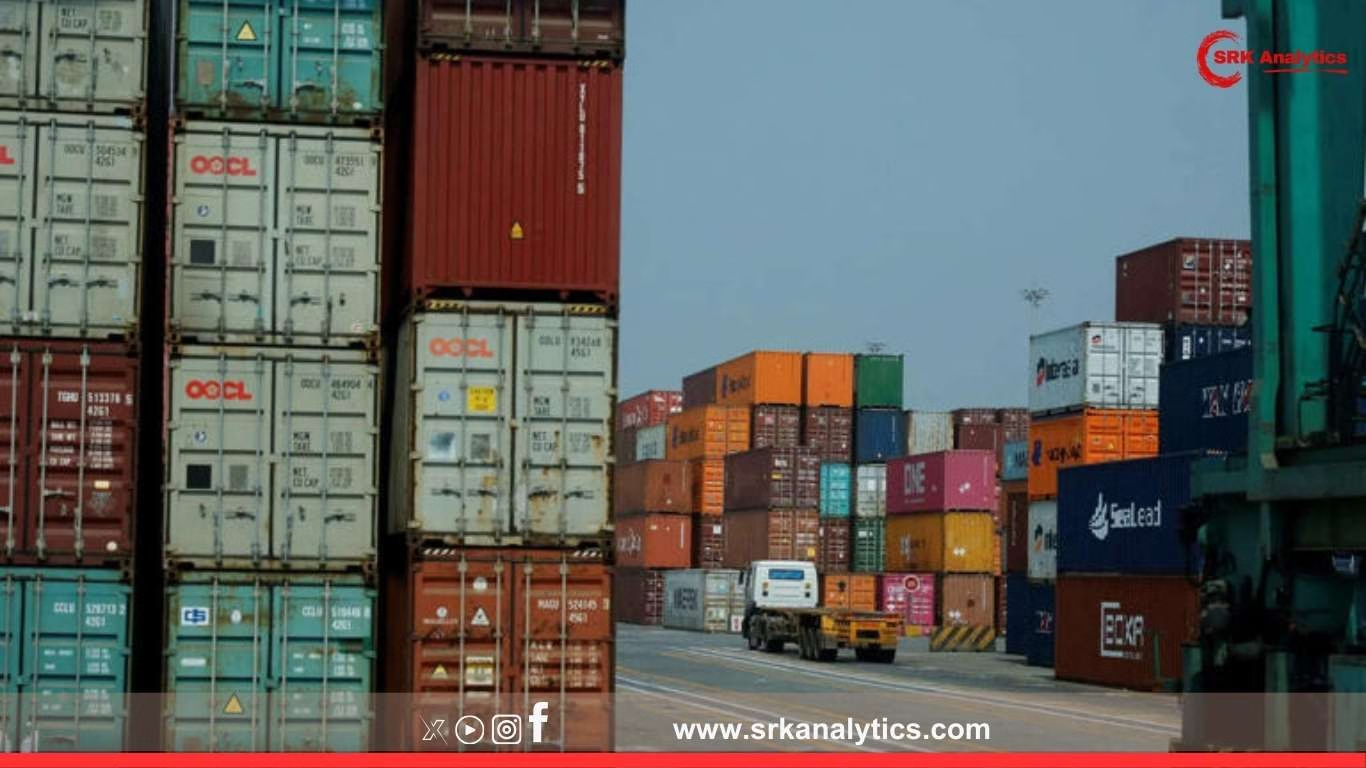
With the United States imposing a steep 50% tariff on Indian exports starting August 27, 2025, the Commerce Ministry has initiated a series of high-level consultations with industry stakeholders to explore shipment diversification and mitigate the impact on key sectors. The move comes amid mounting pressure on India’s export-driven industries, particularly textiles, gems and jewellery, seafood, and auto components, which face significant exposure to the US market.
Commerce Secretary Sunil Barthwal confirmed that the ministry will hold targeted meetings with export promotion councils (EPCs), trade bodies, and large exporters over the next two weeks. The discussions will focus on identifying alternative markets, enhancing trade facilitation, and leveraging bilateral and regional trade agreements to cushion the blow.
🧭 Timeline of India’s Response to US Tariff Escalation
| Date | Event Description | Strategic Outcome |
|---|---|---|
| April 2025 | US proposes 25% reciprocal tariff | Initial consultations begin |
| August 2025 | Additional 25% penalty announced | Total tariff reaches 50% |
| August 27, 2025 | Tariffs take effect | Exporters face immediate cost escalation |
| August 28–Sept 10 | Commerce Ministry meetings with EPCs | Diversification roadmap to be drafted |
| Q4 FY26 | New market entry initiatives expected | Trade realignment begins |
The ministry is also expected to release a revised export strategy document by October, incorporating sector-specific recommendations and market prioritization.
📊 Sectors Most Affected by 50% US Tariffs
| Sector | FY25 Export Value to US (₹ crore) | Tariff Exposure (%) | Risk Level |
|---|---|---|---|
| Gems & Jewellery | ₹3,20,000 | 70% | High |
| Textiles & Apparel | ₹2,10,000 | 65% | High |
| Seafood (Shrimp) | ₹45,000 | 80% | High |
| Auto Components | ₹85,000 | 40% | Moderate |
| Leather Goods | ₹38,000 | 55% | Moderate |
| Pharmaceuticals | ₹1,25,000 | 20% | Low |
Exporters in these sectors are expected to face margin compression, order cancellations, and increased competition from tariff-exempt countries.
🔍 Commerce Ministry’s Diversification Strategy
The ministry’s approach to diversification includes both short-term tactical measures and long-term structural reforms:
| Strategic Pillar | Focus Area | Expected Impact |
|---|---|---|
| Market Diversification | Africa, Latin America, ASEAN | Reduced dependence on US and EU |
| Trade Agreement Acceleration | UAE, Australia, UK, EFTA | Preferential access to new markets |
| Export Credit Support | Enhanced ECGC coverage | Risk mitigation for exporters |
| Logistics & Port Efficiency | Faster customs clearance, multimodal hubs | Improved delivery timelines |
| MSME Onboarding | Digital tools, training, compliance | Broader participation in global trade |
The ministry is also working with the Department of Revenue to explore tariff relief mechanisms for re-export-oriented units.
📉 Exporter Sentiment and Industry Feedback
Initial feedback from exporters has been mixed. While large firms are exploring alternate markets, MSMEs are struggling with compliance costs and limited market intelligence.
| Exporter Type | Key Concern | Suggested Support |
|---|---|---|
| Large Corporates | Reworking supply chains | Faster FTA execution, export incentives |
| MSMEs | Lack of market access, high logistics cost | Subsidized trade fairs, digital platforms |
| EPCs | Need for sector-specific guidance | Dedicated diversification task forces |
The Apparel Export Promotion Council (AEPC) and the Gem & Jewellery Export Promotion Council (GJEPC) have requested emergency relief packages and faster GST refunds to maintain liquidity.
🧠 Trade Agreements and Bilateral Leverage
India is currently negotiating trade agreements with several countries and blocs that could offer tariff-free access to high-potential markets.
| Trade Partner/Bloc | Agreement Status | Strategic Benefit |
|---|---|---|
| UK | Final round of talks | Duty-free access for textiles, pharma |
| EFTA (Switzerland, Norway, etc.) | Ongoing | High-value goods, precision engineering |
| Australia | CECA Phase 2 | Seafood, auto components |
| UAE | CEPA implementation | Gems, jewellery, electronics |
| Latin America (Brazil, Chile) | Exploratory talks | Agro exports, leather goods |
The ministry aims to fast-track these negotiations and align tariff structures with India’s export priorities.
🔥 Immediate Relief Measures Under Consideration
To support exporters in the short term, the Commerce Ministry is evaluating the following interventions:
- Interest Equalization Scheme Extension: Additional 2% support for MSMEs
- Export Credit Guarantee Expansion: Higher coverage for high-risk markets
- Trade Fair Subsidies: Increased budget for participation in Africa, ASEAN expos
- Customs Duty Refund Acceleration: Faster processing under RoDTEP and RoSCTL
- Digital Export Facilitation Portal: Real-time market intelligence and compliance tools
| Relief Measure | Target Group | Implementation Timeline |
|---|---|---|
| Interest Equalization Boost | MSMEs | September 2025 |
| ECGC Premium Reduction | All exporters | October 2025 |
| Trade Fair Grants | Sectoral EPCs | Q3 FY26 |
| RoDTEP Refund Acceleration | All exporters | Immediate |
| Digital Portal Launch | MSMEs, EPCs | November 2025 |
These measures are expected to be finalized after consultations with industry bodies and the Finance Ministry.
📌 Conclusion
As India grapples with the fallout of the 50% US tariff on exports, the Commerce Ministry’s proactive engagement with exporters signals a strategic pivot toward diversification and resilience. By identifying new markets, accelerating trade agreements, and offering targeted relief, the government aims to safeguard India’s export momentum and minimize disruption.
The next few weeks will be critical in shaping India’s trade trajectory for FY26. With exporters, policymakers, and trade bodies working in tandem, the country has an opportunity to turn adversity into a catalyst for long-term transformation.
—
Disclaimer: This article is based on publicly available news reports and official statements as of August 27, 2025. It is intended for informational purposes only and does not constitute financial, legal, or investment advice.