




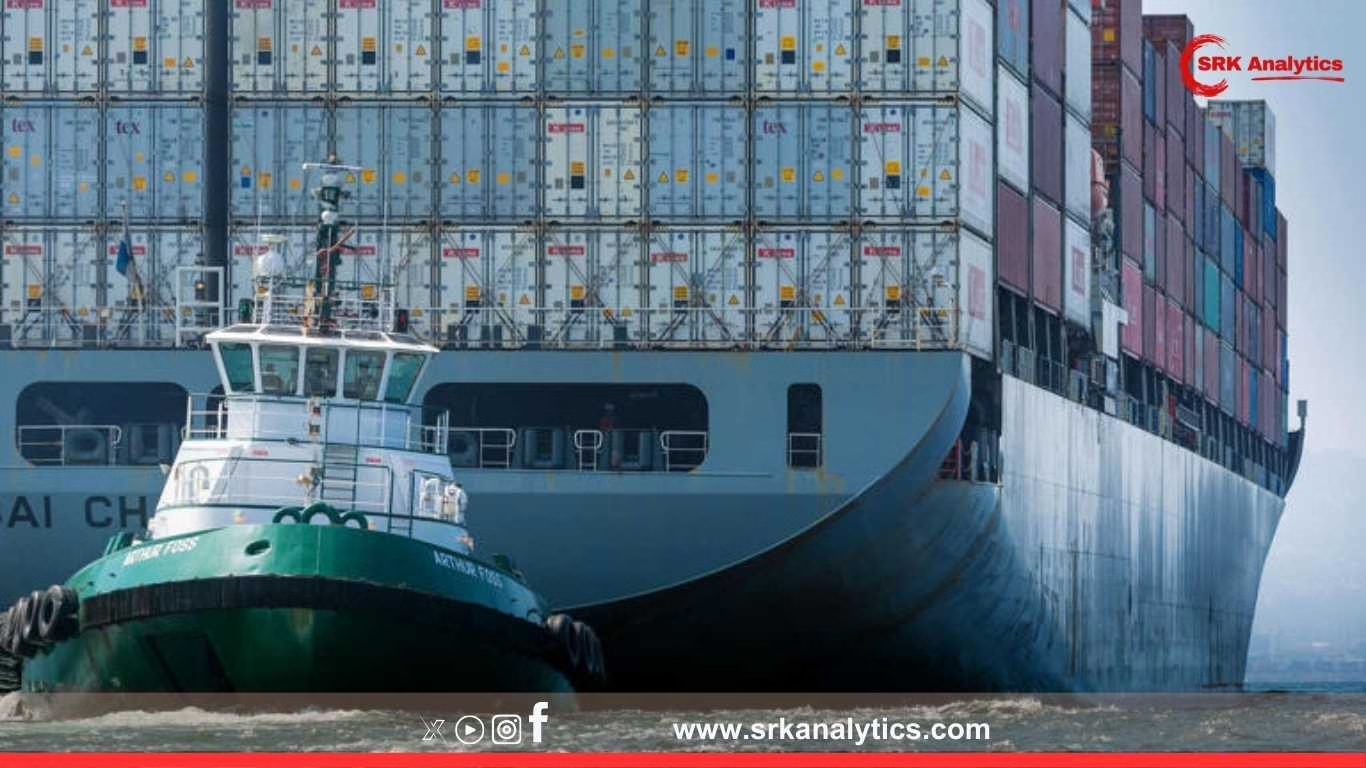
In a bold move to elevate India’s maritime capabilities, the Central government is preparing to launch a ₹70,000-crore financial package aimed at boosting shipbuilding, ship repair, and port infrastructure across the country. The initiative, which is expected to receive Union Cabinet approval by mid-September 2025, is part of a long-term strategy to position India among the top five global shipbuilding nations by 2047.
The package comprises three major components: a ₹20,000-crore shipping cluster programme, a ₹20,000-crore Shipbuilding Financial Assistance Programme (SBFAP 2.0), and a ₹25,000–30,000 crore Maritime Development Fund (MDF). Together, these schemes are designed to unlock large-scale investments, attract global partnerships, and modernize India’s maritime infrastructure.
🧭 Investment Components and Strategic Goals
| Scheme Name | Allocation (₹ crore) | Objective |
|---|---|---|
| Shipping Cluster Programme | ₹20,000 | Develop greenfield clusters with 1.0–1.2 million GT capacity |
| Shipbuilding Financial Assistance (SBFAP 2.0) | ₹20,000 | Extend shipbuilding subsidies for 10 years from April 2026 |
| Maritime Development Fund (MDF) | ₹25,000–30,000 | Provide blended financing for shipyards and port-linked projects |
The policy note for these schemes has been finalized following consultations between the Ministry of Finance and the Ministry of Ports, Shipping and Waterways (MoPSW). Officials say the measures will provide financial clarity and infrastructure support, enabling joint ventures with Japanese and Korean shipbuilding majors.
📊 States Under Consideration for Maritime Clusters
| State | Status in Proposal | Strategic Advantage |
|---|---|---|
| Tamil Nadu | Likely host for first cluster | Deepwater ports, industrial corridors |
| Gujarat | Under consideration | Proximity to global shipping routes |
| Odisha | Under consideration | Emerging logistics hub, mineral exports |
| Andhra Pradesh | Proposed site | Coastal connectivity, shipyard potential |
| Maharashtra | Proposed site | Existing port infrastructure, trade volume |
Each cluster will receive direct capital support for breakwater construction, dredging, trunk infrastructure, and utilities. The goal is to create globally competitive shipbuilding ecosystems that can handle large tonnage and advanced vessel designs.
🔍 Shipbuilding Financial Assistance Programme (SBFAP 2.0)
The revamped SBFAP will extend the current shipbuilding subsidy scheme by another decade, offering financial assistance to Indian shipyards to offset cost disadvantages and boost competitiveness. Proposed subsidy rates include:
- 15% for standard ships up to ₹100 crore
- 20% for advanced vessels over ₹100 crore
- 25% for green ships with eco-friendly propulsion systems
This initiative is expected to catalyze indigenous shipbuilding and encourage innovation in vessel design, sustainability, and technology.
🧠 Maritime Development Fund (MDF): Blended Finance Model
The MDF will operate on a blended finance model, combining:
- 49% concessional capital from the government and state-owned ports
- 51% commercial capital from multilateral lenders, sovereign funds, and private investors
The fund will offer long-term, low-cost financing to support shipbuilding, port-linked infrastructure, and shipping tonnage expansion. Instruments with varying returns and terms will cater to diverse investor profiles.
📉 Investment Requirements and Sectoral Goals by 2047
India’s maritime sector is projected to require $885–940 billion in investment by 2047, including:
| Investment Area | Estimated Requirement (USD billion) |
|---|---|
| Shipping Tonnage Expansion | $388 |
| Green Vessel Development | $260 |
| Next-Generation Ports | $224 |
| Shipbuilding and Repair Hub | $18 |
| Coastal & Inland Shipping Share | $8.82 |
| Cruise Tourism Infrastructure | $1.65 |
India aims to break into the global top 10 in shipbuilding by 2030 and top 5 by 2047, competing with leaders like China, South Korea, and Japan.
🧠 Legislative Push: Maritime Bills Passed in Monsoon Session
The monsoon session of Parliament concluded with the passage of five key maritime legislations:
| Bill Name | Purpose |
|---|---|
| Merchant Shipping Bill | Modernize shipping regulations |
| Coastal Shipping Bill | Promote domestic coastal trade |
| Carriage of Goods Bill | Streamline cargo handling norms |
| Bills of Lading Bill | Digitize shipping documentation |
| Indian Ports Bill | Replace 117-year-old Indian Ports Act |
Ports Secretary T.K. Ramachandran called the legislative overhaul a “watershed moment” for India’s maritime transformation.
📌 Conclusion
The Centre’s ₹70,000-crore push for shipbuilding and port infrastructure marks a decisive step toward realizing India’s maritime ambitions. By combining financial incentives, global partnerships, and legislative reforms, the government aims to create a robust ecosystem that supports industrial growth, job creation, and strategic autonomy in the shipping sector.
As Cabinet approval nears, stakeholders across shipbuilding, logistics, and trade are watching closely. If executed effectively, this package could redefine India’s position in the global maritime map and unlock unprecedented economic potential.
—
Disclaimer: This article is based on publicly available news reports and official statements as of August 25, 2025. It is intended for informational purposes only and does not constitute financial, legal, or investment advice.