




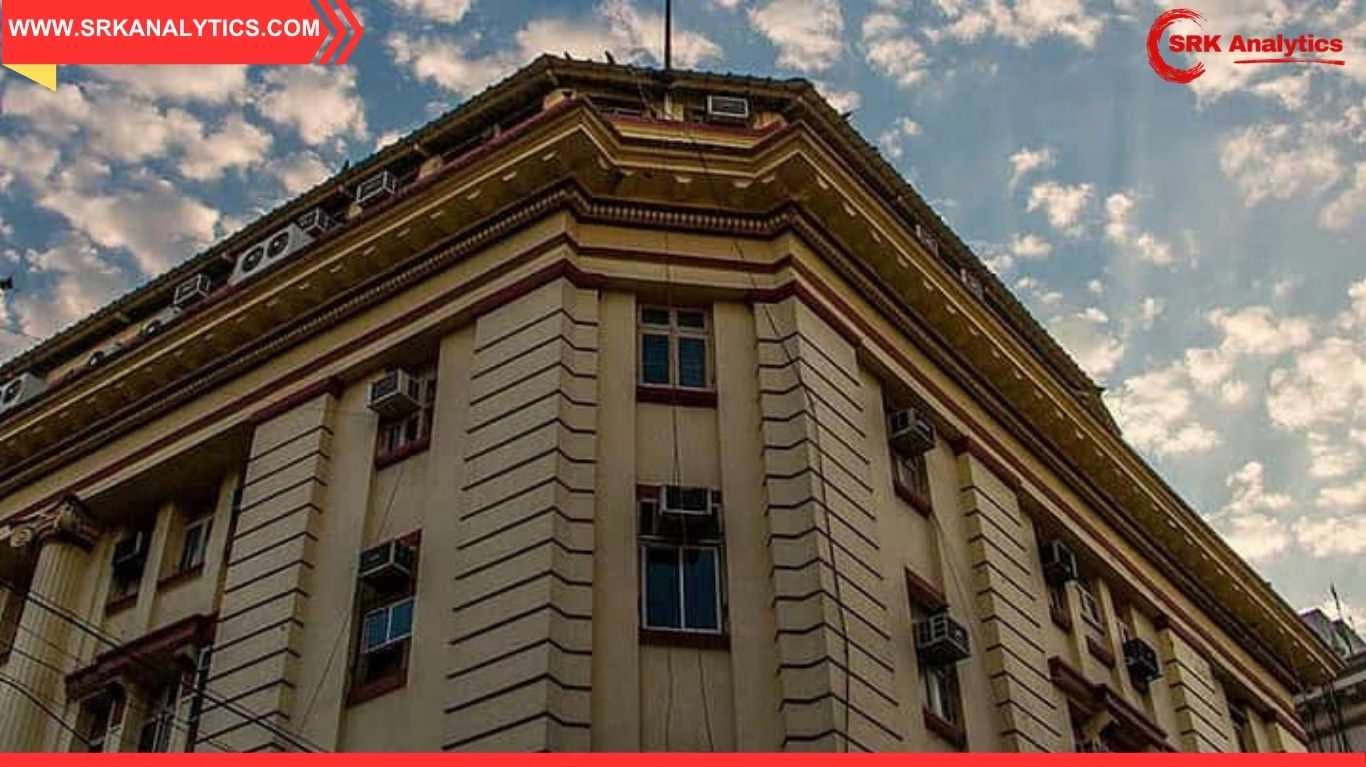
In a poignant moment for India’s financial history, the Calcutta Stock Exchange (CSE)—one of the country’s oldest bourses—is set to celebrate its final Diwali and Kali Puja as a functioning exchange on October 20, 2025, before formally shutting down operations. Founded in 1908, the CSE once rivalled the Bombay Stock Exchange in trading volumes and stood as a symbol of Kolkata’s financial heritage. However, after years of regulatory non-compliance, dwindling trade volumes, and legal hurdles, the exchange has opted for a voluntary exit, marking the end of a 117-year-old chapter.
Trading at the CSE was suspended in April 2013 by the Securities and Exchange Board of India (SEBI) due to repeated violations of regulatory norms. Despite multiple revival attempts, including appeals and restructuring proposals, the exchange failed to meet SEBI’s compliance benchmarks. The final decision to exit was taken after a decade-long legal battle and persistent operational stagnation.
🧠 Key Reasons Behind Calcutta Stock Exchange’s Closure
| Element | Details |
|---|---|
| Founded | 1908 |
| Suspension Date | April 2013 |
| Regulator | Securities and Exchange Board of India (SEBI) |
| Reason for Suspension | Non-compliance with regulatory norms |
| Revival Attempts | Legal appeals, restructuring proposals |
| Final Exit Decision | Voluntary exit approved in 2025 |
| Last Trading Celebration | Diwali & Kali Puja, October 20, 2025 |
The CSE’s inability to transition into a technology-driven trading ecosystem and its failure to attract liquidity and investor confidence were key factors in its decline.
📊 Timeline of Calcutta Stock Exchange’s Decline
| Year | Milestone Description |
|---|---|
| 2000 | Dot-com boom exposes tech gaps in CSE infrastructure |
| 2013 | SEBI suspends trading due to non-compliance |
| 2015–2022 | Multiple legal appeals and revival attempts |
| October 2025 | Final Diwali celebration before voluntary exit |
The exchange’s last active trading day was over a decade ago, with no fresh listings or volume since 2013.
🗣️ Reactions from Market Experts, Traders, and Historians
- Former CSE Trader: “It’s the end of an era. CSE was once the pride of eastern India.”
- Market Analyst: “The closure reflects the need for modernization and compliance in capital markets.”
- Financial Historian: “CSE’s legacy will live on, but its operational model couldn’t keep pace.”
| Stakeholder Group | Reaction Summary |
|---|---|
| Traders | Nostalgic but resigned to closure |
| Regulators | Emphasizing compliance and investor protection |
| Historians | Documenting CSE’s contribution to Indian finance |
| Investors | Shifted to NSE and BSE platforms |
The closure is expected to have minimal impact on current market operations, as most trading has already migrated to NSE and BSE.
🧾 Comparative Snapshot: India’s Regional Stock Exchanges
| Exchange Name | Founded | Current Status | Reason for Decline |
|---|---|---|---|
| Calcutta Stock Exchange | 1908 | Voluntary exit 2025 | Regulatory non-compliance, tech lag |
| Delhi Stock Exchange | 1947 | Closed in 2017 | Lack of liquidity, SEBI action |
| Bangalore Stock Exchange | 1963 | Closed in 2014 | Merger with NSE, low volumes |
| Ahmedabad Stock Exchange | 1894 | Closed in 2018 | Failure to modernize |
The trend reflects a consolidation of trading activity into national-level exchanges with robust infrastructure and compliance.
🧭 What to Watch Post CSE Closure
- Archival Preservation: Digitization of CSE’s historical records and trading data
- Investor Transition: Migration of legacy accounts to NSE/BSE platforms
- Policy Lessons: Strengthening oversight for regional exchanges
- Cultural Impact: Commemorative events and publications on CSE’s legacy
The final Diwali celebration at CSE is expected to be attended by former brokers, employees, and financial historians, marking a respectful farewell to a storied institution.
Disclaimer
This news content is based on verified regulatory updates, media reports, and historical records as of October 20, 2025. It is intended for editorial use and public awareness. The information does not constitute financial advice, regulatory interpretation, or investment recommendation and adheres to ethical journalism standards.