



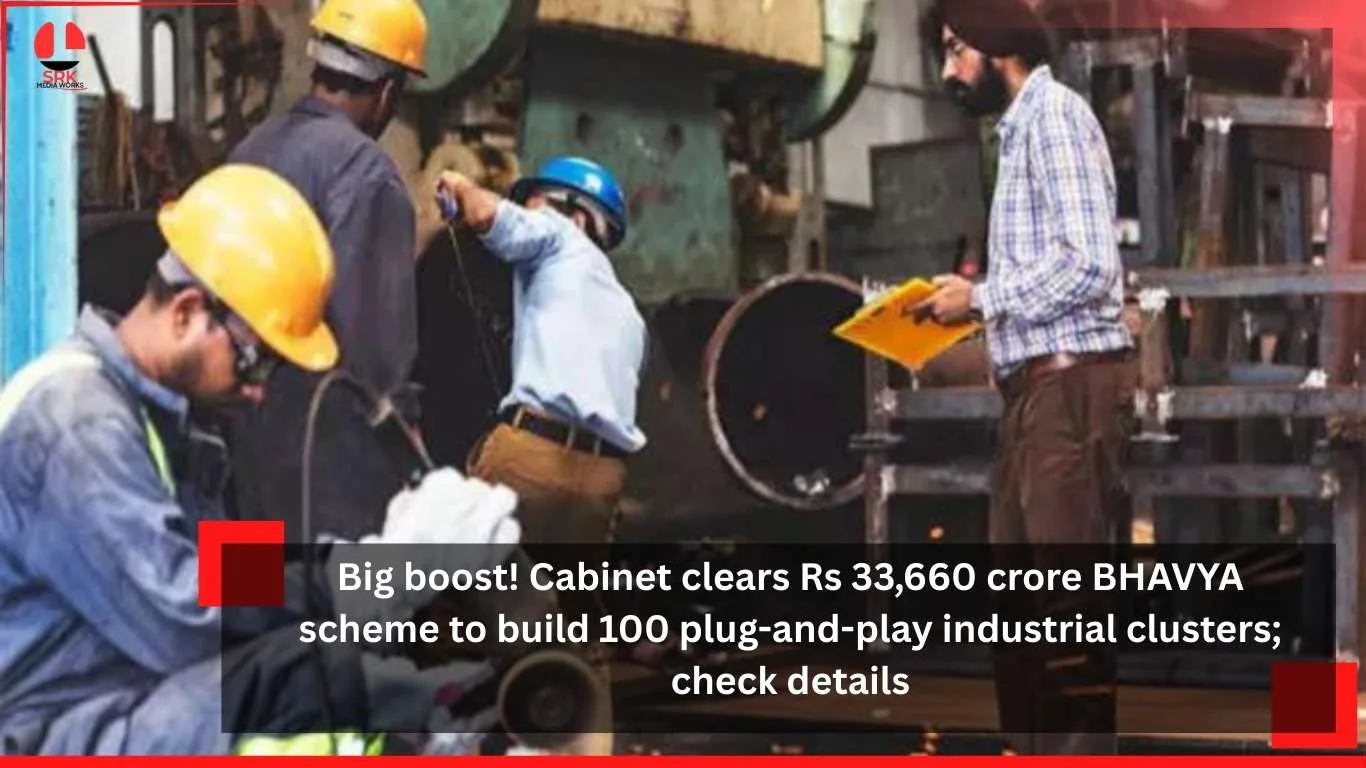
India’s industrial growth story has received a significant push as the Union Cabinet has approved the BHAVYA scheme with an outlay of Rs 33,660 crore to establish 100 plug-and-play industrial clusters across the country. This ambitious initiative is designed to accelerate manufacturing, attract investments, and create millions of jobs while ensuring balanced regional development.
Strategic Importance of the BHAVYA Scheme
The BHAVYA scheme (Boosting Holistic Advancement of Vibrant Yards for Advancement) is a landmark policy aimed at transforming India’s industrial landscape. Its objectives include:
- Plug-and-Play Infrastructure: Ready-to-use facilities for industries to start operations without delays.
- Regional Balance: Ensuring industrial growth is spread across states, not concentrated in a few hubs.
- Investment Magnet: Attracting both domestic and foreign investors with world-class facilities.
- Employment Generation: Creating direct and indirect jobs across sectors.
- Sustainability: Incorporating green technologies and eco-friendly practices in industrial clusters.
Key Features of the Scheme
- Establishment of 100 industrial clusters strategically located across India.
- Allocation of Rs 33,660 crore for infrastructure, utilities, and technology integration.
- Focus on plug-and-play facilities to minimize setup time for industries.
- Integration of smart technologies for energy efficiency, waste management, and logistics.
- Special emphasis on MSMEs and startups, providing them affordable access to industrial infrastructure.
Comparative Analysis of BHAVYA Scheme Benefits
| Aspect | Current Industrial Challenges | BHAVYA Scheme Solutions |
|---|---|---|
| Infrastructure | Delays in land acquisition, poor facilities | Ready-to-use plug-and-play clusters |
| Investment Climate | High setup costs, regulatory hurdles | Streamlined approvals, modern infrastructure |
| Employment | Limited job creation in certain regions | Millions of jobs across diverse states |
| Regional Development | Concentration in few hubs | Balanced growth across India |
| Sustainability | High pollution, inefficient systems | Green technologies, eco-friendly practices |
Pivot Analysis: Short-Term vs. Long-Term Impact
| Dimension | Short-Term Impact | Long-Term Impact |
|---|---|---|
| Industrial Growth | Immediate boost with plug-and-play facilities | Sustained growth with balanced clusters |
| Employment | Quick job creation in construction and setup | Long-term employment in manufacturing and services |
| Investment | Attraction of new investors | Establishment of India as a global manufacturing hub |
| Regional Balance | Initial spread of clusters | Long-term reduction in regional disparities |
| Sustainability | Adoption of green practices | Contribution to India’s climate goals |
Broader Implications for India
The BHAVYA scheme carries transformative implications:
- Economic Growth: Industrial clusters will boost GDP and strengthen India’s manufacturing sector.
- Global Competitiveness: India can position itself as a preferred destination for global supply chains.
- Job Creation: Millions of jobs will be generated across sectors, reducing unemployment.
- Regional Development: Balanced growth will reduce migration pressures on urban centers.
- Sustainability: Green clusters will align with India’s climate commitments.
Challenges Ahead
Despite the promise, challenges remain:
- Ensuring timely implementation of infrastructure projects.
- Coordinating between central and state governments for land and approvals.
- Maintaining affordability for MSMEs and startups.
- Balancing industrial growth with environmental sustainability.
Future Outlook
The Cabinet’s approval of the BHAVYA scheme sets the stage for a new era in India’s industrial development. Over the next decade, India could witness:
- Emergence of 100 world-class industrial clusters across the country.
- Attraction of billions in foreign direct investment.
- Creation of a robust ecosystem for startups and MSMEs.
- Integration of India into global supply chains as a reliable manufacturing hub.
- Achievement of sustainable industrial growth aligned with climate goals.
The BHAVYA scheme is not just an infrastructure project—it is a vision for India’s industrial future, combining growth, sustainability, and inclusivity.
Disclaimer
This article is intended for informational purposes only. It highlights recent policy developments regarding the Cabinet’s approval of the BHAVYA scheme. The content does not constitute financial advice, investment guidance, or official government statements. Readers should independently verify details before making financial or business decisions.