


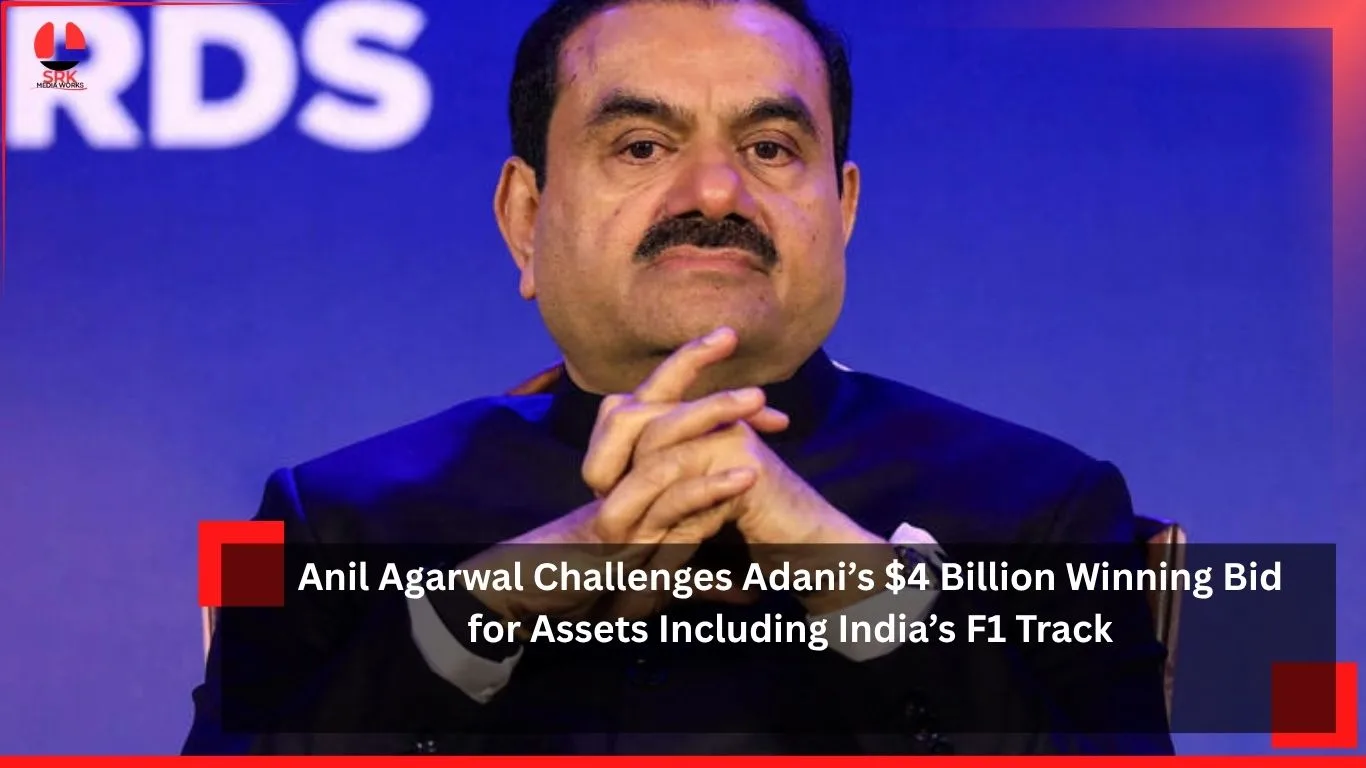
India’s corporate landscape has once again been thrust into the spotlight as billionaire industrialist Anil Agarwal, founder of Vedanta Resources, has formally challenged Gautam Adani’s winning $4 billion bid for Jaiprakash Associates’ assets. The contested deal includes India’s only Formula One track, the Buddh International Circuit, along with a portfolio of infrastructure and real estate assets. This development has set the stage for a high-stakes legal battle that could reshape the future of India’s infrastructure sector and redefine the balance of power among its top conglomerates.
Background of the Dispute
The assets in question were put up for sale as part of Jaiprakash Associates’ debt resolution process. Gautam Adani’s group emerged as the highest bidder, offering approximately $4 billion for the package. The deal was hailed as a strategic move that would strengthen Adani’s footprint in infrastructure, real estate, and sports facilities. However, Anil Agarwal has now approached the Supreme Court, arguing that the bidding process lacked transparency and fairness.
Agarwal’s challenge is not just about the assets themselves but also about the credibility of India’s corporate governance and auction mechanisms. His petition raises questions about whether the bidding process gave equal opportunity to all interested parties and whether regulatory oversight was adequate.
Why the Assets Matter
The portfolio includes several high-value properties and projects:
- Buddh International Circuit (F1 Track): India’s only Formula One track, located in Greater Noida, which has hosted international racing events and remains a symbol of India’s ambition in global sports infrastructure.
- Real Estate Projects: Large-scale residential and commercial developments in prime locations.
- Cement and Power Assets: Strategic industrial units that complement India’s growing demand for construction and energy.
These assets are not just financially significant but also carry symbolic weight, representing India’s push toward modern infrastructure and global recognition.
The Legal Challenge
Anil Agarwal’s petition to the Supreme Court argues that:
- The bidding process favored Adani Group disproportionately.
- Certain regulatory approvals were expedited without adequate scrutiny.
- The valuation of assets was not conducted in a transparent manner.
- Other bidders, including Vedanta, were not given equal opportunity to revise or improve their offers.
If the Supreme Court admits the petition, the case could delay or even derail Adani’s acquisition, creating uncertainty for creditors, investors, and stakeholders.
Implications for Adani Group
For Gautam Adani, the acquisition was meant to be another jewel in his crown of diversified assets. Adani Group has aggressively expanded into ports, airports, energy, and infrastructure. Securing Jaiprakash Associates’ portfolio would have further cemented its dominance. However, Agarwal’s challenge threatens to slow down this momentum.
A prolonged legal battle could:
- Delay integration of assets into Adani’s portfolio.
- Increase scrutiny of Adani’s other acquisitions.
- Affect investor confidence in the group’s aggressive expansion strategy.
Implications for Vedanta and Anil Agarwal
For Anil Agarwal, challenging the bid is both a business and reputational move. Vedanta has been seeking to expand its footprint in infrastructure and real estate. Losing out on these assets was a setback, but by contesting the process, Agarwal positions himself as a defender of fair corporate practices.
If successful, Vedanta could:
- Gain access to strategic assets that complement its existing portfolio.
- Strengthen its position against Adani in India’s corporate hierarchy.
- Reinforce its image as a company committed to transparency and fairness.
Broader Impact on India’s Corporate Sector
This dispute is more than just a battle between two billionaires. It highlights key issues in India’s corporate governance:
- Transparency in Auctions: Are bidding processes truly fair and competitive?
- Regulatory Oversight: Do regulators have the capacity to ensure impartiality?
- Corporate Rivalries: How do power struggles among conglomerates affect India’s economic growth?
The outcome of this case could set a precedent for future asset sales and debt resolution processes.
Comparative Analysis of Adani vs Vedanta
| Aspect | Adani Group | Vedanta Resources |
|---|---|---|
| Core Focus | Infrastructure, energy, logistics | Mining, metals, energy, infrastructure |
| Expansion Strategy | Aggressive acquisitions | Selective, resource-driven |
| Recent Major Deals | Airports, ports, renewable energy | Oil & gas, aluminum, power |
| Financial Strength | Backed by diversified portfolio | Strong in natural resources |
| Legal Challenges | Increasing scrutiny in acquisitions | Focused on regulatory compliance |
Asset Value Distribution
| Asset Category | Estimated Value (USD) | Strategic Importance |
|---|---|---|
| Buddh International Circuit | $500 million | Sports, tourism, global branding |
| Real Estate Projects | $1.5 billion | Residential & commercial growth |
| Cement Units | $1 billion | Infrastructure demand |
| Power Assets | $1 billion | Energy security |
| Miscellaneous Assets | $0.5 billion | Diversified portfolio |
Possible Outcomes
- Supreme Court Upholds Adani’s Bid: Adani secures the assets, reinforcing his dominance.
- Court Orders Re-Bidding: A fresh auction could give Vedanta and others another chance.
- Court Cancels Deal: Assets remain unsold, prolonging Jaiprakash Associates’ debt resolution.
Each scenario carries significant consequences for India’s corporate sector and investor sentiment.
Conclusion
The battle between Anil Agarwal and Gautam Adani is not just about $4 billion worth of assets—it is about the future of corporate governance in India. The inclusion of India’s only Formula One track adds a layer of prestige and global visibility to the dispute. As the Supreme Court deliberates, the outcome will shape not only the fortunes of two of India’s biggest industrialists but also the credibility of India’s economic institutions.
Disclaimer
This article is based on publicly available information and analysis of corporate developments. It does not constitute financial, legal, or investment advice. Readers are encouraged to verify details independently and consult professionals before making any business or investment decisions. The content is intended for informational purposes only and reflects ongoing developments that may change with time.