




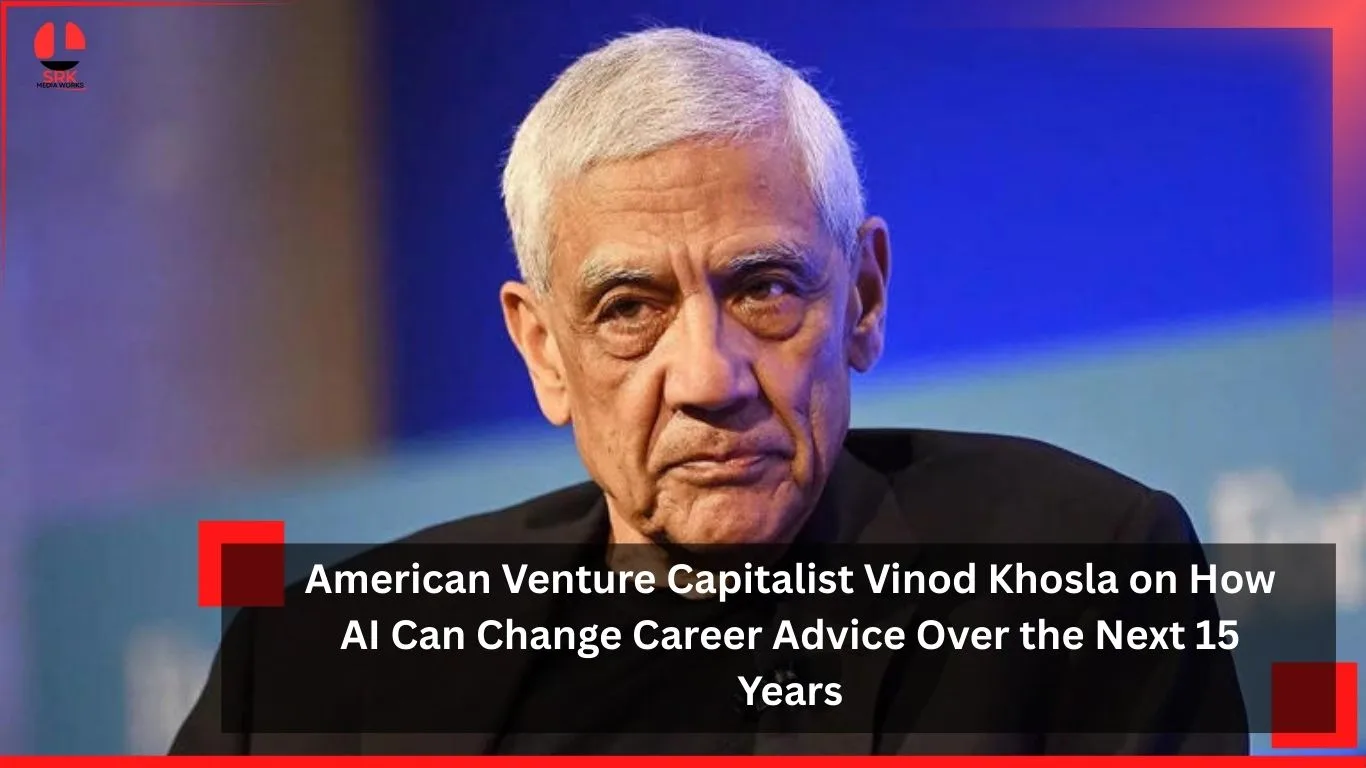
American venture capitalist Vinod Khosla, founder of Khosla Ventures and one of Silicon Valley’s most influential voices, has shared his perspective on how artificial intelligence (AI) will reshape career advice and professional choices in the coming 15 years. He believes that much of the conventional career guidance given today may become obsolete as AI transforms industries, job roles, and the very nature of work.
The Problem with Traditional Career Advice
For decades, career advice has often centered around stability, specialization, and following established paths. Students and professionals are frequently told to pursue careers in medicine, law, engineering, or finance because these fields are considered “safe” and “reliable.”
Vinod Khosla argues that this advice is increasingly “bad” because it fails to account for the disruptive impact of AI. In his view, careers that are considered secure today may be automated tomorrow, while entirely new fields may emerge that no one can predict right now.
Why Current Advice Falls Short
- Focus on Stability: Encourages risk-averse choices rather than innovation.
- Over-Specialization: Limits adaptability in a rapidly changing world.
- Ignoring Technology: Underestimates the role of AI and automation.
- Linear Thinking: Assumes career paths will remain unchanged over decades.
AI as a Career Disruptor
Khosla emphasizes that AI will not just automate routine tasks but will also redefine high-skilled professions. From medicine to law, AI systems are already demonstrating capabilities that rival human experts.
Key Areas of Disruption
- Healthcare: AI-driven diagnostics and personalized medicine.
- Law: Automated contract analysis and legal research.
- Finance: Algorithmic trading and AI-based risk management.
- Education: Personalized learning platforms powered by AI.
- Creative Industries: AI-generated art, music, and content creation.
Comparative Outlook of Careers
| Career Path | Current Perception | AI Impact | Future Outlook |
|---|---|---|---|
| Medicine | Stable, high demand | AI diagnostics, robotics | Transformed |
| Law | Secure, prestigious | Automated research, contracts | Transformed |
| Engineering | Reliable, technical | AI design, automation | Evolving |
| Finance | Lucrative, analytical | AI trading, risk models | Transformed |
| Creative Arts | Risky, niche | AI-generated creativity | Expanding |
Pivot Analysis of Career Advice
| Advice Type | Traditional Focus | AI-Driven Future | Strategic Priority |
|---|---|---|---|
| Stability | Choose secure jobs | Adaptability over stability | High |
| Specialization | Narrow expertise | Broad, interdisciplinary skills | Very High |
| Risk Aversion | Avoid uncertainty | Embrace innovation and change | High |
| Long-Term Planning | Fixed career paths | Flexible, evolving careers | Very High |
The Future of Career Guidance
According to Khosla, career advice in the age of AI must shift toward adaptability, creativity, and interdisciplinary learning. Instead of telling students to pursue “safe” careers, mentors should encourage them to:
- Learn how to learn, rather than mastering a single skill.
- Embrace uncertainty and explore emerging fields.
- Develop creativity and problem-solving abilities.
- Combine technical knowledge with human-centric skills like empathy and ethics.
Education and AI
Education systems will need to evolve to prepare students for an AI-driven future. Traditional rote learning and standardized testing may give way to personalized, AI-powered learning platforms that adapt to individual strengths and weaknesses.
Innovation in Education
- AI tutors providing customized guidance.
- Virtual labs for experimentation.
- Global collaboration through digital platforms.
- Emphasis on lifelong learning rather than fixed degrees.
Challenges Ahead
While AI offers immense opportunities, Khosla acknowledges challenges such as:
- Job Displacement: Automation may eliminate certain roles.
- Ethical Concerns: AI decision-making in sensitive fields.
- Access Inequality: Unequal distribution of AI benefits.
- Resistance to Change: Traditional institutions may resist transformation.
The Road Ahead
Fifteen years from now, career advice will look very different. Instead of guiding students toward “safe” professions, advisors will encourage them to embrace change, explore new technologies, and prepare for careers that may not even exist today.
Conclusion
Vinod Khosla’s perspective challenges conventional wisdom and highlights the need for a paradigm shift in career guidance. As AI continues to reshape industries, the best advice may no longer be about choosing a stable career but about cultivating adaptability, creativity, and resilience. The future belongs to those who can navigate uncertainty and leverage AI as a tool for innovation.
Disclaimer
This article is a synthesized news-style content created for informational and SEO purposes. It is not an official press release or financial advice. Readers are encouraged to verify details from official interviews and company communications before making career or investment decisions.