




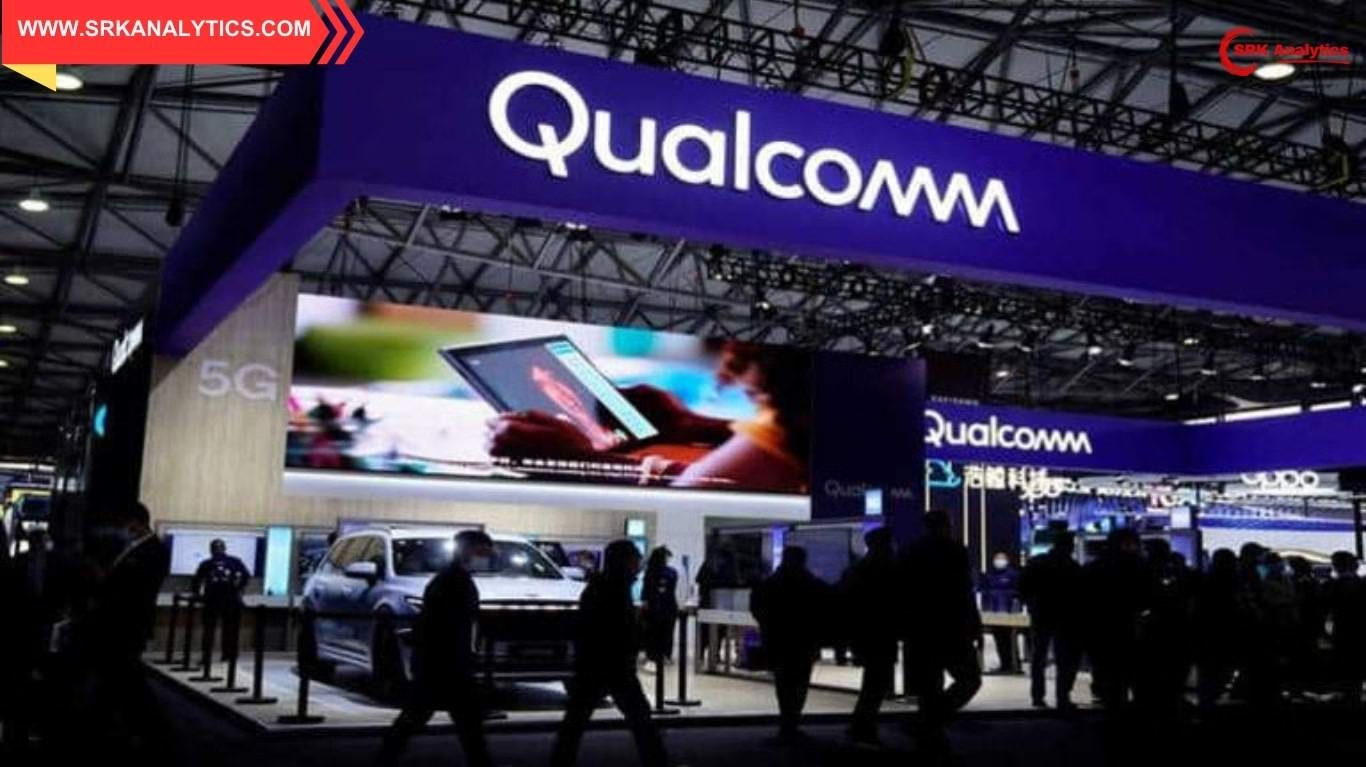
Qualcomm Technologies has announced a breakthrough in semiconductor design with the successful tape-out of its 2-nanometre (nm) chip, developed with major contributions from its engineering centers in Bengaluru, Chennai, and Hyderabad. This milestone reinforces India’s growing role in the global semiconductor ecosystem and positions the country as a hub for cutting-edge chip innovation.
Key Highlights
- 2 nm Tape-Out: Qualcomm has completed the design stage of its next-generation semiconductor using 2 nm technology.
- India’s Role: The chip was designed at Qualcomm’s India centers, which now represent the company’s largest engineering workforce outside the US.
- Government Recognition: Union Minister Ashwini Vaishnaw attended the milestone event at Qualcomm’s Bengaluru facility, underscoring India’s semiconductor ambitions.
- Global Impact: The development strengthens Qualcomm’s leadership in advanced chip design and highlights India’s contribution to global innovation.
What Tape-Out Means
Tape-out refers to the final stage of semiconductor design before manufacturing begins. It is a critical milestone that confirms the chip’s design is ready for fabrication. Qualcomm’s 2 nm tape-out signals readiness for mass production in collaboration with foundry partners.
Analysis of Qualcomm’s Breakthrough
| Factor | Traditional Expectation | Current Scenario (2026) | Outcome Observed |
|---|---|---|---|
| Chip Design | US-led innovation | India centers lead 2 nm design | India’s rising role |
| Workforce | Concentrated in US | Largest outside US in India | Global talent hub |
| Government Support | Limited involvement | Minister attends milestone | Policy backing |
| Technology Impact | Incremental improvements | 2 nm breakthrough | Industry disruption |
| Global Positioning | US-centric semiconductor hub | India emerges as key contributor | Strategic shift |
Comparative Analysis of Semiconductor Milestones
| Company | Technology Node | Location of Breakthrough | Global Impact |
|---|---|---|---|
| Qualcomm | 2 nm | India (Bengaluru, Chennai, Hyderabad) | Expands India’s role |
| TSMC | 3 nm | Taiwan | Manufacturing leadership |
| Intel | 4 nm | US | Catch-up strategy |
| Samsung | 3 nm | South Korea | Advanced foundry services |
Strategic Importance for India
- Global Recognition: India is now seen as a critical hub for semiconductor design.
- Talent Development: Qualcomm’s India centers employ thousands of engineers, showcasing the country’s skilled workforce.
- Policy Alignment: India’s semiconductor mission aims to attract global investment and foster innovation.
- Economic Impact: Advanced chip design boosts India’s position in global supply chains.
Industry and Market Reaction
- Tech Analysts: Applauded Qualcomm’s decision to leverage India’s engineering talent for advanced design.
- Government Leaders: Highlighted the milestone as proof of India’s growing semiconductor ecosystem.
- Investors: Viewed the breakthrough as strengthening Qualcomm’s competitive edge in AI, mobile, and computing markets.
Future Outlook
Qualcomm’s 2 nm chip design is expected to power next-generation devices across smartphones, AI systems, and cloud computing. India’s role in this milestone sets the stage for:
- Expansion of semiconductor R&D centers.
- Collaboration with global foundries for manufacturing.
- Integration of India into advanced technology supply chains.
- Strengthened government-industry partnerships.
Conclusion
The tape-out of Qualcomm’s 2 nm chip design from India centers marks a historic milestone in global semiconductor innovation. It highlights India’s transformation into a hub for advanced chip design, supported by government initiatives and global industry recognition. As Qualcomm prepares for mass production, India’s contribution to the semiconductor revolution is set to grow, reinforcing its position in the global technology landscape.
Disclaimer
This article is intended for informational and analytical purposes only. It summarizes publicly available updates on Qualcomm’s semiconductor breakthrough. It does not constitute investment advice, technical endorsement, or professional consultation. Readers are encouraged to verify facts independently and follow official industry updates for accurate information.