



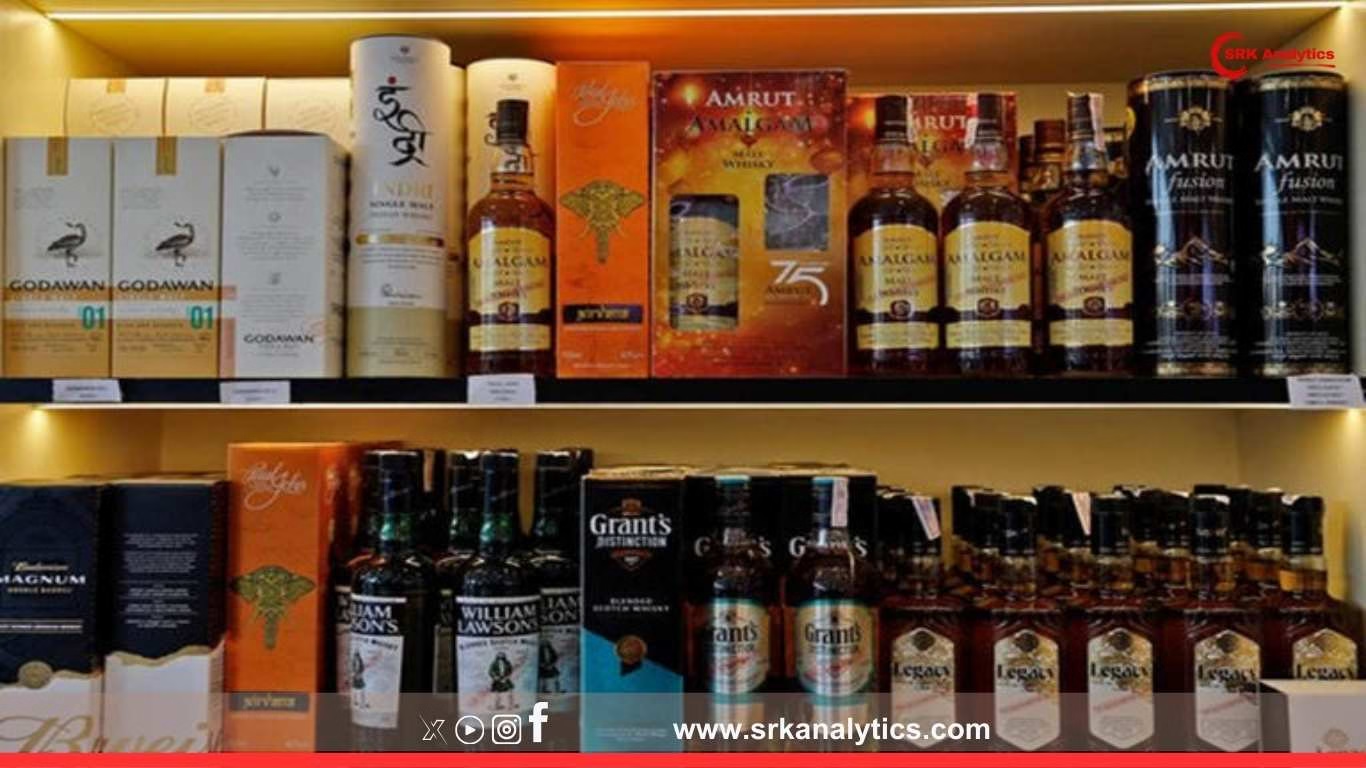
Amid sweeping changes to India’s Goods and Services Tax (GST) structure, the government has officially clarified that alcohol for human consumption will not be impacted by the revised tax rates set to take effect from September 22, 2025. Despite speculation that liquor could become costlier under the new 40% GST slab for sin goods, the Ministry of Finance and the GST Council have confirmed that alcohol remains outside the purview of GST and will continue to be taxed under state excise laws.
The clarification comes after the 56th GST Council meeting, which approved a major overhaul of the GST system, merging the previous four-tier structure into a simplified two-slab regime of 5% and 18%, with a distinct 40% slab for luxury and sin goods such as tobacco, pan masala, and high-end vehicles. However, alcohol for human consumption remains exempt from GST under Article 366(12A) of the Constitution, and its taxation continues to be governed by individual state policies.
🧭 GST Council’s Clarification on Alcohol Pricing
| Item Category | GST Applicability | Tax Authority | Status Post Sept 22, 2025 |
|---|---|---|---|
| Alcohol for Human Consumption | Not applicable | State Excise Departments | No change |
| Ethanol for Blending | GST applicable (5%) | Central Government | No change |
| Industrial Alcohol | GST applicable (18%) | Central Government | No change |
| Alcoholic Beverages (Ready-to-drink) | GST on packaging, not on liquor | Mixed jurisdiction | Marginal impact possible |
The GST Council reiterated that the new 40% slab applies only to sin goods currently under GST, such as tobacco and pan masala. Alcohol, being constitutionally excluded, will not attract GST even under the revised structure.
🔍 Why Alcohol Is Excluded from GST
Alcohol for human consumption was deliberately kept outside the GST framework during its rollout in 2017 to preserve state revenue autonomy. Excise duty on liquor is a major source of income for state governments, contributing over ₹2.5 lakh crore annually.
| Reason for Exclusion | Explanation | Impact on Taxation |
|---|---|---|
| Constitutional Provision | Article 366(12A) excludes alcohol from GST | States retain full control |
| Revenue Dependency | States rely heavily on liquor excise collections | GST inclusion would reduce state income |
| Political Sensitivity | Liquor pricing is a state-level issue | Central GST not applicable |
Any change to this framework would require a constitutional amendment and consensus among all states—an unlikely scenario in the near future.
📉 Alcohol Pricing: What Actually Determines Cost
While GST does not apply to liquor, its retail price is influenced by several other factors:
| Pricing Component | Tax Type / Authority | Typical Rate Range |
|---|---|---|
| Excise Duty | State Government | ₹50–₹500 per litre |
| VAT / Sales Tax | State Government | 5%–25% |
| Import Duty (for foreign brands) | Central Government | 100%+ |
| Packaging GST | Central GST (on bottles, labels) | 18% |
Thus, any increase in alcohol prices would stem from changes in state excise duty or VAT, not from GST revisions.
🔥 Sin Goods Under New 40% GST Slab
The 40% GST slab introduced in the latest reform applies to goods considered harmful or non-essential, such as:
| Item | Previous GST + Cess Rate | New GST Rate (Sept 22) |
|---|---|---|
| Pan Masala | 28% + 60% cess | 40% (no cess) |
| Gutkha | 28% + 204% cess | 40% |
| Cigarettes | 28% + variable cess | 40% |
| SUVs and Luxury Cars | 28% + 22% cess | 40% |
Alcohol, despite being classified as a sin good in some contexts, is not included in this GST slab due to its constitutional exemption.
🧠 Expert Commentary and Industry Sentiment
| Expert Name | Role | Comment |
|---|---|---|
| Meera Iyer | Tax Policy Analyst | “Alcohol’s exclusion from GST is a fiscal safeguard for states.” |
| Rajiv Bansal | Beverage Industry Consultant | “Price changes in liquor will depend on state excise revisions, not GST.” |
| Dr. Rakesh Sinha | Constitutional Law Expert | “Any GST inclusion for alcohol would require a constitutional amendment.” |
Industry stakeholders have welcomed the clarification, noting that it removes uncertainty ahead of the festive season, when liquor sales typically spike.
📦 State-Level Trends in Alcohol Taxation
| State | Excise Duty on IMFL (per litre) | VAT / Sales Tax (%) | Recent Price Change |
|---|---|---|---|
| Maharashtra | ₹225–₹500 | 25% | No change |
| Delhi | ₹200–₹400 | 20% | Revised in July 2025 |
| Karnataka | ₹250–₹450 | 18% | No change |
| West Bengal | ₹150–₹350 | 25% | Revised in June 2025 |
| Tamil Nadu | ₹200–₹400 | 14.5% | No change |
States may revise excise rates independently, but such changes are not linked to GST Council decisions.
📌 Conclusion
Despite the sweeping GST reforms set to roll out from September 22, alcohol for human consumption will not become costlier due to GST changes. The government has clarified that liquor remains outside the GST framework and will continue to be taxed under state excise laws. While sin goods like tobacco and pan masala will face higher GST rates, alcohol pricing will depend solely on state-level decisions. Consumers and retailers can expect stability in liquor prices unless individual states opt for excise duty hikes in the coming months.
—
Disclaimer: This article is based on publicly available government notifications and media reports as of September 4, 2025. It is intended for informational purposes only and does not constitute financial, legal, or tax advice.