









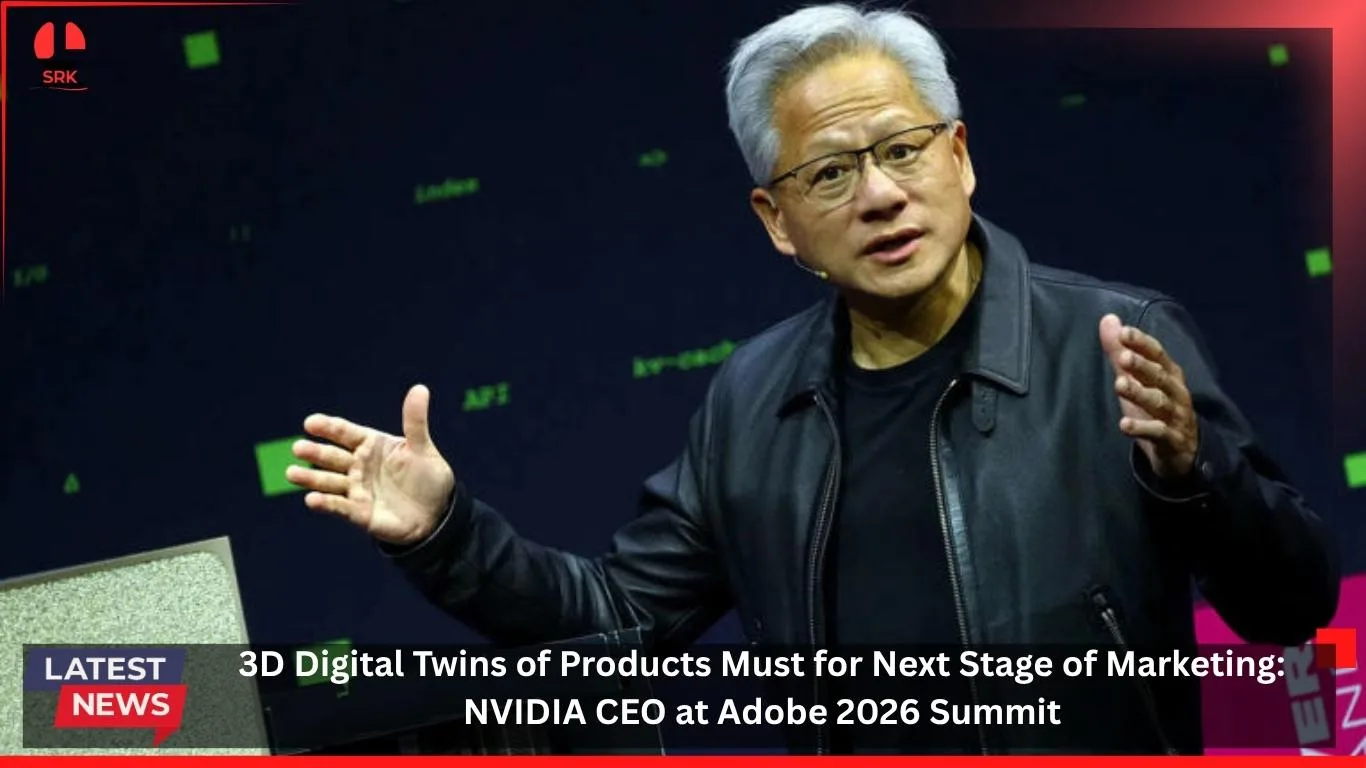
At the Adobe Summit 2026, NVIDIA CEO Jensen Huang emphasized that 3D digital twins of products are essential for the next stage of marketing, highlighting how immersive technologies will redefine consumer engagement, brand storytelling, and product visualization. His keynote underscored the convergence of artificial intelligence, 3D modeling, and cloud computing as the foundation of future marketing strategies.
Key Highlights
- Digital Twins as Marketing Tools: Huang stated that 3D replicas of products will become indispensable for brands.
- Immersive Consumer Experience: Customers will interact with lifelike digital versions before purchase.
- AI Integration: Artificial intelligence will enhance personalization and predictive marketing.
- Industry Adoption: Retail, automotive, fashion, and healthcare expected to lead adoption.
Why Digital Twins Matter
Digital twins are virtual representations of physical products, enabling real-time interaction and simulation. In marketing, they allow consumers to explore products in detail, improving decision-making and reducing returns.
| Benefit | Impact on Marketing |
|---|---|
| Immersive Visualization | Customers can view products in 3D |
| Personalization | AI tailors product experiences |
| Reduced Costs | Fewer physical prototypes needed |
| Enhanced Engagement | Interactive storytelling builds loyalty |
NVIDIA’s Vision
Huang explained that digital twins will transform marketing from static campaigns to dynamic, interactive experiences. By leveraging NVIDIA’s GPU technology and AI platforms, brands can create hyper-realistic product twins accessible across devices.
Adobe’s Role
Adobe, with its creative software ecosystem, is positioned to integrate digital twin capabilities into marketing workflows. The collaboration between Adobe and NVIDIA aims to empower marketers with tools for 3D content creation, distribution, and analytics.
Industry Applications
- Retail: Virtual stores with 3D product twins.
- Automotive: Customers test-drive cars digitally.
- Fashion: Virtual fitting rooms powered by AI.
- Healthcare: Medical devices showcased through digital replicas.
| Sector | Example Use Case |
|---|---|
| Retail | 3D furniture visualization |
| Automotive | Digital car configurators |
| Fashion | Virtual try-ons |
| Healthcare | Interactive medical device demos |
Expert Opinions
Marketing analysts believe digital twins will become as fundamental as websites and social media. By combining AI-driven insights with immersive visualization, brands can achieve deeper consumer trust and higher conversion rates.
Challenges Ahead
- Infrastructure Costs: Building 3D twins requires investment in hardware and software.
- Data Security: Protecting consumer interactions with digital twins is critical.
- Skill Gap: Marketers must adapt to new tools and workflows.
Conclusion
NVIDIA CEO Jensen Huang’s remarks at the Adobe Summit 2026 highlight a paradigm shift in marketing. With 3D digital twins set to become mainstream, brands must embrace immersive technologies to stay competitive. The fusion of AI, creativity, and digital replicas promises a future where marketing is not just seen but experienced.
Disclaimer
This article is a journalistic analysis based on public statements and industry trends. It does not constitute financial or technological advice. Readers are encouraged to follow official company updates for verified information.