




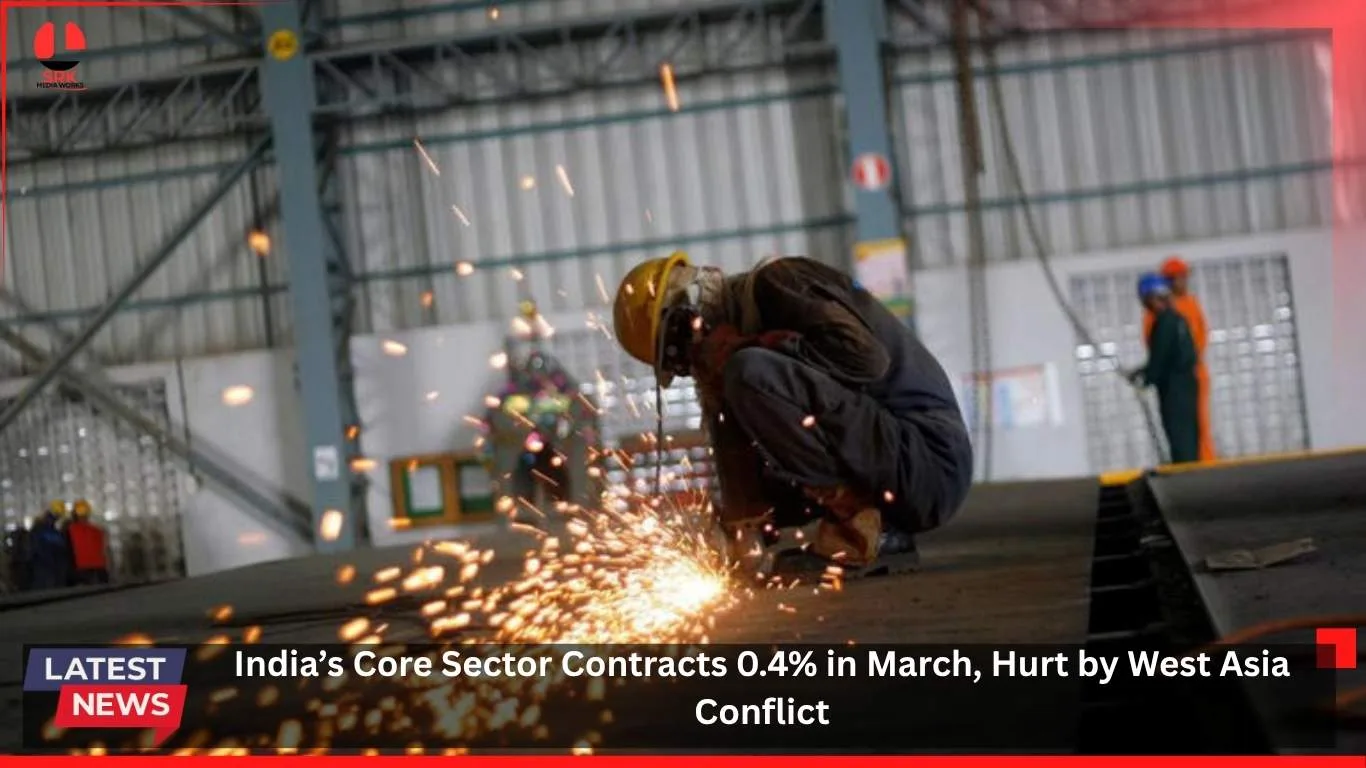
India’s core sector output contracted by 0.4% in March, marking a rare decline in the country’s industrial backbone. The contraction has been attributed largely to disruptions caused by the ongoing conflict in West Asia, which has impacted supply chains, energy imports, and global trade flows. The data underscores the vulnerability of India’s economy to external shocks, particularly in sectors heavily dependent on global linkages.
What is the Core Sector?
The core sector comprises eight key industries that form the foundation of India’s industrial economy. These include coal, crude oil, natural gas, refinery products, fertilizers, steel, cement, and electricity. Together, they account for nearly 40% of the Index of Industrial Production (IIP), making their performance a critical indicator of overall economic health.
Key Highlights:
- March 2026 saw a 0.4% contraction in core sector output.
- Conflict in West Asia disrupted energy imports and supply chains.
- Fertilizer and cement production faced significant declines.
- Electricity generation and steel output provided partial support.
Sector-Wise Performance
The contraction was uneven across sectors, with some industries showing resilience while others struggled.
| Sector | March Performance | Impact of West Asia Conflict | Outlook |
|---|---|---|---|
| Coal | Slight growth | Limited impact | Stable |
| Crude Oil | Decline | Supply disruptions | Volatile |
| Natural Gas | Decline | Import dependency | Uncertain |
| Refinery Products | Sharp fall | Oil price volatility | Weak |
| Fertilizers | Decline | Raw material shortages | Challenging |
| Steel | Moderate growth | Domestic demand support | Positive |
| Cement | Decline | Construction slowdown | Weak |
| Electricity | Growth | Domestic resilience | Strong |
Pivot Analysis of Conflict Impact
| Factor | Effect on India | Sector Most Affected | Long-Term Risk |
|---|---|---|---|
| Energy Imports | Higher costs, supply delays | Crude oil, natural gas | Inflationary pressure |
| Shipping Routes | Disruptions in Gulf | Refinery products | Trade imbalance |
| Raw Materials | Fertilizer shortages | Fertilizers, cement | Agricultural stress |
| Investor Sentiment | Increased volatility | All sectors | Slower investment |
Economic Implications
The contraction in the core sector has broader implications for India’s economy. Industrial slowdown affects employment, investment, and GDP growth. Rising energy costs due to West Asia conflict add inflationary pressures, complicating monetary policy decisions.
Key Economic Effects:
- Inflation risks due to higher energy prices.
- Slower industrial growth impacting GDP.
- Pressure on government to stabilize supply chains.
- Potential delays in infrastructure projects.
Government Response
Authorities are expected to announce measures to mitigate the impact. These may include diversifying energy imports, boosting domestic production, and incentivizing industries to adapt to supply chain disruptions.
Policy Options:
- Strategic oil reserves utilization.
- Encouraging renewable energy adoption.
- Expanding fertilizer production capacity.
- Infrastructure support for cement and steel industries.
Global Context
India’s contraction reflects broader global challenges. Many economies dependent on West Asia’s energy supplies are facing similar disruptions. The conflict has led to volatility in oil prices, shipping delays, and uncertainty in global trade.
| Country | Impact | Response |
|---|---|---|
| India | Core sector contraction | Diversify imports |
| China | Manufacturing slowdown | Strategic reserves |
| EU | Energy crisis | Renewable push |
| US | Oil price volatility | Domestic production boost |
Historical Context
India’s core sector has generally shown resilience, but external shocks such as wars, pandemics, or global recessions have historically caused temporary contractions. The current decline echoes past episodes where geopolitical tensions disrupted supply chains.
Possible Outcomes
- Quick Recovery: Conflict eases, supply chains stabilize, core sector rebounds.
- Prolonged Slowdown: Continued disruptions lead to sustained contraction.
- Structural Shift: India accelerates renewable energy and domestic production.
- Inflationary Spiral: Rising costs impact consumers and businesses.
Conclusion
India’s core sector contraction of 0.4% in March highlights the economic risks posed by global conflicts. The West Asia crisis has disrupted energy imports and supply chains, affecting key industries. While some sectors like electricity and steel showed resilience, others such as fertilizers and refinery products struggled. The government’s response and global developments will determine whether this contraction is a temporary setback or the beginning of a prolonged slowdown.
Disclaimer
This article is an analytical overview of India’s core sector performance in March 2026 and the impact of the West Asia conflict. It is based on current developments and historical context, and does not represent official government positions. Readers should follow authoritative updates for the latest information on India’s industrial and economic outlook.