




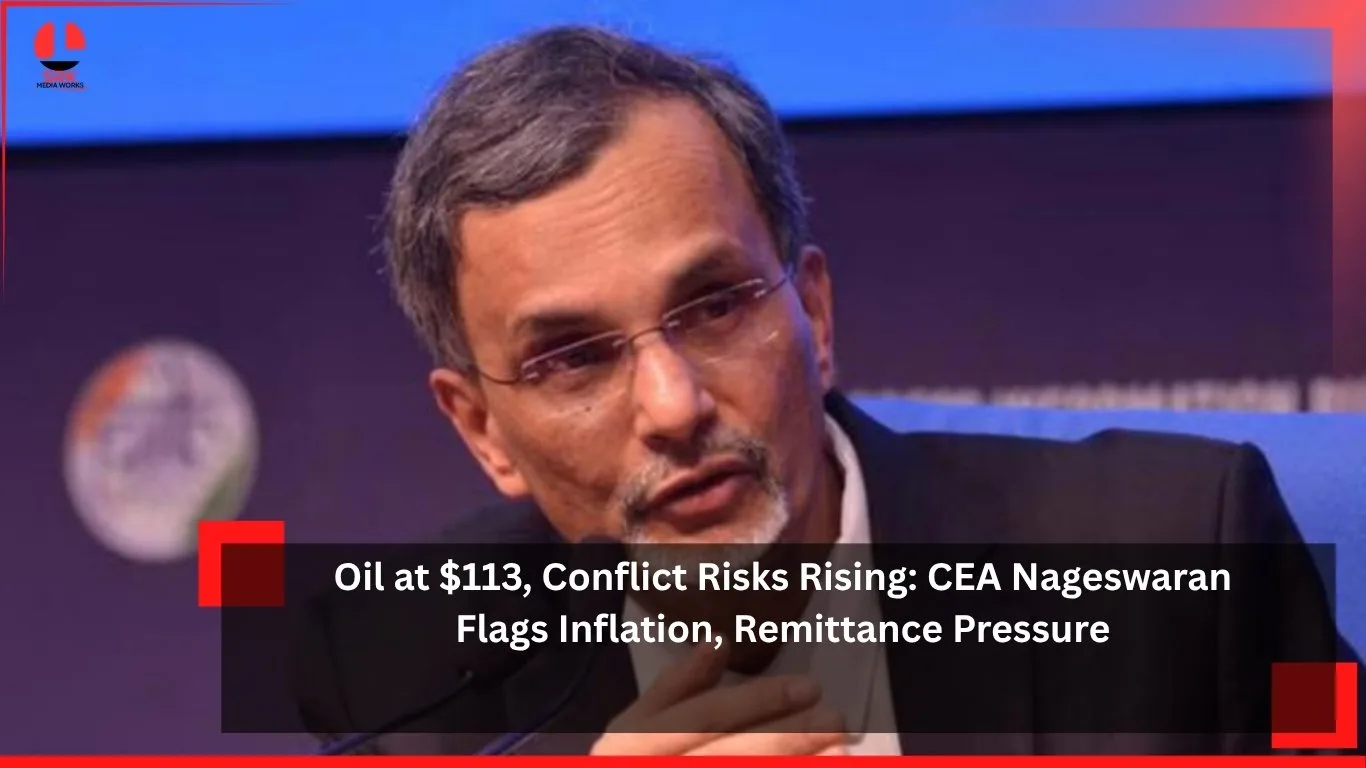
India’s Chief Economic Advisor (CEA) V. Anantha Nageswaran has cautioned that crude oil prices hovering around $113 per barrel, coupled with escalating geopolitical conflicts, could intensify inflationary pressures and strain remittance flows. His remarks highlight the vulnerabilities of India’s economy to external shocks, particularly in energy imports and overseas worker remittances, which are critical for foreign exchange stability.
Key Concerns Raised
- Oil Prices: At $113 per barrel, India’s import bill is rising sharply, worsening the current account deficit.
- Inflation Risks: Higher fuel costs feed into transportation, food, and manufacturing, raising consumer inflation.
- Conflict Impact: Geopolitical tensions in West Asia and Eastern Europe threaten supply chains and insurance costs.
- Remittance Pressure: Millions of Indian workers in conflict-prone regions face uncertainty, potentially reducing inflows.
- Policy Challenge: Balancing inflation control with growth remains a priority for the Reserve Bank of India (RBI).
Comparative Overview of Economic Pressures
| Factor | Impact on India | Short-Term Risk | Long-Term Risk |
|---|---|---|---|
| Oil Prices | Higher import bill | Inflation spike | Fiscal strain |
| Global Conflicts | Supply chain disruption | Trade slowdown | Strategic vulnerability |
| Remittance Flows | Reduced inflows | FX pressure | Lower household income |
| Inflation | Rising consumer prices | Policy tightening | Growth slowdown |
This overview shows how multiple external factors converge to challenge India’s economic stability.
Pivot Analysis: Oil Stability vs. Volatility
| Scenario | Economic Impact | Policy Impact | Social Impact |
|---|---|---|---|
| Oil stabilizes | Lower import costs | Easier monetary policy | Relief for households |
| Oil volatile | Rising deficits | RBI tightening | Higher living costs |
The pivot analysis highlights how oil price volatility directly influences India’s inflation and policy decisions.
Broader Context
- Global Energy Market: Supply disruptions and geopolitical risks are keeping oil prices elevated.
- India’s Dependence: With over 80% of crude imported, India remains highly vulnerable to price shocks.
- Remittance Role: India is the world’s largest recipient of remittances, vital for household consumption and FX reserves.
- Inflation Outlook: Rising costs could push inflation beyond RBI’s comfort zone, complicating rate decisions.
Reactions
- Industry Experts: Warn that prolonged high oil prices could derail India’s growth momentum.
- Policy Analysts: Stress the need for diversification of energy sources and stronger FX management.
- Households: Already feeling the pinch of rising fuel and food costs.
- Global Observers: Note India’s balancing act between growth, inflation, and external vulnerabilities.
Conclusion
CEA Nageswaran’s warning underscores the fragility of India’s economic outlook amid oil at $113 and rising conflict risks. Inflationary pressures, remittance uncertainties, and global supply chain disruptions present a complex challenge for policymakers. The path forward requires careful management of monetary policy, diversification of energy sources, and safeguarding remittance flows to ensure resilience against external shocks.
Disclaimer
This article is a journalistic analysis created for informational purposes. It does not represent official government statements or financial disclosures. Readers are encouraged to consult multiple perspectives for updates. The content is intended for educational and news reporting use only, without endorsing any political party or institution.