





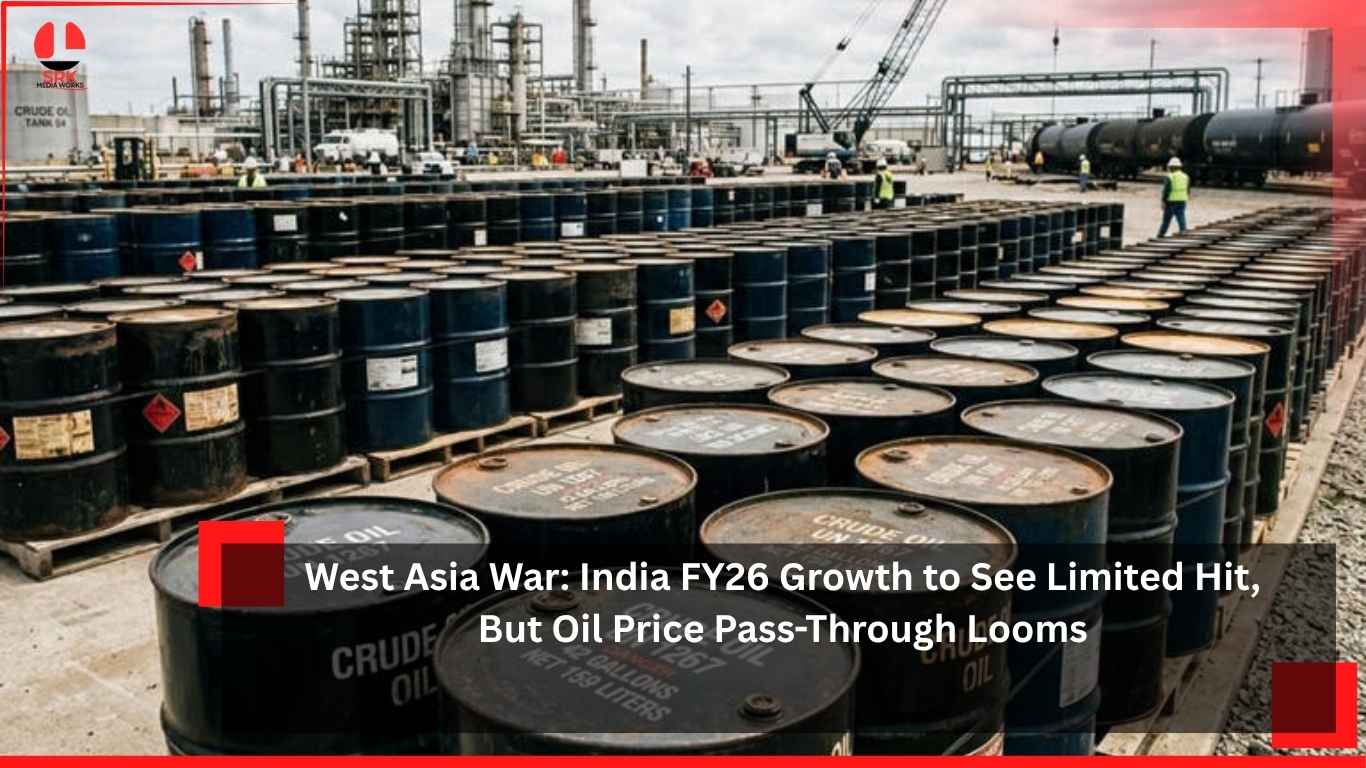
India’s economic outlook for FY26 is under close watch as the ongoing West Asia war raises concerns about global stability, energy markets, and trade flows. While analysts suggest that India’s overall growth trajectory will face only a limited impact, the oil price pass-through effect remains a looming challenge that could influence inflation, fiscal balances, and consumer sentiment.
Limited Growth Impact
Despite geopolitical tensions, India’s economy is expected to remain resilient. Strong domestic demand, government-led infrastructure spending, and robust services exports are likely to cushion the impact of external shocks.
Key Growth Drivers:
- Infrastructure push under government programs.
- Resilient IT and services exports despite global uncertainty.
- Domestic consumption supported by rising incomes.
- Agriculture sector stability with favorable monsoon forecasts.
Oil Price Pass-Through Risk
The biggest risk for India lies in the oil price pass-through. As a major importer of crude oil, India is vulnerable to price spikes triggered by geopolitical instability in West Asia.
| Factor | FY25 | FY26 Projection | Impact |
|---|---|---|---|
| Average Crude Price (per barrel) | $78 | $95–100 | Inflationary pressure |
| Import Bill | $120 billion | $140 billion+ | Higher fiscal burden |
| CPI Inflation | 4.8% | 5.5–6% | Consumer impact |
| Fiscal Deficit | 5.8% of GDP | 6%+ | Budgetary stress |
Sectoral Impact Analysis
Different sectors of the Indian economy will experience varying degrees of impact from the West Asia conflict.
| Sector | Impact | Outlook |
|---|---|---|
| Energy | High | Rising import costs, pressure on subsidies |
| Manufacturing | Moderate | Input cost inflation |
| Services | Low | Continued resilience in IT exports |
| Agriculture | Low | Stable due to domestic factors |
| Infrastructure | Positive | Government spending to offset external shocks |
Investor Sentiment
Equity markets have shown volatility in response to global developments, but India remains a preferred destination for long-term investors. The limited direct impact of the West Asia war on growth has reassured many, though oil-linked inflation risks remain a concern.
Investor Takeaways:
- Short-term volatility expected in energy and transport stocks.
- Defensive sectors like FMCG and healthcare may outperform.
- Infrastructure and capital goods remain attractive due to government spending.
- Currency stability will depend on oil import costs and foreign inflows.
Comparative Global Context
India’s resilience stands out compared to other emerging markets that are more directly exposed to West Asia.
| Country | Growth Outlook FY26 | Oil Dependency | Risk Level |
|---|---|---|---|
| India | 6.5–6.7% | High | Moderate |
| China | 4.8–5% | Moderate | Moderate |
| Turkey | 3.5–4% | High | High |
| Brazil | 2.5–3% | Low | Low |
Policy Measures to Mitigate Risks
The Indian government and Reserve Bank of India (RBI) are expected to take proactive steps to manage the fallout:
- Strategic oil reserves utilization to stabilize supply.
- Diversification of energy imports to reduce dependency.
- Monetary policy adjustments to control inflation.
- Targeted subsidies to protect vulnerable households.
FY26 Growth Projection
Despite external risks, India’s GDP growth is projected to remain strong, supported by domestic demand and structural reforms.
| Indicator | FY25 | FY26 Projection |
|---|---|---|
| GDP Growth | 6.8% | 6.5–6.7% |
| Inflation | 4.8% | 5.5–6% |
| Fiscal Deficit | 5.8% | 6%+ |
| Current Account Deficit | 1.5% | 2%+ |
Conclusion
The West Asia war presents challenges for India, particularly through the channel of rising oil prices. However, the country’s strong domestic fundamentals, government spending, and resilient services sector are expected to limit the overall impact on FY26 growth. The key risk remains inflationary pressures from energy imports, which policymakers will need to manage carefully to sustain momentum.
Disclaimer
This article is based on economic analysis and publicly available information. It is intended for informational purposes only and should not be considered financial or investment advice. Readers are encouraged to consult certified financial experts before making decisions.