









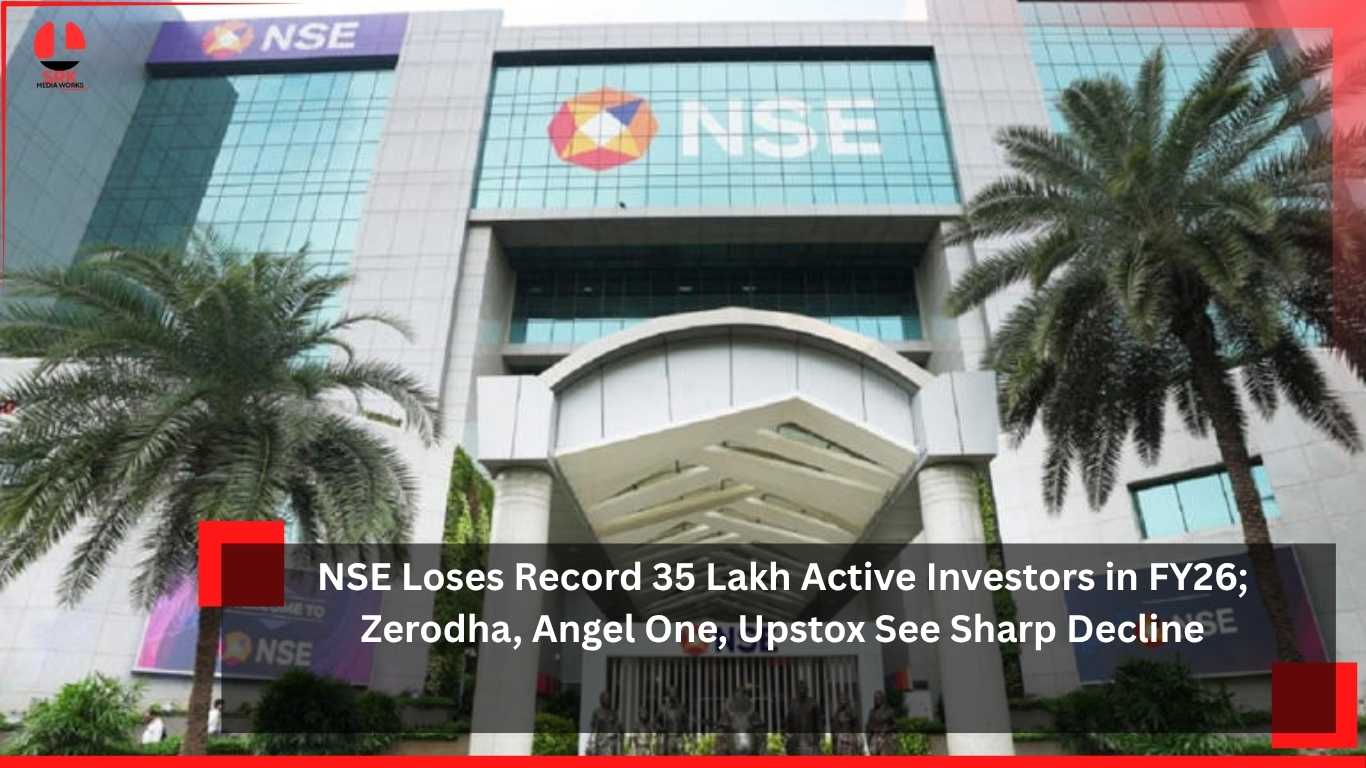
India’s stock market witnessed a dramatic shift in FY26 as the National Stock Exchange (NSE) reported a record loss of nearly 35 lakh active investors. This decline has raised concerns about retail participation in equities, especially as leading brokerage firms such as Zerodha, Angel One, and Upstox recorded sharp drops in their active client base.
The Scale of Investor Exit
The NSE, which has long been the backbone of India’s equity markets, saw its active investor count shrink significantly. This marks one of the largest declines in recent years, signaling a possible shift in investor sentiment.
Several factors contributed to this downturn:
- Market volatility driven by global economic uncertainty.
- Profit booking after years of strong retail inflows.
- Regulatory tightening and compliance costs.
- Rise of alternative investment avenues such as mutual funds, bonds, and digital assets.
Brokerage Firms Hit Hard
The decline in active investors was most visible in leading discount brokerages that had previously fueled retail participation.
| Brokerage Firm | Active Clients FY25 | Active Clients FY26 | Decline (%) |
|---|---|---|---|
| Zerodha | 1.20 crore | 1.05 crore | -12.5% |
| Angel One | 90 lakh | 78 lakh | -13.3% |
| Upstox | 70 lakh | 61 lakh | -12.8% |
| Others | 1.50 crore | 1.36 crore | -9.3% |
This data highlights that even the most dominant players in the brokerage industry were unable to escape the broader trend of declining investor activity.
Investor Behavior Analysis
The sharp decline in active investors reflects changing retail behavior. Many traders who entered the market during the pandemic years, attracted by easy access to trading apps and bullish momentum, have now exited.
Key Observations:
- Short-term traders faced heavy losses due to volatility.
- New investors lacked risk management strategies.
- Shift to passive investing through mutual funds and ETFs.
- Increased awareness of risks associated with leveraged trading.
Impact on NSE
The NSE’s record loss of active investors has implications for liquidity and market depth. While institutional investors continue to dominate, retail participation has historically provided resilience and diversity to the market.
| Factor | FY25 | FY26 | Change |
|---|---|---|---|
| Active Investors | 7.5 crore | 7.15 crore | -35 lakh |
| Retail Share in Turnover | 23% | 19% | -4% |
| Average Daily Volume | ₹75,000 crore | ₹68,000 crore | -9.3% |
Industry Reactions
Market experts believe this decline is cyclical and could reverse once volatility stabilizes. Brokerages are expected to:
- Introduce educational initiatives to retain retail investors.
- Expand into wealth management services.
- Focus on long-term investment products rather than short-term trading.
Broader Economic Context
The decline in active investors coincides with:
- Global interest rate hikes impacting liquidity.
- Domestic inflationary pressures reducing disposable income.
- Geopolitical tensions affecting investor confidence.
Despite these challenges, India’s equity market fundamentals remain strong, with corporate earnings showing resilience.
Comparative Analysis of Investor Trends
| Segment | FY25 Participation | FY26 Participation | Trend |
|---|---|---|---|
| Retail Traders | High | Declining | Negative |
| Mutual Fund Investors | Moderate | Rising | Positive |
| Institutional Investors | Stable | Stable | Neutral |
| Alternative Assets (Crypto, Bonds) | Low | Increasing | Positive |
Future Outlook
While FY26 has been challenging, analysts expect retail participation to recover gradually. The rise of systematic investment plans (SIPs) and digital wealth platforms could attract investors back into equities.
Brokerages like Zerodha, Angel One, and Upstox are likely to diversify their offerings, focusing on advisory services, long-term investment tools, and financial literacy programs.
Conclusion
The record loss of 35 lakh active investors in FY26 marks a turning point for India’s equity markets. While the decline highlights the risks of short-term trading and market volatility, it also opens opportunities for brokerages and regulators to strengthen investor education and promote sustainable participation.
The coming years will determine whether retail investors return in large numbers or shift permanently toward alternative investment avenues.
Disclaimer
This article is based on market data and industry analysis. It is intended for informational purposes only and should not be considered financial advice. Readers are encouraged to consult certified financial advisors before making investment decisions.


