





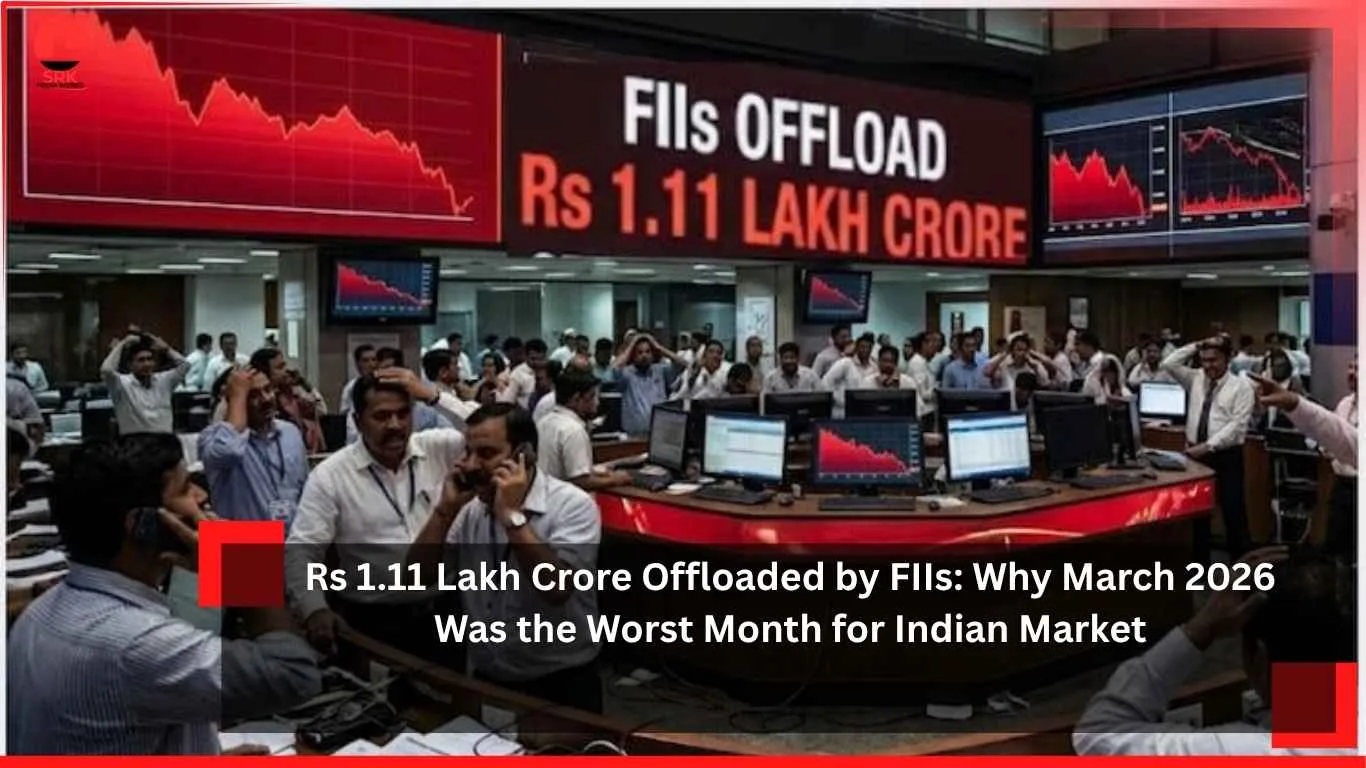
March 2026 will be remembered as one of the darkest months in the history of Indian equity markets. Foreign Institutional Investors (FIIs) offloaded a staggering ₹1.11 lakh crore worth of shares, triggering a sharp sell-off across sectors and wiping out trillions in market capitalization. The exodus of foreign capital not only rattled investor confidence but also exposed vulnerabilities in India’s financial ecosystem.
Background of the Sell-Off
FIIs have traditionally played a crucial role in shaping the trajectory of Indian markets. Their inflows often fuel rallies, while outflows trigger corrections. In March 2026, however, the scale of selling was unprecedented.
- Total FII outflow: ₹1.11 lakh crore
- Impact: Nifty and Sensex saw double-digit declines in a single month
- Reason: Combination of global uncertainty, rising US bond yields, geopolitical tensions, and domestic policy concerns
Key Reasons Behind the FII Exodus
- Global Interest Rate Hikes: The US Federal Reserve raised rates aggressively, making American bonds more attractive than emerging market equities.
- Geopolitical Tensions: Rising instability in Asia and Europe led investors to seek safer assets.
- Domestic Policy Concerns: Delays in key reforms and fiscal deficit worries added to investor anxiety.
- Currency Depreciation: The Indian rupee weakened sharply, eroding returns for foreign investors.
- Profit Booking: After years of strong gains, FIIs booked profits amid global uncertainty.
Sector-Wise Impact
| Sector | FII Outflow (₹ Crore) | Market Impact |
|---|---|---|
| Banking & Finance | 35,000 | Sharp fall in PSU and private banks |
| IT & Technology | 20,000 | Weakness due to global slowdown fears |
| Energy & Infra | 15,000 | Oil price volatility hurt sentiment |
| FMCG & Consumer | 10,000 | Defensive stocks also saw selling |
| Others | 31,000 | Broad-based liquidation |
The banking sector bore the brunt of the sell-off, while even traditionally defensive sectors like FMCG were not spared.
Comparative Analysis of FII Activity
| Month/Year | FII Net Flow (₹ Crore) | Market Trend |
|---|---|---|
| Jan 2026 | +25,000 | Bullish |
| Feb 2026 | +12,000 | Mild gains |
| Mar 2026 | -1,11,000 | Worst crash in years |
| Apr 2026 (till date) | -8,000 | Continued weakness |
This comparison highlights how March 2026 was an anomaly, with the largest single-month outflow in recent history.
Impact on Indian Investors
- Retail Investors: Many saw their portfolios shrink by 20–30% in a matter of weeks.
- Mutual Funds: Domestic institutions tried to absorb some selling but struggled against the sheer scale.
- Wealth Erosion: Market capitalization dropped by over ₹15 lakh crore.
- Investor Sentiment: Fear and panic dominated trading floors, with record withdrawals from equity mutual funds.
Government and Regulatory Response
The Indian government and regulators took several steps to stabilize markets:
- Assurances on Fiscal Discipline: Reaffirmed commitment to reducing fiscal deficit.
- Policy Announcements: Promised faster implementation of reforms in infrastructure and manufacturing.
- RBI Intervention: Took measures to stabilize the rupee and ensure liquidity in the system.
Despite these efforts, investor confidence remained fragile.
Lessons from March 2026
- Dependence on FIIs: Heavy reliance on foreign capital makes Indian markets vulnerable.
- Need for Domestic Depth: Strengthening domestic institutional participation is crucial.
- Currency Stability: Managing rupee volatility is essential to attract long-term investors.
- Policy Consistency: Clear and consistent reforms can reduce uncertainty.
Possible Future Scenarios
- Recovery Phase: If global interest rates stabilize, FIIs may return gradually.
- Continued Volatility: Persistent geopolitical tensions could keep markets under pressure.
- Domestic Resilience: Strong earnings and reforms could help Indian investors offset foreign selling.
Conclusion
March 2026 stands out as the worst month for Indian markets due to the unprecedented ₹1.11 lakh crore sell-off by FIIs. The event underscores the fragility of emerging markets when faced with global shocks and highlights the urgent need for India to deepen its domestic investor base. While short-term pain is inevitable, long-term resilience will depend on reforms, currency stability, and consistent policy measures.
Disclaimer
This article is based on market data, financial analysis, and publicly available information. It is intended for informational purposes only and does not constitute financial or investment advice. Readers should consult financial experts before making investment decisions, as market conditions are subject to rapid change.