



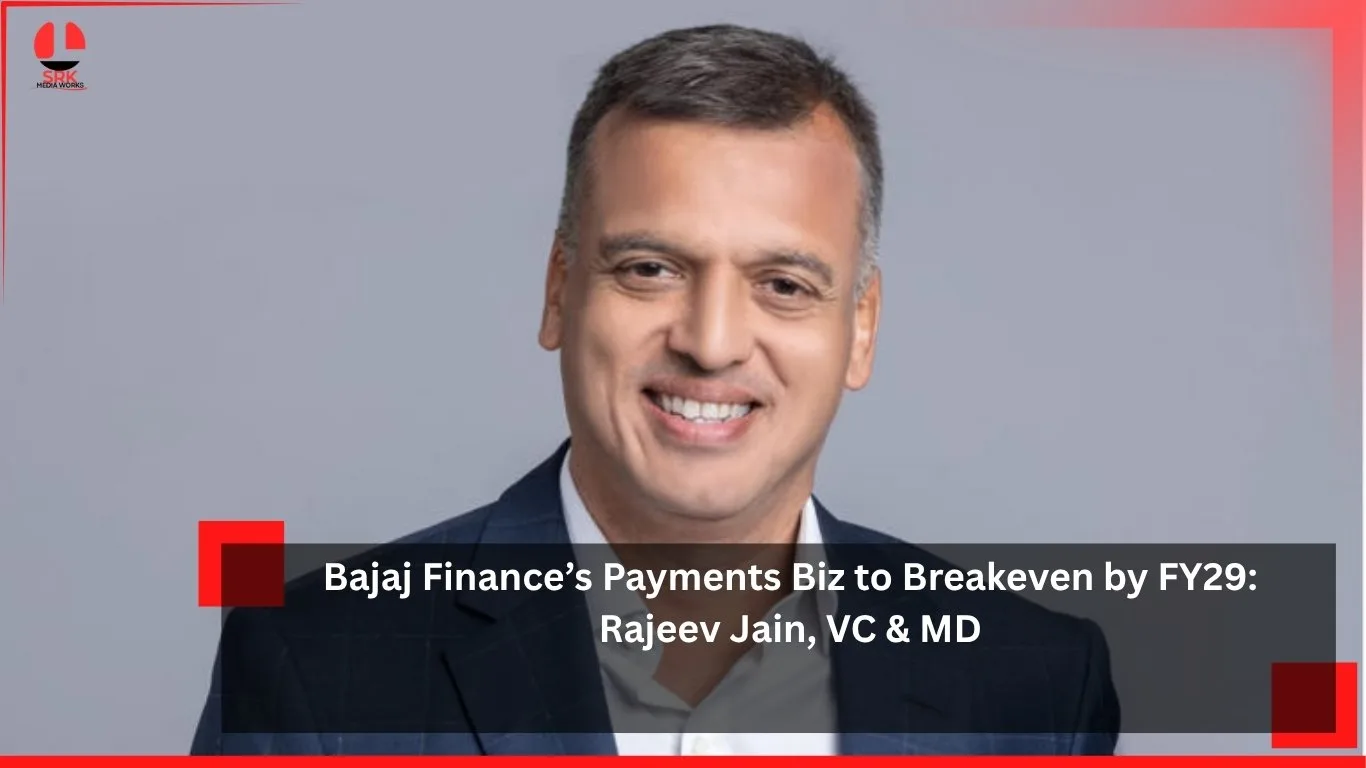
In a major strategic update, Rajeev Jain, Vice Chairman and Managing Director of Bajaj Finance, has announced that the company’s payments business is expected to breakeven by FY29. This projection underscores Bajaj Finance’s long-term vision to expand beyond lending into digital payments, positioning itself as a formidable player in India’s rapidly evolving fintech ecosystem.
Key Highlights
- Breakeven Timeline: Payments vertical expected to achieve breakeven by FY29.
- Strategic Focus: Expansion into digital payments, wallets, and merchant solutions.
- Customer Base: Leveraging Bajaj Finance’s 80+ million customers for adoption.
- Revenue Model: Focus on transaction fees, merchant services, and cross-selling financial products.
- Digital Push: Integration with UPI, QR-based payments, and mobile-first solutions.
Why This Matters
- Diversification: Bajaj Finance is traditionally known for consumer lending; payments expansion diversifies revenue streams.
- Fintech Competition: The move positions Bajaj against giants like Paytm, PhonePe, and Google Pay.
- Investor Confidence: Clear breakeven timeline reassures stakeholders about profitability.
- Digital India Alignment: Supports government’s push for cashless economy.
Comparative Analysis of Payment Players in India
| Company | Strengths | Weaknesses | Breakeven/Profitability Outlook |
|---|---|---|---|
| Bajaj Finance | Large customer base, strong lending ecosystem | Late entrant in payments | FY29 breakeven target |
| Paytm | Wide merchant network, brand recognition | Struggles with profitability | Yet to achieve consistent profits |
| PhonePe | Strong UPI presence, Walmart backing | Limited lending ecosystem | Expanding revenue streams |
| Google Pay | Tech integration, global brand | No lending arm | Focus on transaction growth |
This comparison shows Bajaj Finance’s unique advantage in combining lending with payments.
Pivot Analysis: Impact of Payments Expansion
| Stakeholder | Short-Term Impact | Long-Term Consequence |
|---|---|---|
| Bajaj Finance | Increased investment costs | Diversified revenue streams |
| Customers | Access to integrated financial services | Enhanced digital experience |
| Merchants | New payment solutions | Stronger ecosystem partnerships |
| Investors | Initial margin pressure | Sustainable profitability by FY29 |
Rajeev Jain’s Strategy
Jain emphasized that the payments business is not a short-term play but a strategic investment in India’s digital future. By FY29, Bajaj Finance expects transaction volumes to scale significantly, supported by merchant adoption and customer loyalty.
He highlighted that the company’s lending expertise will complement its payments business, enabling cross-selling of loans, insurance, and investment products through digital platforms.
Challenges Ahead
- Competition: Established fintech players dominate the market.
- Regulatory Oversight: RBI’s evolving guidelines on digital payments could impact operations.
- Technology Costs: High investment in infrastructure and cybersecurity.
- Customer Acquisition: Convincing users to shift from entrenched platforms.
Possible Outcomes
- Successful Breakeven: Bajaj Finance achieves FY29 target, becoming a major fintech player.
- Delayed Profitability: Market competition slows adoption, pushing breakeven further.
- Strategic Partnerships: Collaborations with banks and tech firms accelerate growth.
- Market Leadership: Bajaj leverages lending dominance to outpace rivals in payments.
Conclusion
The announcement that Bajaj Finance’s payments business will breakeven by FY29, as stated by VC & MD Rajeev Jain, marks a pivotal moment in the company’s journey. With a strong customer base, integrated financial ecosystem, and clear strategic roadmap, Bajaj Finance is poised to challenge established fintech players and carve out a significant share of India’s digital payments market.
While challenges remain, the long-term vision reflects confidence in India’s digital economy and Bajaj Finance’s ability to adapt, innovate, and grow.
Disclaimer: This article is based on reported corporate statements and market analysis. It does not represent official financial advice or investment recommendations. Readers should consult professional advisors before making financial decisions.