




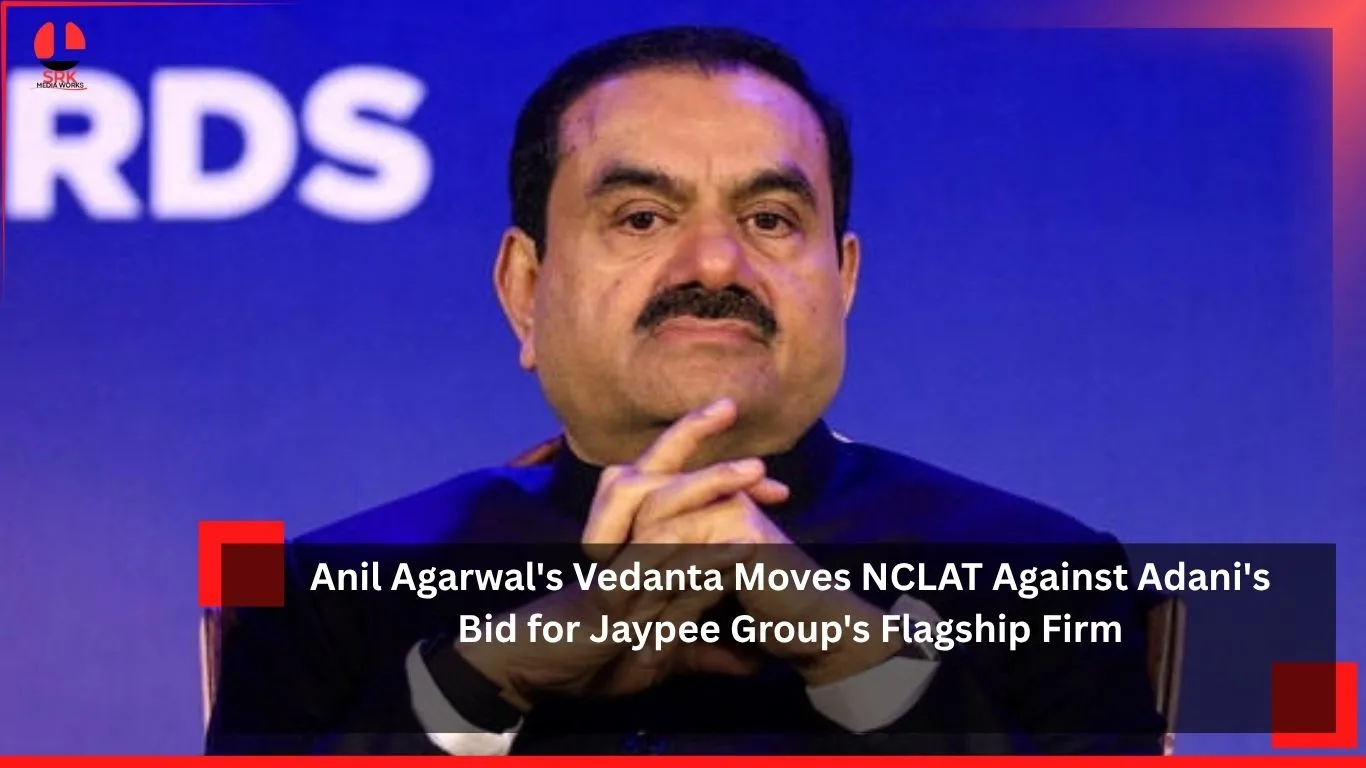
In a dramatic twist to India’s corporate battle for distressed assets, Anil Agarwal’s Vedanta Group has approached the National Company Law Appellate Tribunal (NCLAT) challenging Adani Group’s bid for the Jaypee Group’s flagship firm, Jaiprakash Associates Limited (JAL). This move intensifies the competition between two of India’s largest conglomerates, each vying for control of strategic infrastructure and cement assets.
The Legal Challenge
Vedanta’s petition argues that Adani’s bid for JAL violates certain procedural norms under the Insolvency and Bankruptcy Code (IBC). The company claims that the resolution process favored Adani unfairly, sidelining other bidders, including Vedanta. By moving NCLAT, Vedanta seeks to overturn the approval granted to Adani’s offer and reopen the bidding process.
Why This Matters
- Corporate Rivalry: The battle pits Vedanta against Adani, two giants with diverse portfolios.
- Infrastructure Stakes: JAL’s cement and construction assets are crucial for India’s infrastructure growth.
- Legal Precedent: The case could set new benchmarks for insolvency proceedings under IBC.
- Investor Confidence: The outcome will influence how global investors view India’s bankruptcy resolution framework.
Comparative Analysis of Bids
| Company | Bid Strengths | Bid Weaknesses | Strategic Interest |
|---|---|---|---|
| Adani Group | Financial muscle, diversified portfolio | Alleged procedural favoritism | Cement expansion, infrastructure dominance |
| Vedanta Group | Strong mining & resources base | Claims of unfair treatment | Diversification into cement & construction |
| Other Bidders | Regional presence | Limited financial backing | Niche market opportunities |
This comparison highlights why Vedanta is contesting Adani’s dominance in the bidding process.
Pivot Analysis: Impact of NCLAT Case
| Stakeholder | Short-Term Impact | Long-Term Consequence |
|---|---|---|
| Vedanta | Legal visibility, possible delay | Strengthened position if successful |
| Adani Group | Temporary uncertainty | Cement sector dominance if upheld |
| Jaypee Group | Prolonged resolution | Final exit from debt crisis |
| Investors | Market volatility | Greater clarity on IBC framework |
Jaypee Group’s Debt Crisis
The Jaypee Group, once a leading infrastructure conglomerate, has faced mounting debt due to stalled projects and financial mismanagement. Its cement division and real estate assets have been at the center of insolvency proceedings for years. The resolution of JAL is seen as critical to restoring confidence in India’s insolvency process.
Vedanta’s Strategy
Vedanta’s move to NCLAT reflects its ambition to diversify beyond mining and oil into cement and infrastructure. By challenging Adani’s bid, Vedanta aims to secure assets that would strengthen its presence in India’s construction sector.
Adani’s Expansion Drive
Adani Group has aggressively expanded into cement, ports, power, and infrastructure. Winning JAL would further cement its dominance in India’s building materials sector, complementing its recent acquisitions in cement manufacturing.
Possible Outcomes
- NCLAT Overturns Bid: The tribunal may reopen bidding, giving Vedanta another chance.
- Adani Bid Upheld: Adani secures JAL, reinforcing its cement sector dominance.
- Settlement: Vedanta and Adani may reach a compromise, avoiding prolonged litigation.
- Prolonged Legal Battle: The case drags on, delaying resolution for Jaypee Group creditors.
Conclusion
The announcement that Vedanta has moved NCLAT against Adani’s bid for Jaypee Group’s flagship firm underscores the intensity of India’s corporate battles over distressed assets. With billions at stake, the case will not only decide the future of JAL but also shape the contours of India’s insolvency resolution framework.
As the tribunal hears arguments, the outcome will be closely watched by investors, policymakers, and industry leaders, aware that the verdict could redefine corporate competition in India’s infrastructure and cement sectors.
Disclaimer: This article is based on reported corporate developments and legal proceedings. It does not represent official court rulings or company statements. The content is intended for informational purposes only and should not be interpreted as definitive legal or financial advice.