









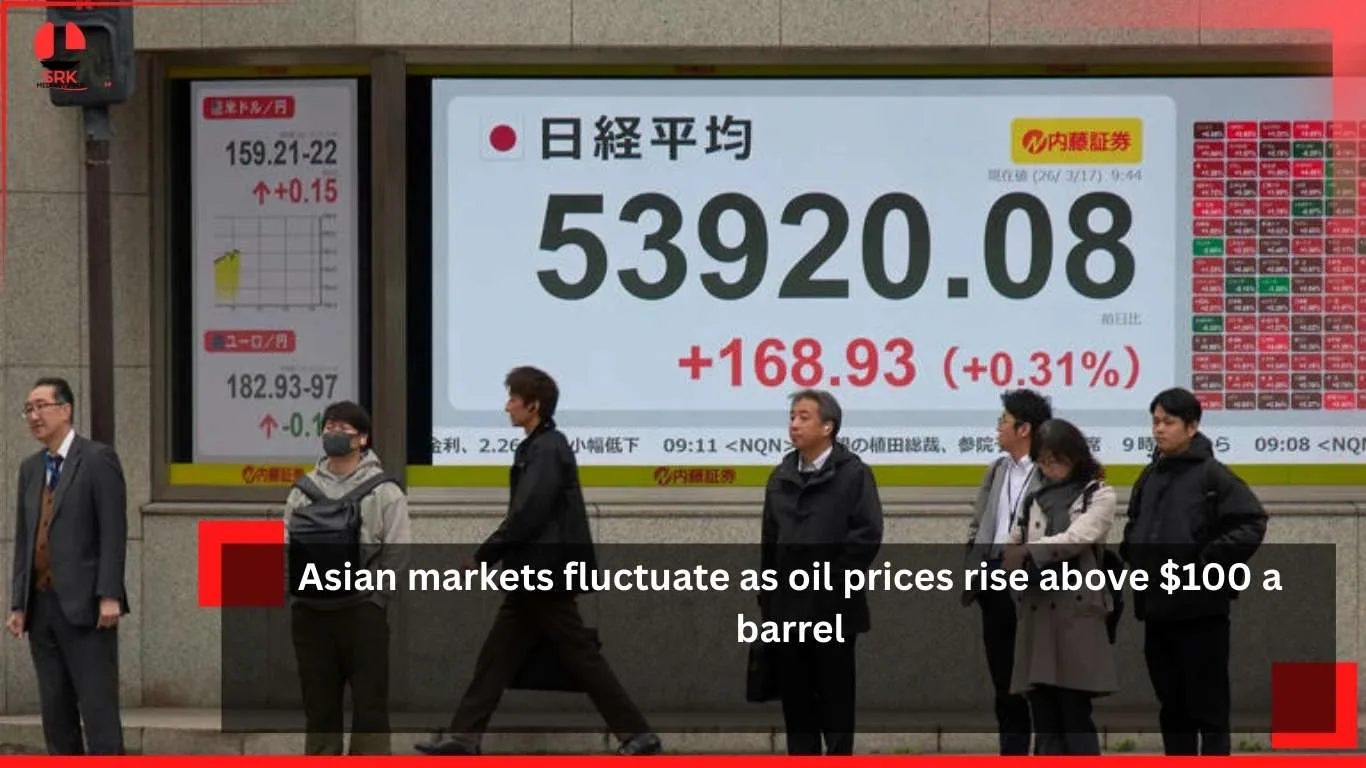
Global financial markets are facing renewed volatility as Asian indices fluctuated sharply after oil prices surged past $100 per barrel. The sudden rise in crude prices has reignited concerns about inflation, energy security, and economic growth across the region. Investors are closely monitoring the situation, with energy-dependent economies in Asia particularly vulnerable to the impact of higher fuel costs.
The Immediate Market Reaction
The surge in oil prices triggered mixed responses across Asian stock exchanges:
- Japan’s Nikkei saw declines in energy-intensive sectors such as manufacturing and transport.
- Hong Kong’s Hang Seng fluctuated as investors weighed the benefits for oil producers against risks for consumer-driven industries.
- India’s Sensex and Nifty faced downward pressure due to concerns over rising import bills and inflationary trends.
- China’s Shanghai Composite remained relatively stable, supported by government interventions and domestic energy reserves.
Why Oil Prices Matter for Asian Economies
Asia is home to some of the world’s largest oil-importing nations. A surge above $100 per barrel has wide-ranging consequences:
- Inflationary Pressures: Higher fuel costs ripple across transportation, manufacturing, and consumer goods.
- Fiscal Strain: Governments face increased subsidy burdens to shield consumers.
- Trade Deficits: Rising import bills worsen current account balances.
- Currency Volatility: Pressure on local currencies due to higher foreign exchange outflows.
Comparative Analysis of Market Impact
| Country/Region | Market Reaction | Key Concern |
|---|---|---|
| Japan (Nikkei) | Decline in manufacturing stocks | Rising energy costs |
| Hong Kong (Hang Seng) | Mixed performance | Balancing oil producers vs. consumer sectors |
| India (Sensex/Nifty) | Downward pressure | Inflation, import bills |
| China (Shanghai Composite) | Stable | Government reserves, policy support |
| South Korea (KOSPI) | Volatile | Export competitiveness under threat |
Pivot Analysis: Short-Term vs. Long-Term Impact
| Dimension | Short-Term Impact | Long-Term Impact |
|---|---|---|
| Inflation | Immediate rise in consumer prices | Structural inflation if oil remains high |
| Fiscal Stability | Higher subsidies, budget strain | Need for energy diversification |
| Trade Balance | Worsening deficits | Push toward renewable energy investments |
| Currency Stability | Depreciation pressures | Potential policy-driven stabilization |
| Industrial Growth | Slower output | Transition to cleaner energy sources |
Broader Implications for Asia
The oil surge carries significant implications for the region:
- Economic Growth Risks: Rising costs may slow industrial output and consumer demand.
- Energy Security Concerns: Heavy reliance on imports exposes economies to global volatility.
- Policy Challenges: Governments must balance subsidies with fiscal discipline.
- Global Positioning: Asian economies may accelerate renewable energy adoption to reduce dependency.
Challenges Ahead
Despite policy measures, challenges remain:
- Volatility in global oil markets beyond regional control.
- Balancing short-term relief with long-term sustainability.
- Ensuring affordability for consumers while protecting fiscal health.
- Coordinating regional strategies for energy diversification.
Future Outlook
If oil prices remain above $100 per barrel, Asia could witness:
- Accelerated investments in renewable energy and electric mobility.
- Greater emphasis on strategic oil reserves.
- Policy reforms to stabilize inflation and currency volatility.
- Regional cooperation to mitigate energy risks.
The current fluctuations highlight the vulnerability of Asian markets to global energy shocks, underscoring the urgent need for sustainable energy frameworks.
Disclaimer
This article is intended for informational purposes only. It highlights recent developments in Asian markets following the surge in oil prices. The content does not constitute financial advice, investment recommendations, or official government statements. Readers should independently verify details before making financial or business decisions.