





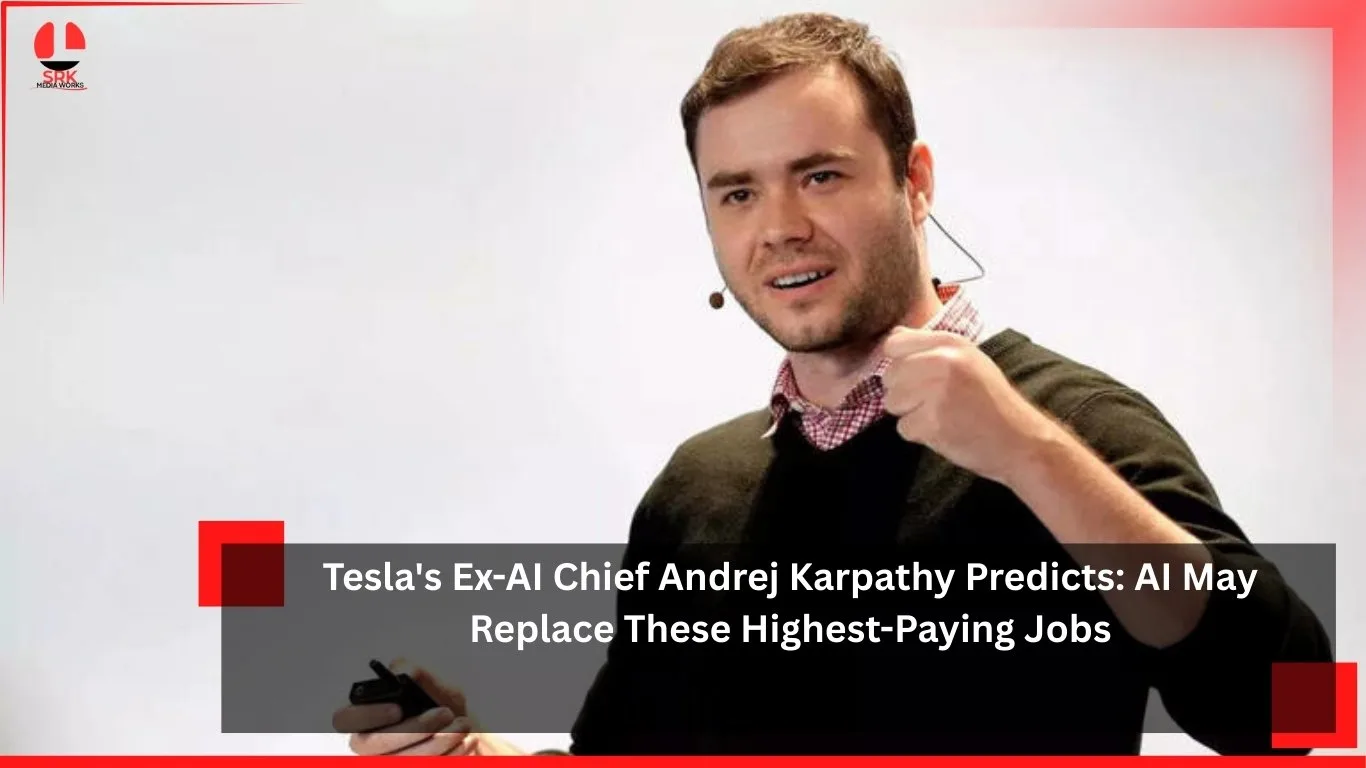
Artificial intelligence continues to reshape industries, and Andrej Karpathy, Tesla’s former AI chief and one of the most respected voices in machine learning, has made a bold prediction: AI could replace some of the world’s highest-paying jobs. His insights highlight the disruptive potential of advanced algorithms and automation, raising questions about the future of work, income distribution, and human creativity.
Karpathy’s Prediction
Karpathy emphasized that AI is no longer confined to repetitive or low-skill tasks. Instead, it is increasingly capable of performing complex, high-paying roles traditionally reserved for highly educated professionals.
- AI’s Reach: From law to medicine, finance to software engineering, AI systems are demonstrating capabilities once thought uniquely human.
- Economic Impact: High-paying jobs may face disruption, altering global labor markets.
- Human Challenge: Professionals must adapt, focusing on creativity, empathy, and strategic thinking—areas where AI still struggles.
High-Paying Jobs at Risk
Karpathy’s prediction points to several categories of jobs that could be impacted:
- Lawyers and Legal Analysts
- AI can analyze contracts, predict case outcomes, and draft legal documents.
- Routine legal work may be automated, reducing demand for junior associates.
- Doctors and Radiologists
- AI diagnostic tools outperform humans in certain imaging tasks.
- While empathy and patient care remain human strengths, diagnostic roles face automation.
- Financial Analysts and Traders
- Algorithms already dominate high-frequency trading.
- AI can predict market trends and optimize portfolios faster than humans.
- Software Engineers
- AI coding assistants generate and debug code.
- Routine programming tasks may be automated, shifting focus to system design and innovation.
- Consultants and Strategists
- AI can process vast datasets to provide insights.
- Human consultants may need to emphasize interpersonal skills and creative problem-solving.
Comparative Analysis of AI’s Impact on Jobs
| Profession | Current Role of AI | Potential Impact on Human Jobs |
|---|---|---|
| Lawyers | Contract analysis, legal research | Reduced demand for routine legal work |
| Doctors/Radiologists | Diagnostics, predictive analytics | Automation of imaging and routine checks |
| Financial Analysts | Market predictions, trading algorithms | Reduced need for manual analysis |
| Software Engineers | Code generation, debugging | Routine tasks automated, design remains |
| Consultants | Data-driven insights, scenario modeling | Human creativity and empathy emphasized |
This table shows how AI is poised to disrupt high-paying professions by automating routine tasks.
Political and Social Reactions
Karpathy’s prediction has triggered varied responses:
| Stakeholder Group | Reaction Type | Key Observations |
|---|---|---|
| Tech Enthusiasts | Excited | See AI as a tool for efficiency |
| Professionals | Concerned | Fear job displacement and reduced income |
| Governments | Cautious | Explore policies for reskilling and safety nets |
| Citizens | Mixed | Some embrace AI, others fear inequality |
This distribution highlights the tension between optimism and anxiety in society.
Historical Parallels
Karpathy’s prediction echoes past technological disruptions:
| Year | Event | Outcome |
|---|---|---|
| 19th Century | Industrial Revolution | Machines replaced manual labor |
| 20th Century | Rise of computers | Clerical jobs automated, new industries emerged |
| 21st Century | AI revolution | High-paying jobs face disruption |
| 2026 | Karpathy’s prediction | Professionals must adapt to AI dominance |
This comparison shows how technological progress consistently reshapes labor markets.
Global Implications
The prediction carries broader significance:
- Income Inequality: Automation of high-paying jobs could widen wealth gaps.
- Reskilling Needs: Professionals must acquire new skills to remain relevant.
- Policy Challenges: Governments may need to implement universal basic income or retraining programs.
- Cultural Shifts: Society must redefine work, purpose, and human value in an AI-driven world.
Public Sentiment
Public opinion reflects both excitement and concern:
- Supporters: Believe AI will free humans from repetitive tasks.
- Critics: Fear loss of livelihoods and professional identity.
- Neutral Observers: Emphasize the need for balance between AI and human roles.
Future Outlook
The trajectory of AI adoption and its impact on high-paying jobs remains uncertain. Possible scenarios include:
| Scenario | Description | Potential Impact |
|---|---|---|
| Balanced Integration | AI supports professionals without replacing them | Sustainable growth, reduced disruption |
| Full Automation | AI dominates high-paying professions | Job displacement, income inequality |
| Human-AI Collaboration | Professionals focus on creativity and empathy | Enhanced productivity, new opportunities |
Conclusion
Andrej Karpathy’s prediction that AI may replace some of the highest-paying jobs underscores the disruptive potential of artificial intelligence. While automation promises efficiency and innovation, it also raises profound questions about human identity, income distribution, and the future of work. The challenge for professionals, governments, and societies will be to adapt, ensuring that AI enhances rather than diminishes human purpose.
Disclaimer
This article is based on analytical perspectives and available information. It does not confirm or deny confidential corporate strategies and should not be interpreted as official policy. Readers are encouraged to follow verified economic and technological reports for authoritative updates.