









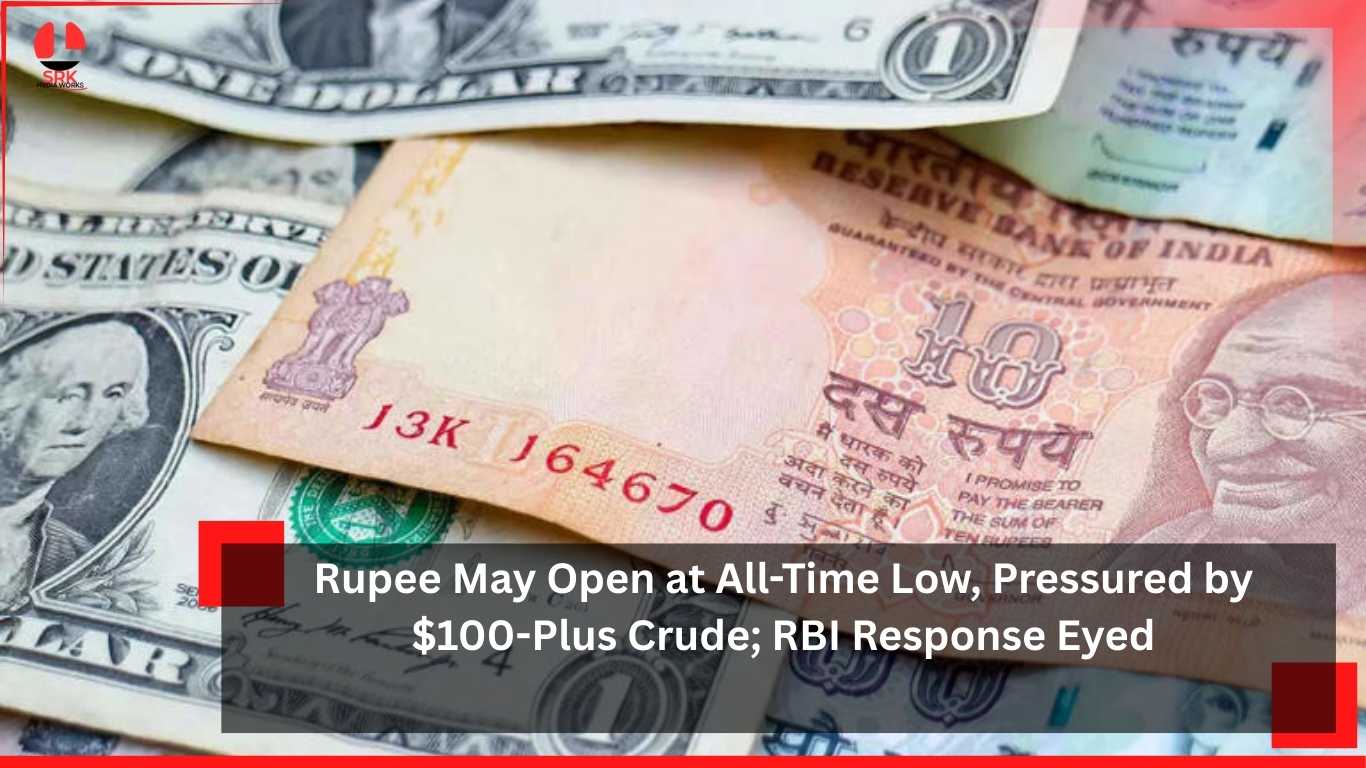
The Indian rupee is expected to open at an all-time low against the US dollar, as surging crude oil prices above $100 per barrel and escalating geopolitical tensions weigh heavily on investor sentiment. Market participants are closely watching the Reserve Bank of India’s (RBI) response, as the central bank may intervene to stabilize currency volatility and reassure investors.
Why the Rupee is Under Pressure
- Crude Oil Surge: India imports over 80% of its crude oil requirements. With Brent crude crossing $100 per barrel, the import bill rises sharply, worsening the current account deficit.
- Geopolitical Tensions: The Iran conflict has disrupted global supply chains, pushing up energy and commodity prices.
- Foreign Capital Outflows: Risk aversion among global investors has triggered selling in emerging markets, including India.
- Weak Equity Markets: The Sensex and Nifty have seen sharp declines, adding pressure on the rupee.
- Dollar Strength: The US dollar has strengthened as investors flock to safe-haven assets, further weakening the rupee.
RBI’s Possible Response
The RBI has historically intervened in the forex market to curb volatility. Analysts expect:
- Dollar Sales: RBI may sell dollars from its reserves to stabilize the rupee.
- Liquidity Management: Adjusting liquidity to prevent excessive volatility.
- Policy Communication: Clear messaging to reassure markets.
- Monitoring Inflation: Ensuring that imported inflation from crude does not destabilize the economy.
Comparative Analysis of Rupee Movements During Crises
| Year | Event | Rupee Movement | RBI Response |
|---|---|---|---|
| 2013 | Taper Tantrum | Fell to 68/USD | Dollar sales, rate hikes |
| 2020 | COVID-19 Pandemic | Fell to 76/USD | Liquidity support, intervention |
| 2022 | Russia-Ukraine War | Fell to 80/USD | Dollar sales, forex reserves use |
| 2026 | Iran Conflict | Expected all-time low | Intervention likely |
Pivot Analysis of Current Rupee Pressure
| Dimension | Short-Term Impact | Medium-Term Outlook | Long-Term Implications |
|---|---|---|---|
| Crude Oil Prices | Surge above $100 | Inflationary pressure | Push for renewable energy |
| Forex Reserves | Possible RBI intervention | Moderate depletion | Need for reserve rebuilding |
| Investor Sentiment | Panic selling | Volatility persists | Stabilization after clarity |
| Inflation | Rising fuel costs | Higher CPI | Policy tightening possible |
Impact on Indian Economy
- Inflation: Rising fuel costs will push up transportation and food prices.
- Corporate Margins: Energy-intensive industries face margin pressures.
- Stock Markets: Equity indices may remain volatile until clarity emerges.
- Trade Deficit: Higher import bills will widen the current account deficit.
What Investors Should Watch
- RBI Intervention: Timing and scale of RBI’s dollar sales.
- Global Crude Prices: Sustained rise above $100 will worsen pressure.
- US Dollar Strength: Continued dollar rally will weigh on emerging currencies.
- Equity Market Trends: Foreign investor flows will influence rupee stability.
Conclusion
The rupee’s expected opening at an all-time low reflects the deep interconnectedness of global geopolitics, crude oil prices, and investor sentiment. While the RBI is likely to intervene to curb volatility, the trajectory of the rupee will depend on how long crude oil remains elevated and how geopolitical tensions unfold.
For now, businesses and investors must brace for short-term volatility, while policymakers focus on maintaining stability and ensuring inflation does not spiral out of control.
Disclaimer
This article is a journalistic analysis based on publicly available financial data and commentary. It does not represent investment advice. Readers are encouraged to consult certified financial advisors before making decisions.