






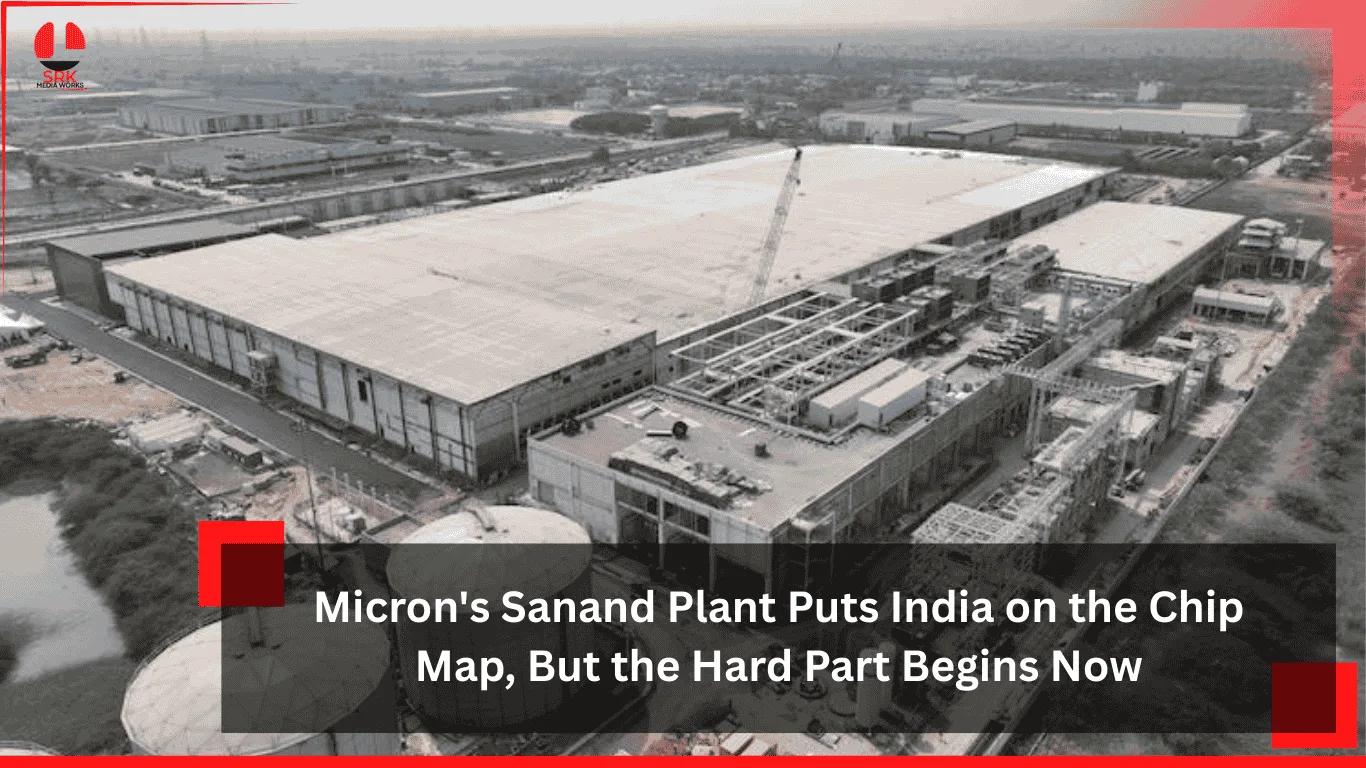
India has taken a historic step in the global semiconductor race with Micron Technology’s new plant in Sanand, Gujarat, officially positioning the country on the chip manufacturing map. While the inauguration of this facility is a major milestone, industry experts caution that the hard part begins now—building a sustainable ecosystem, ensuring supply chain resilience, and competing with established global players.
Background of the Sanand Plant
- Micron’s Investment: The Sanand plant represents one of the largest foreign direct investments in India’s semiconductor sector.
- Government Push: The Indian government has been aggressively promoting its semiconductor mission, offering incentives to attract global chipmakers.
- Strategic Location: Sanand, Gujarat, has emerged as a hub for electronics manufacturing, with strong infrastructure and proximity to ports.
- Global Context: The plant is part of Micron’s strategy to diversify its supply chain amid geopolitical tensions and rising demand for chips.
Strategic Importance of the Plant
- National Security: Semiconductor independence is critical for India’s defense and technology sectors.
- Economic Growth: The plant is expected to generate thousands of jobs and boost ancillary industries.
- Global Positioning: India joins the league of nations actively producing chips, reducing reliance on imports.
- Innovation Potential: The facility could catalyze R&D and skill development in advanced electronics.
Comparative Analysis of Semiconductor Ecosystems
| Country/Region | Strengths | Challenges | Outlook |
|---|---|---|---|
| India (Sanand Plant) | Government incentives, growing talent pool | Nascent ecosystem, supply chain gaps | High potential, long-term growth |
| Taiwan | Established chip manufacturing hub | Geopolitical risks | Continued dominance |
| USA | Strong R&D, CHIPS Act support | High labor costs | Expanding domestic production |
| China | Large-scale manufacturing | Trade restrictions, IP concerns | Aggressive expansion |
| South Korea | Advanced memory chip production | Global competition | Sustained leadership |
Business Impact Projection
| Factor | Short-Term Impact | Long-Term Impact |
|---|---|---|
| Indian Economy | Job creation, FDI inflows | Strengthened tech ecosystem |
| Micron’s Strategy | Diversified supply chain | Stronger global resilience |
| Global Semiconductor Market | Increased competition | Balanced supply chains |
| Local Industry | Boost for ancillary suppliers | Emergence of full chip ecosystem |
Industry Context
- Global Chip Shortage: The pandemic highlighted vulnerabilities in global semiconductor supply chains.
- India’s Ambition: The government aims to make India a semiconductor hub, reducing dependence on imports from Taiwan and China.
- Skill Development: Building a skilled workforce is critical to sustaining chip manufacturing.
- Supply Chain Challenges: India must develop raw material sourcing, logistics, and testing facilities to support large-scale production.
Expert Insights
Industry experts emphasize that while Micron’s Sanand plant is a breakthrough, India must focus on building the entire semiconductor value chain—from design to fabrication to packaging. Without this, India risks being limited to assembly and testing rather than full-scale chip production. Analysts also highlight the need for partnerships with universities and global firms to accelerate skill development.
Future Outlook
- Short-Term: The Sanand plant will focus on assembly, testing, and packaging, creating immediate employment opportunities.
- Medium-Term: India may attract more global players, leveraging government incentives and growing demand.
- Long-Term: With sustained investment, India could emerge as a global semiconductor hub, reducing reliance on imports and enhancing technological sovereignty.
Conclusion
Micron’s Sanand plant has officially put India on the global semiconductor map, marking a turning point in the nation’s technological journey. However, the real challenge lies ahead—building a robust ecosystem, ensuring supply chain resilience, and competing with established giants like Taiwan, South Korea, and the USA. If India can overcome these hurdles, the Sanand plant could be the foundation of a new era in India’s digital economy.
Disclaimer
This article is intended for informational purposes only and should not be construed as financial or investment advice. Semiconductor industry developments are subject to global market conditions, government policies, and technological advancements. Readers are encouraged to follow credible updates for the latest developments.

Куршавель — это не просто широко известный горнолыжный курорт, но и зона с богатой историей и культурой, перекликающееся по духу к таким известным достопримечательностям, как Нотр-Дам де Пари и Собор Парижской Богоматери. Для ценителей архитектуры и истории Парижа будет захватывающе изучить районы города, такие как Монпарнас, Гревская площадь или же известный 15-й и 19-й округа. Непременно нужно обратить внимание на замки Луары и дворец Версаль с их изумительными парками и малым Трианоном — эти места воплощают атмосферу эпохи Марии-Антуанетты и других значимых фигур.
Тем, кто увлечён культурные аспекты, то не пропустите знаменитые кафе, например, Кафе де Флор, где проводили время Коко Шанель и другие выдающиеся персоны. На карте Парижа по округам несложно обнаружить такие сооружения, как Сен-Дени, Руансийский собор и Вандомская колонна. Для простых путешествий по городу имеет смысл использовать RER, а при желании познать парижскую повседневную жизнь — блошиный рынок Париж и площади вроде Трокадеро и Площадь Согласия. Полную информацию о парижских округах, а также фото куршавеля можно изучить на этом ресурсе булонский лес .
Если вы готовите путешествие и хотите открыть для себя Вена достопримечательности, настоятельно рекомендуется посетить такие места, как дворец правосудия Вена, cafe Sacher Vienna и смотровая площадка Вена, откуда открываются потрясающие виды на город. Для интересующихся истории будет увлекательно узнать, что памятник советским воинам, погибшим в 1945 году при освобождении Австрии от фашизма, пребывает именно в Вене, что вносит особую историческую ценность прогулкам по городу.
Что касается путешествий между городами, расстояние Прага Вена и Вена Зальцбург расстояние достаточно удобно для планирования однодневных поездок, а если нужен выгодный способ размещения, стоит изучить дешевые отели Вена Австрия или гостиницы в Вене на рождественские ярмарки вена 2025 . Вена зимой по-настоящему восхитительна с рождественскими ярмарками 2024 и 2025 годов, а также разнообразными кафе и ресторанами, такими как Steirereck Вена или Cafe Central Вена, где можно с удовольствием отдохнуть.
Если вы продвигаете сайт и ищете понятные материалы, можете посмотреть SEO-блог: продвижение в Яндексе — там есть разборов по оптимизации контента и структуре.