





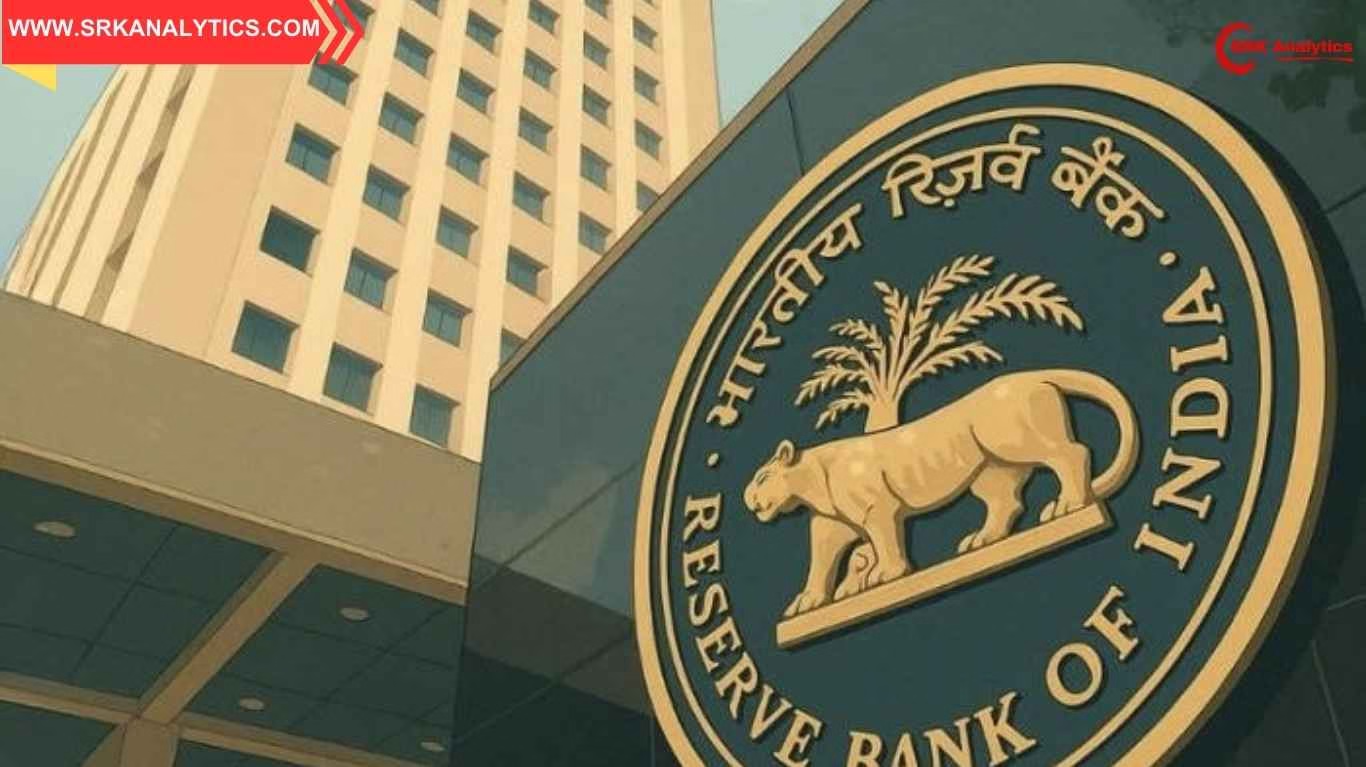
The Reserve Bank of India (RBI) has announced its latest monetary policy decision, keeping the repo rate unchanged at 5.25%. This move comes as part of the central bank’s cautious approach to balancing inflation control with economic growth. For millions of borrowers across India, this means Equated Monthly Installments (EMIs) will remain unchanged, offering relief to households and businesses managing loans.
What is the Repo Rate?
The repo rate is the interest rate at which the RBI lends money to commercial banks. It is one of the most important tools used by the central bank to regulate liquidity, inflation, and overall economic stability.
- Higher Repo Rate: Makes borrowing costlier, reducing liquidity and controlling inflation.
- Lower Repo Rate: Encourages borrowing, increases liquidity, and stimulates growth.
- Unchanged Repo Rate: Indicates a cautious stance, balancing inflationary pressures with growth needs.
RBI’s Policy Decision
The Monetary Policy Committee (MPC) of the RBI decided unanimously to keep the repo rate steady at 5.25%. The decision was influenced by current inflation trends, global economic uncertainties, and domestic growth indicators.
Key highlights of the decision:
- Repo Rate: Unchanged at 5.25%.
- Reverse Repo Rate: Maintained at 3.75%.
- Cash Reserve Ratio (CRR): No change.
- Inflation Outlook: RBI expects inflation to remain within its target band.
- Growth Outlook: GDP growth projections remain steady, supported by domestic demand.
Impact on Borrowers
For individuals and businesses with loans, the unchanged repo rate means EMIs will remain stable. Banks are unlikely to revise lending rates significantly, providing relief to borrowers.
| Loan Type | Current Impact | Borrower Benefit |
|---|---|---|
| Home Loans | EMIs unchanged | Stability in household budgets |
| Car Loans | EMIs unchanged | Affordable financing continues |
| Personal Loans | EMIs unchanged | No additional burden |
| Business Loans | EMIs unchanged | Easier financial planning |
Analysis of RBI’s Decision
| Factor | Traditional Challenge | Current Scenario (2026) | Outcome Expected |
|---|---|---|---|
| Inflation Control | Rising food and fuel prices | Inflation within target band | Stability maintained |
| Economic Growth | Balancing liquidity | Domestic demand strong | Growth supported |
| Global Uncertainty | Volatile global markets | RBI cautious on rate changes | Risk mitigation |
| Borrower Relief | Rising loan costs | EMIs unchanged | Household stability |
| Banking Sector | Liquidity management | Adequate reserves maintained | Financial stability |
Why RBI Chose to Hold Rates
The RBI’s decision reflects a careful balance between inflation and growth. While inflation has moderated, global uncertainties such as oil prices, geopolitical tensions, and currency fluctuations remain. By keeping rates unchanged, the RBI aims to:
- Ensure stability in borrowing costs.
- Support domestic consumption and investment.
- Maintain confidence in the financial system.
- Avoid shocks to households and businesses.
Comparative Analysis of Repo Rate Trends
| Year | Repo Rate (%) | Policy Stance | Economic Context |
|---|---|---|---|
| 2022 | 4.00 | Accommodative | Pandemic recovery |
| 2023 | 5.00 | Neutral | Inflation concerns |
| 2024 | 5.25 | Cautious | Global volatility |
| 2025 | 5.25 | Steady | Inflation under control |
| 2026 | 5.25 | Neutral | Balanced growth |
Impact on Different Sectors
The unchanged repo rate will have varied impacts across sectors:
- Real Estate: Stability in home loan EMIs may encourage housing demand.
- Automobile Industry: Affordable financing supports car sales.
- SMEs and Startups: Easier financial planning with stable borrowing costs.
- Banking Sector: Liquidity management remains steady, ensuring financial stability.
Public Sentiment
Borrowers and businesses have welcomed the RBI’s decision, as it provides predictability in financial planning. Consumers are relieved that EMIs will not rise, while businesses see it as a supportive measure for investment and expansion.
Future Outlook
The RBI is expected to continue monitoring inflation and growth closely. Any future changes in repo rate will depend on:
- Inflation trends in food and fuel prices.
- Global economic developments.
- Domestic growth indicators.
- Currency and trade dynamics.
Key areas to watch:
- RBI’s next policy review.
- Global oil price movements.
- Domestic demand and consumption trends.
- Banking sector liquidity.
Conclusion
The RBI’s decision to keep the repo rate unchanged at 5.25% reflects a cautious and balanced approach to managing India’s economy. For borrowers, this means EMIs remain stable, offering relief amid global uncertainties. The move underscores the central bank’s commitment to maintaining financial stability while supporting growth.
Disclaimer
This article is intended for informational and analytical purposes only. It is based on publicly available economic updates and general financial trends. It does not constitute financial advice, investment recommendations, or professional consultation. Readers are encouraged to verify facts independently and consult financial experts before making decisions.