




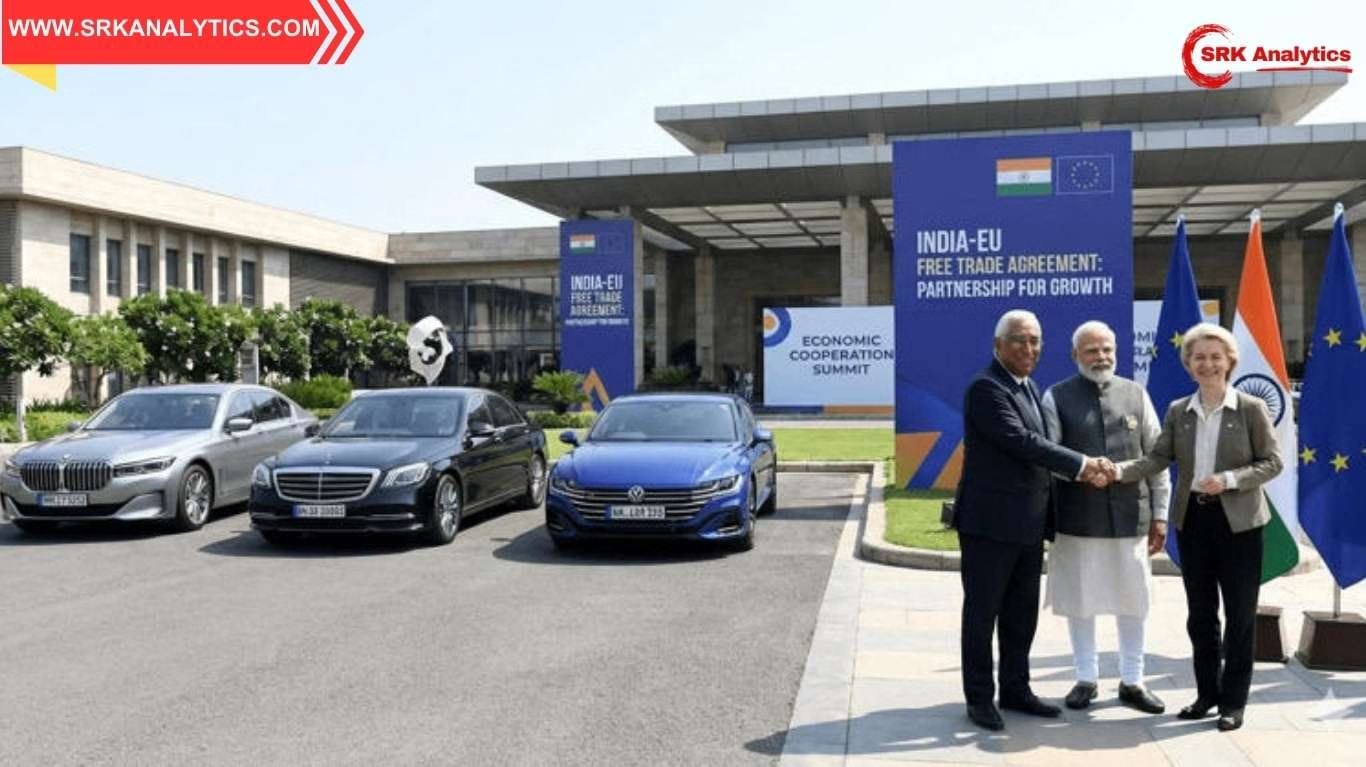
The upcoming India-European Union Free Trade Agreement (FTA), scheduled to be signed on January 27, 2026, is set to reshape bilateral trade relations. According to reports, one of the most significant provisions will be the reduction of import duties on high-end European cars from 110% to just 10%. This landmark move is expected to boost luxury car imports, strengthen economic ties, and signal India’s commitment to trade liberalization.
Background of the Agreement
- India and the EU have been negotiating the FTA for years, aiming to enhance trade and investment flows.
- The automobile sector has been a major sticking point, with European manufacturers pushing for lower tariffs.
- The reduction in duties is expected to make luxury cars more affordable in India, benefiting brands like BMW, Mercedes-Benz, Audi, and Porsche.
- Beyond automobiles, the FTA covers sectors such as pharmaceuticals, textiles, technology, and agriculture.
Key Highlights
| Indicator | Details |
|---|---|
| Agreement | India-EU Free Trade Agreement |
| Date of Signing | January 27, 2026 |
| Major Provision | Car import duties cut from 110% to 10% |
| Impact | Boost to luxury car imports, stronger trade ties |
| Broader Context | India’s trade liberalization and global integration |
Current vs Post-FTA Scenario
| Factor | Current Scenario | Post-FTA Scenario | Implication |
|---|---|---|---|
| Import Duty on Cars | 110% | 10% | Luxury cars more affordable |
| Market Accessibility | Limited | Expanded | Boost to European brands |
| Consumer Base | Elite segment only | Wider affluent class | Increased demand |
| Trade Relations | Negotiation stage | Strengthened partnership | Deeper integration |
| Long-Term Outlook | Restricted growth | Sustainable expansion | Balanced trade flows |
Why This Story Matters
- Economic Growth: The FTA will enhance India’s trade with one of its largest partners.
- Automobile Industry: Lower duties will reshape the luxury car market in India.
- Consumer Impact: Affluent buyers will gain access to more affordable European cars.
- Global Positioning: Strengthens India’s role in global trade networks.
- Future Outlook: Sets precedent for India’s trade deals with other regions.
India’s Perspective
- India aims to attract investment and boost exports through the FTA.
- Lower duties on cars are balanced by greater access for Indian goods in European markets.
- The government views the agreement as part of its broader reform agenda.
EU’s Perspective
- The EU has long sought reduced tariffs to expand its automobile exports to India.
- The FTA provides European companies with a competitive edge in one of the fastest-growing markets.
- It also strengthens political and economic ties with India.
Expert Opinions
- Economists: Applaud the duty reduction as a step toward liberalization.
- Automobile Analysts: Predict a surge in luxury car sales in India.
- Trade Experts: Highlight the importance of balancing imports with export opportunities.
- Critics: Warn that domestic manufacturers may face increased competition.
Challenges Ahead
- Domestic Industry Concerns: Indian carmakers may struggle against European competition.
- Implementation: Ensuring smooth execution of FTA provisions.
- Public Perception: Balancing consumer benefits with industry protection.
- Global Volatility: External economic shocks could impact trade flows.
- Regulatory Oversight: Monitoring compliance with FTA terms.
Opportunities
- Consumer Choice: Wider range of luxury cars at lower prices.
- Investment Inflows: European companies may invest in India’s automobile sector.
- Export Growth: Indian goods gain better access to EU markets.
- Technology Transfer: Collaboration with European firms could boost innovation.
- Global Integration: Strengthens India’s position in international trade.
Broader Context of India’s Trade Policy
- India has pursued FTAs with multiple regions, including ASEAN and the UK.
- The India-EU FTA is one of the most ambitious, covering diverse sectors.
- The duty reduction reflects India’s willingness to embrace global competition.
- The agreement aligns with India’s “Reform Express” narrative of modernization.
Sectoral Breakdown of Impact
| Sector | Impact | Strategic Importance |
|---|---|---|
| Automobile | Surge in imports | Reshapes luxury car market |
| Manufacturing | Increased competition | Drives innovation |
| Agriculture | Expanded exports | Boosts farmer income |
| Technology | Collaboration opportunities | Enhances digital growth |
| Services | Greater access to EU | Strengthens IT and finance |
Media Coverage
- Headlines emphasize the dramatic cut in car import duties.
- Analysts debate the impact on India’s domestic automobile industry.
- Coverage highlights the broader implications of the FTA.
- The story continues to dominate discussions in economic and political circles.
Conclusion
The India-EU Free Trade Agreement, set to be signed on January 27, 2026, marks a turning point in bilateral relations. The reduction of duties on high-end European cars from 110% to 10% is a landmark provision that will reshape India’s automobile market, strengthen trade ties, and signal India’s commitment to global integration. While challenges remain, the FTA offers immense opportunities for consumers, businesses, and policymakers alike.
Disclaimer
This article is intended for informational purposes only and does not constitute financial or professional advice. Policies, statements, and outcomes are subject to change based on evolving circumstances. Readers are encouraged to follow official updates for accurate information. The author and publisher are not responsible for any decisions made based on this article.