





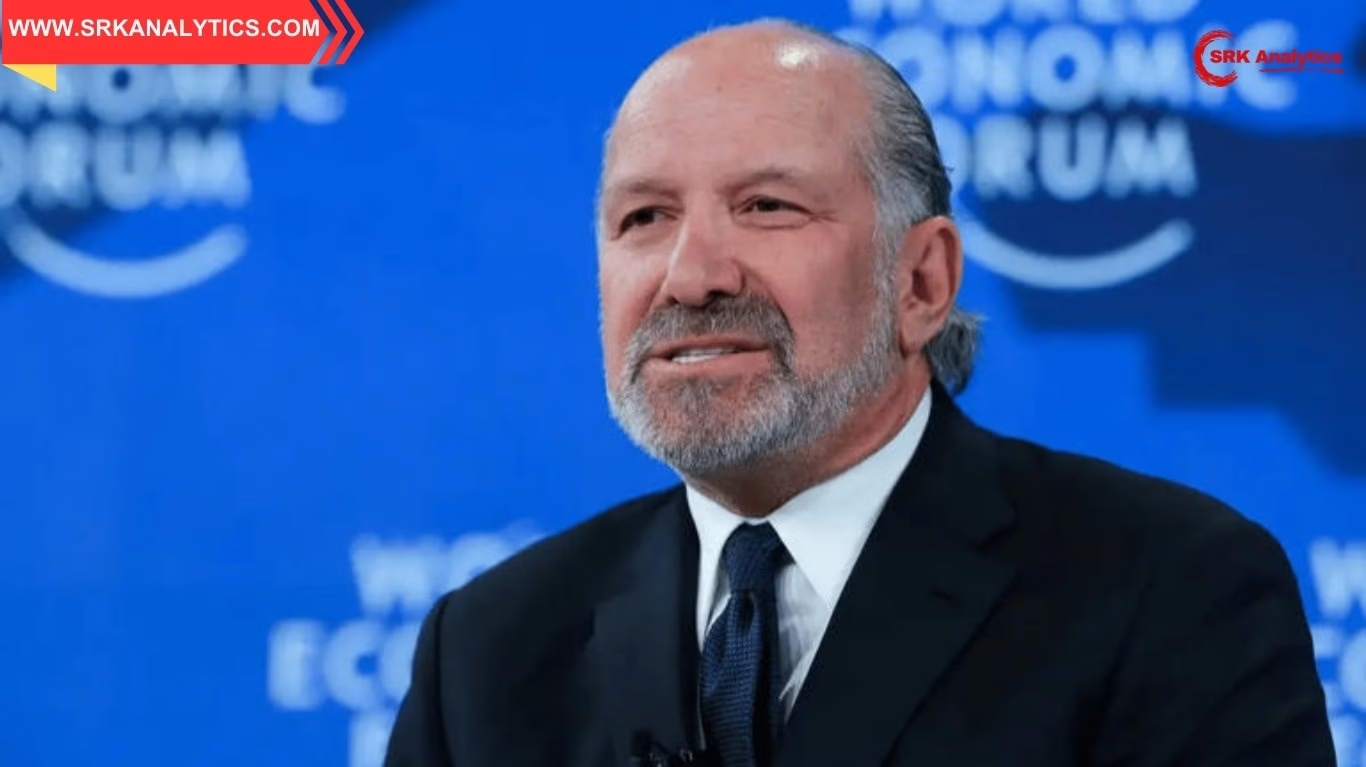
The annual World Economic Forum (WEF) in Davos is known for its high-profile gatherings of global leaders, CEOs, and policymakers. However, this year’s event took an unexpected turn when Howard Lutnick, CEO of Cantor Fitzgerald, faced heckling during a private dinner hosted by BlackRock CEO Larry Fink. The incident occurred just hours before Donald Trump’s scheduled speech, adding political undertones to what was meant to be a corporate networking evening.
Background of the Davos Dinner
- The dinner hosted by Larry Fink was attended by influential figures from finance, politics, and business.
- Howard Lutnick, a prominent Wall Street executive, was invited to share his views on global markets and U.S. policy.
- His remarks, however, drew sharp reactions from sections of the audience, leading to heckling and visible discomfort.
- The timing of the incident, just ahead of Trump’s speech, amplified its significance in both political and financial circles.
Key Highlights
| Indicator | Details |
|---|---|
| Event | BlackRock CEO’s private dinner at Davos |
| Individual Involved | Howard Lutnick, CEO of Cantor Fitzgerald |
| Incident | Faced heckling during remarks |
| Context | Hours before Trump’s speech at WEF |
| Broader Impact | Sparks debate on Wall Street’s political positioning |
Reasons Behind Heckling vs Broader Implications
| Factor | Immediate Cause | Broader Implication | Impact |
|---|---|---|---|
| Political Remarks | Lutnick’s perceived alignment with Trump | Polarization among elites | Divided audience |
| Market Commentary | Optimistic outlook seen as dismissive of risks | Questions on Wall Street credibility | Investor skepticism |
| Audience Composition | Mix of global leaders, activists, and executives | Clash of perspectives | Heated exchanges |
| Timing | Just before Trump’s speech | Heightened sensitivity | Amplified reactions |
| Media Coverage | Focus on heckling | Debate on Davos culture | Global attention |
Why This Story Matters
- Political Context: Highlights tensions between Wall Street executives and global elites over Trump’s policies.
- Financial Narratives: Raises questions about credibility of optimistic market outlooks.
- Public Perception: Shapes how audiences view corporate leaders’ political alignments.
- Davos Culture: Reflects growing polarization even in elite gatherings.
- Global Impact: Influences investor sentiment and diplomatic narratives.
Howard Lutnick’s Remarks
- Lutnick reportedly spoke about the resilience of U.S. markets and the strength of Trump’s economic policies.
- His comments were interpreted by some as overtly supportive of Trump, sparking disapproval among attendees critical of the administration.
- Lutnick emphasized that Wall Street remains confident in U.S. growth despite global uncertainties.
- The tone of his remarks was seen as dismissive of concerns about inequality, climate change, and geopolitical risks.
Audience Reaction
- Several attendees expressed frustration, leading to heckling and interruptions.
- Activists and executives concerned about climate change and social inequality challenged Lutnick’s perspective.
- The incident highlighted the ideological divide between pro-market optimism and calls for systemic reform.
- The heckling disrupted the flow of the dinner, drawing attention from media and participants alike.
Expert Opinions
- Political Analysts: Note that Lutnick’s remarks reflect Wall Street’s alignment with Trump’s economic narrative.
- Economists: Stress that optimism must be balanced with acknowledgment of systemic risks.
- Sociologists: Highlight that Davos is increasingly a stage for ideological clashes.
- Critics: Warn that dismissing concerns about inequality and climate change undermines credibility.
Challenges Ahead
- Wall Street Credibility: Ensuring market optimism does not appear disconnected from global realities.
- Political Polarization: Managing perceptions of alignment with controversial leaders.
- Public Trust: Rebuilding confidence in corporate leadership.
- Davos Culture: Addressing growing tensions in elite gatherings.
- Media Narratives: Controlling fallout from high-profile incidents.
Opportunities for Corporate Leaders
- Balanced Messaging: Present optimism while acknowledging risks.
- Public Engagement: Strengthen dialogue with diverse stakeholders.
- Policy Influence: Shape debates on inequality and sustainability.
- Global Collaboration: Use Davos as a platform for constructive engagement.
- Reputation Management: Demonstrate sensitivity to broader concerns.
Broader Context of Trump’s Speech
- Trump’s scheduled speech at Davos was expected to emphasize U.S. economic strength and nationalist policies.
- Lutnick’s remarks were seen as aligning with Trump’s narrative, intensifying reactions.
- The incident reflects how Trump’s presence at global forums polarizes audiences.
- Davos has increasingly become a battleground for competing visions of globalization and nationalism.
Sectoral Breakdown of Impact
| Sector | Impact | Strategic Importance |
|---|---|---|
| Finance | Questions on Wall Street credibility | Investor sentiment |
| Politics | Polarization over Trump’s policies | Diplomatic narratives |
| Society | Debate on inequality and climate change | Public trust |
| Media | Focus on heckling incident | Global coverage |
| Davos Culture | Growing ideological clashes | Elite discourse |
Media Coverage
- Headlines focused on Lutnick facing heckling at the BlackRock dinner.
- Analysts debated whether his remarks were overly supportive of Trump.
- Coverage highlighted tensions between Wall Street optimism and global concerns.
- The incident continues to dominate discussions in financial and political circles.
Conclusion
The heckling faced by Howard Lutnick at BlackRock CEO Larry Fink’s Davos dinner underscores the growing polarization in elite gatherings. His remarks, perceived as supportive of Trump’s economic policies, clashed with concerns about inequality, climate change, and global risks. The timing, just ahead of Trump’s speech, amplified the incident’s significance. For Wall Street and global leaders alike, the episode serves as a reminder that optimism must be balanced with sensitivity to broader concerns.
Disclaimer
This article is intended for informational purposes only and does not constitute political or financial advice. Statements, opinions, and events are subject to change based on evolving circumstances. Readers are encouraged to follow official updates for accurate information. The author and publisher are not responsible for any decisions made based on this article.