





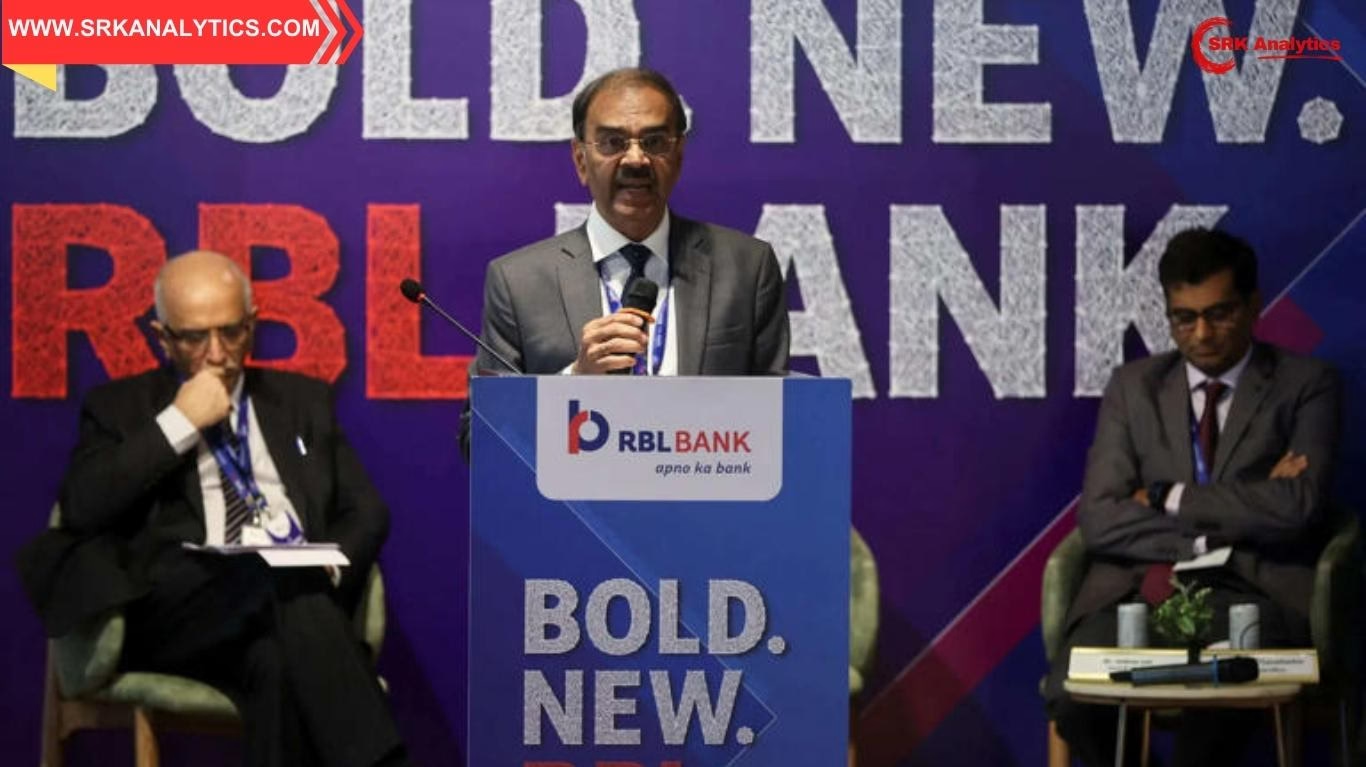
In a landmark development for India’s banking sector, Emirates NBD Bank, one of the largest banking groups in the Middle East, has received approval from the Competition Commission of India (CCI) to acquire a majority stake in RBL Bank. The move is expected to reshape the private banking landscape in India, strengthen RBL Bank’s capital base, and deepen financial ties between India and the United Arab Emirates (UAE).
Background of the Acquisition
- Emirates NBD Bank has been expanding its global footprint, with India being a key strategic market.
- RBL Bank, a mid-sized private sector lender, has faced challenges in recent years, including asset quality concerns and capital adequacy pressures.
- The acquisition approval by CCI marks a significant turning point, allowing Emirates NBD to inject fresh capital and management expertise into RBL Bank.
- The deal is expected to enhance RBL Bank’s competitiveness and provide Emirates NBD with a strong foothold in India’s fast-growing financial services sector.
Key Highlights
| Indicator | Details |
|---|---|
| Acquirer | Emirates NBD Bank |
| Target | RBL Bank |
| Approval Authority | Competition Commission of India (CCI) |
| Nature of Deal | Majority stake acquisition |
| Strategic Impact | Strengthens RBL Bank’s capital base, expands Emirates NBD’s presence in India |
Impact of Acquisition on Both Banks
| Factor | Emirates NBD Bank | RBL Bank | Implication |
|---|---|---|---|
| Market Expansion | Entry into Indian retail and corporate banking | Access to global expertise | Strengthens cross-border banking |
| Capital Base | Diversification of investments | Fresh capital infusion | Improves financial stability |
| Technology | Advanced digital banking systems | Adoption of new platforms | Enhances customer experience |
| Brand Positioning | Stronger presence in Asia | Boost in credibility | Competitive advantage |
| Regulatory Compliance | Adheres to Indian norms | Gains global governance standards | Strengthens risk management |
Why This Story Matters
- Banking Sector Transformation: Marks one of the biggest cross-border acquisitions in India’s private banking space.
- Investor Confidence: Signals renewed trust in RBL Bank’s future growth trajectory.
- Global Integration: Strengthens India-UAE financial cooperation.
- Customer Impact: Promises better services, digital innovation, and stronger financial products.
- Policy Context: Reflects India’s openness to foreign investment in banking.
Strategic Benefits for Emirates NBD
- Access to India’s large and growing retail banking market.
- Opportunity to expand corporate lending and SME financing.
- Strengthening of trade finance and remittance services between India and the Middle East.
- Leveraging India’s digital banking ecosystem to enhance customer offerings.
Strategic Benefits for RBL Bank
- Fresh capital infusion to strengthen balance sheet.
- Improved asset quality management through global best practices.
- Enhanced digital transformation with Emirates NBD’s advanced technology.
- Stronger brand positioning in India’s competitive private banking sector.
Expert Opinions
- Banking Analysts: Stress that the acquisition will stabilize RBL Bank and improve investor sentiment.
- Economists: Highlight the importance of foreign capital in strengthening India’s financial sector.
- Policy Experts: Note that CCI’s approval reflects India’s regulatory openness to global banking partnerships.
- Investors: Express optimism about long-term returns from the deal.
Challenges Ahead
- Regulatory Compliance: Ensuring smooth integration under Indian banking norms.
- Cultural Integration: Aligning Emirates NBD’s global practices with RBL Bank’s local operations.
- Market Competition: Competing with larger private banks like HDFC Bank, ICICI Bank, and Axis Bank.
- Asset Quality: Addressing RBL Bank’s legacy issues in non-performing assets.
- Customer Trust: Building confidence among existing RBL Bank customers during transition.
Opportunities Post-Acquisition
- Digital Banking Expansion: Leveraging Emirates NBD’s advanced platforms.
- Retail Growth: Expanding personal loans, credit cards, and housing finance.
- SME Financing: Strengthening support for small and medium enterprises.
- Trade Finance: Enhancing cross-border financial services between India and UAE.
- Global Partnerships: Building synergies with other international financial institutions.
Broader Context of India’s Banking Sector
- India’s private banking sector has witnessed consolidation and foreign interest in recent years.
- The acquisition reflects growing confidence in India’s regulatory framework and economic potential.
- With rising demand for digital banking and financial inclusion, foreign banks see India as a key growth market.
- The deal underscores India’s role as a global financial hub in the making.
Sectoral Breakdown of Impact
| Sector | Impact | Strategic Importance |
|---|---|---|
| Retail Banking | Expansion of services | Strengthens customer base |
| Corporate Banking | Enhanced lending capacity | Supports business growth |
| SME Financing | Increased focus | Boosts entrepreneurship |
| Digital Banking | Technology adoption | Improves efficiency |
| Trade Finance | Stronger India-UAE ties | Facilitates cross-border commerce |
Media Coverage
- Headlines emphasized CCI’s approval of Emirates NBD’s acquisition of RBL Bank.
- Analysts debated the implications for India’s private banking sector.
- Coverage highlighted the strategic benefits for both Emirates NBD and RBL Bank.
- The story continues to dominate discussions in financial and investor circles.
Conclusion
The CCI’s approval for Emirates NBD Bank to acquire a majority stake in RBL Bank marks a watershed moment in India’s banking sector. The deal promises to strengthen RBL Bank’s capital base, enhance digital transformation, and expand Emirates NBD’s global footprint. While challenges remain in regulatory compliance and market competition, the opportunities for growth and innovation are immense. This acquisition not only reshapes India’s private banking landscape but also deepens financial ties between India and the UAE, signaling a new era of global integration in banking.
Disclaimer
This article is intended for informational purposes only and does not constitute financial or investment advice. Market conditions, regulatory decisions, and company strategies are subject to change based on evolving circumstances. Readers are encouraged to follow official updates for accurate information. The author and publisher are not responsible for any decisions made based on this article.