



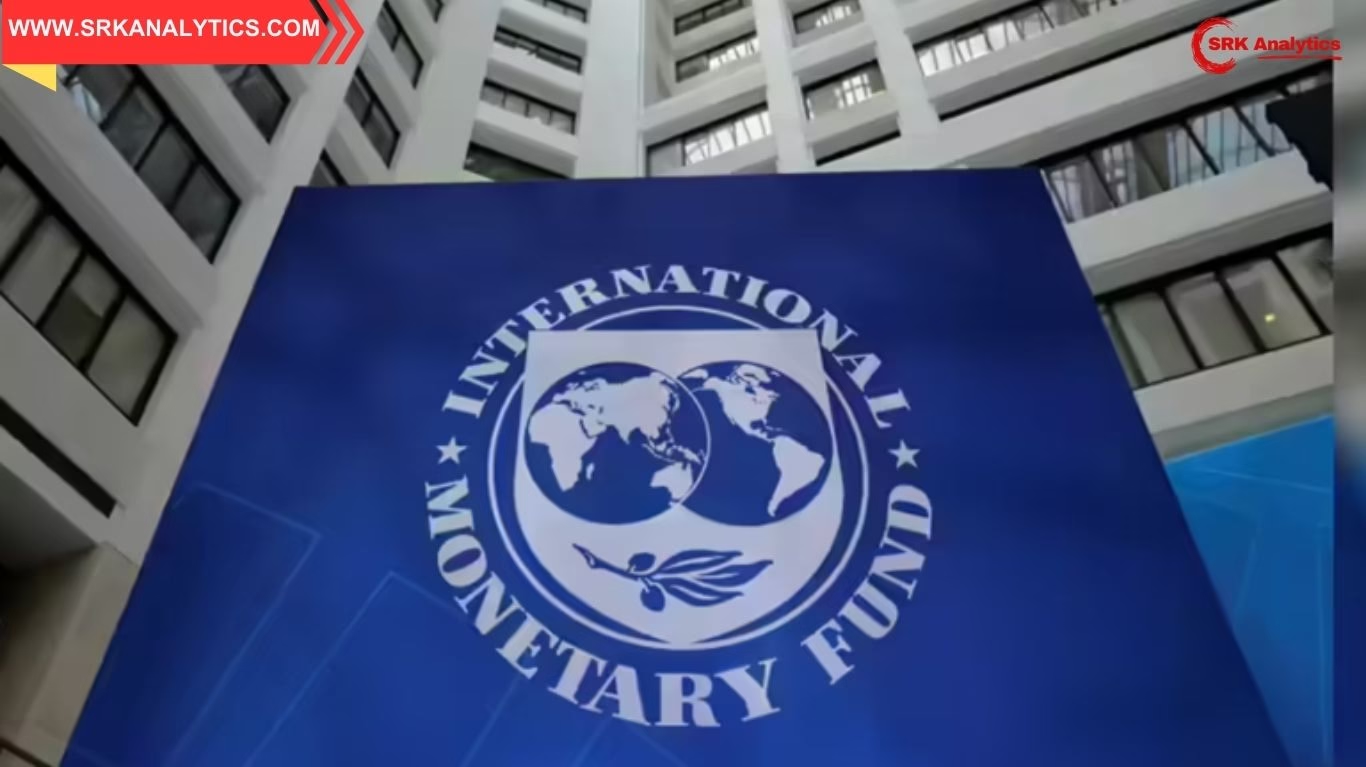
The International Monetary Fund (IMF) has released its latest World Economic Outlook report, projecting that the global economy will grow at 3.3% in 2026, maintaining resilience despite ongoing trade tensions, tariff disruptions, and geopolitical risks. The report highlights how investment in artificial intelligence (AI), digital infrastructure, and diversified supply chains are helping offset challenges posed by inflationary pressures, tighter financial conditions, and policy uncertainty.
Background of the IMF Outlook
- The IMF has slightly upgraded its global growth forecast for 2026 to 3.3%, up 0.2 percentage points from its October 2025 estimate.
- Growth in 2027 is expected to remain steady at 3.2%, broadly in line with 2025 levels.
- The resilience reflects businesses adapting to higher tariffs, rerouting supply chains, and leveraging new trade agreements.
- AI-driven investment cycles are emerging as a major driver of productivity and growth.
Key Highlights
| Indicator | Details |
|---|---|
| Global Growth Forecast | 3.3% in 2026, 3.2% in 2027 |
| Drivers of Growth | AI investment, digital infrastructure, supply chain diversification |
| Risks | Trade tensions, geopolitical conflicts, inflation |
| Regional Momentum | Uneven across advanced and emerging economies |
| Policy Focus | Inflation control, fiscal discipline, climate resilience |
Drivers vs Risks in Global Growth
| Factor | Positive Impact | Negative Impact | Implication |
|---|---|---|---|
| AI & Digital Investment | Boosts productivity, innovation | Risk of inflation, volatility | Net positive driver |
| Trade Agreements | Eases tariff burdens | Limited scope in some regions | Helps stabilize growth |
| Supply Chain Diversification | Reduces dependency | Higher costs in short term | Long-term resilience |
| Geopolitical Risks | None | Wars, conflicts, sanctions | Persistent uncertainty |
| Inflation & Monetary Policy | Stabilization efforts | Tight financial conditions | Balancing act for policymakers |
Why This Story Matters
- Global Stability: The IMF’s forecast reassures markets that growth remains steady despite risks.
- Investor Confidence: Highlights opportunities in AI, digital infrastructure, and resilient supply chains.
- Policy Guidance: Provides governments with insights on balancing growth with inflation control.
- Regional Outlook: Shows uneven momentum, with advanced economies slowing while emerging markets remain robust.
- Future Planning: Businesses can align strategies with global growth trends.
Regional Breakdown
- United States: Growth remains resilient, supported by consumer spending and AI-driven investment.
- Eurozone: Slower growth due to energy costs and geopolitical tensions.
- China: Moderate growth at 4.5%, facing demographic challenges and debt concerns.
- India: Continues to lead as the fastest-growing major economy, projected at 6.4% in 2026-27.
- Emerging Markets: Mixed performance, with some economies benefiting from trade diversification while others struggle with inflation.
Expert Opinions
- IMF Chief Economist Pierre-Olivier Gourinchas: Stated that the global economy has shown “unexpected resilience” despite tariffs and wars.
- Analysts: Stress that AI investment could fuel both productivity and inflationary risks.
- Policy Experts: Highlight the need for fiscal discipline and climate-focused strategies.
- Investors: See opportunities in technology-driven sectors and emerging markets.
Challenges Ahead
- Trade Tensions: Persistent tariff disputes between major economies.
- Geopolitical Conflicts: Wars and sanctions disrupting global supply chains.
- Inflationary Pressures: Rising costs of food and energy.
- Climate Risks: Extreme weather events impacting agriculture and infrastructure.
- Uneven Growth: Advanced economies slowing while emerging markets remain dynamic.
Opportunities for Global Economy
- AI and Digital Transformation: Harnessing technology for productivity gains.
- Green Economy: Investing in renewable energy and sustainable practices.
- Trade Diversification: Expanding agreements to reduce tariff burdens.
- Emerging Market Growth: Leveraging demographic advantages and consumption trends.
- Resilient Supply Chains: Building long-term stability through diversification.
Sectoral Breakdown of Impact
| Sector | Impact | Strategic Importance |
|---|---|---|
| Technology | AI-driven growth | Boosts productivity |
| Energy | Renewable investments | Supports sustainability |
| Trade | Diversification | Reduces dependency |
| Finance | Monetary tightening | Controls inflation |
| Agriculture | Climate risks | Ensures food security |
Media Coverage
- Headlines emphasized the IMF’s forecast of 3.3% global growth in 2026.
- Analysts debated the balance between AI-driven growth and inflationary risks.
- Coverage highlighted uneven regional momentum and persistent geopolitical challenges.
- The story continues to dominate discussions in economic and policy circles.
Conclusion
The IMF World Economic Outlook report projects resilient global growth of 3.3% in 2026, despite trade tensions, geopolitical risks, and inflationary pressures. Driven by AI investment, digital infrastructure, and supply chain diversification, the global economy is adapting to challenges while maintaining stability. While risks remain, opportunities in technology, green energy, and emerging markets offer pathways for sustained growth. The report underscores the importance of balancing innovation with fiscal discipline and climate resilience.
Disclaimer
This article is intended for informational purposes only and does not constitute financial or investment advice. Economic forecasts, policy decisions, and market conditions are subject to change based on evolving circumstances. Readers are encouraged to follow official updates for accurate information. The author and publisher are not responsible for any decisions made based on this article.