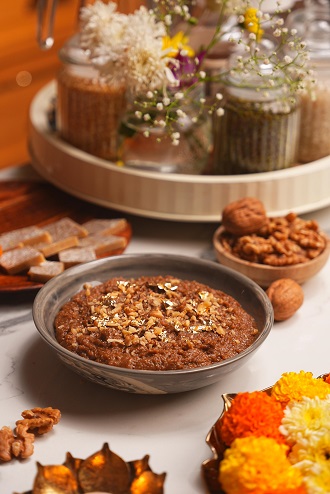

The festive season may still be a little while away, but the anticipation has already begun. The plans are being made, the get-togethers are finding their way onto calendars, and cravings for all those festive favorites are slowly making a comeback. But really, who decided the delicious part needs to wait?
Consider this your permission to start the celebrations a little early. With their rich flavour, satisfying crunch, and incredible versatility, California walnuts can turn everyday treats into something worth celebrating. From indulgent bites, everyday crowd pleasers and comforting favorites to desserts made for sharing, these California walnut-inspired recipes bring a little festive goodness to the table before the festivities even begin.
Because when something this delicious is coming, why wait?
California Walnut Halwa – By Chef Nehal Karkera
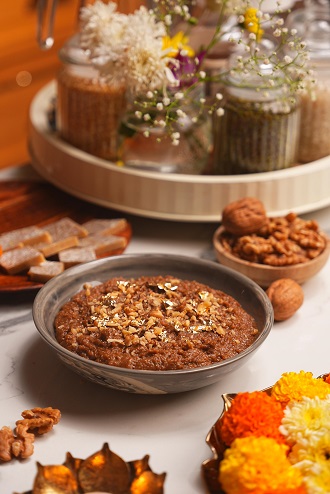 |
California Walnut Halwa
Ingredients
200g California walnuts
¼ cup ghee (clarified butter)
1 tablespoon milk powder
½ cup khoya* (grated)
1½ cup milk
½ cup sugar
½ teaspoon cardamom powder
*Concentrated milk solids
Preparation
1. Powder the walnuts in a grinder until semi coarse ground.
2. Heat the ghee in a pan over low heat. Add the powdered walnuts and cook for 10-12 minutes, stirring continuously until the mixture turns golden and releases a fragrant, nutty aroma.
3. Add milk powder and khoya and stir. Mix thoroughly to ensure everything is well incorporated.
4. Pour in the milk and continue to cook the mixture on medium heat, stirring occasionally. Allow the milk to reduce to half, which will thicken the halwa.
5. Once the milk has reduced, add the sugar. Cook for another few minutes, stirring continuously, until the sugar dissolves and the mixture thickens to a halwa-like consistency, and the ghee starts to separate.
6. Remove from heat and sprinkle cardamom powder for flavor. Garnish with chopped walnuts and edible gold leaves before serving.
California Walnuts Chowpatty Bhel Puri – Chef Varun Inamdar
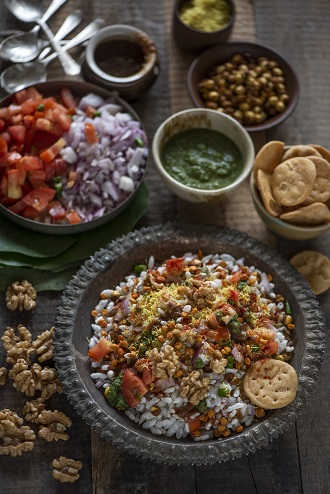 |
California Walnuts Chowpatty Bhel Puri
Ingredients
4 cups puffed rice
2 onions, finely chopped
2 tomatoes, finely chopped
2 green chilies, finely chopped
4 tablespoons mint chutney
4 tablespoons sweet tamarind chutney
1 tablespoon chaat masala powder
1/4 cup chana dal
1/4 cup roasted chana
Salt to taste
1/2 cup California walnuts, chopped roughly
1/4 cup sev
12-15 papdi puris
Preparation
1. Firstly, pre-prepare every ingredient as mentioned above in respective bowls as per quantities and sizes and set the table.
2. All you need to do is toss all ingredients together in a large bowl.
3. Garnish generously with a sprinkling of sev, chopped California walnuts and serve a papdi puri alongside.
4. Serve immediately.
California Walnut Keema Stuffed Pav – Shumaila Chauhan
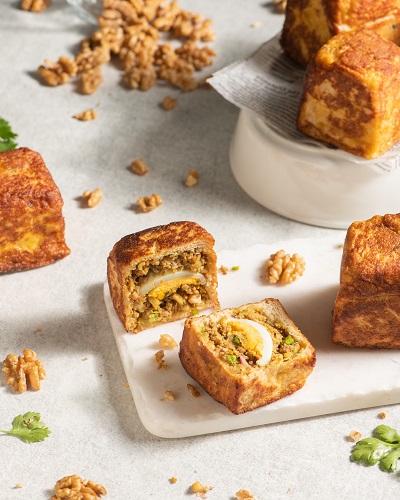 |
California Walnut Keema Stuffed Pav
Ingredients
4 hard-boiled eggs, halved
400g minced mutton or chicken keema
2 teaspoons coriander powder
1/2 teaspoon turmeric powder
2 onions, finely chopped
4 green chilies, finely chopped
1 teaspoon ginger paste
4-6 cloves of garlic, minced
1 teaspoon garam masala
Handful of fresh coriander, chopped
1/2 cup California walnuts, coarsely chopped
1 tablespoon ghee
Salt to taste
For the pav buns:
8 pav buns
2 eggs
1-2 teaspoons milk
A pinch of salt and pepper
Preparation
1. In a pan, heat ghee. Cook the meat with coriander powder, turmeric powder, salt, and 2-3 teaspoons of water until water evaporates and keema is cooked. Set aside.
2. In the same pan, heat 2 tablespoons of oil, and sauté the onions till translucent. Add the green chilies, garlic, and ginger paste and fry till fragrant.
3. Add the minced meat, garam masala, coriander, and walnuts. Adjust seasoning. Stir till the masala is dry. Remove from flame.
4. Using a knife, make a round or square cut on the bottom side of the pavs. Keep the cut piece.
5. Remove some crumbs from the inner section without breaking the bun. Repeat with the remaining buns.
6. Stuff each bun with 1 – 1 ½ tablespoons of keema masala (depending on the size of the pav, adjust the filling).
7. Place an egg half on top of the filling. Top with 1-2 tablespoons of the keema masala. Cover with the reserved cut-out. Press gently.
8. Repeat for the other buns. Make sure the buns are properly filled but take care that you do not break the buns while filling.
(Note: In case a part of the bun breaks, use the crumbs that were removed to patch up the open part. Once you coat it with egg and cook, the crumb will also cook and the breaks will be fixed.)
9. Beat the eggs with 2 teaspoons of milk and a tiny pinch of salt and pepper.
10. Heat 1 tablespoon of ghee/butter over medium heat. Dip the bun in the beaten egg covering all sides with the egg batter. Place the bun’s bottom side first in the pan. This will help seal the bottom part.
11. Cook for 1 – 2 minutes per side. Serve warm.