





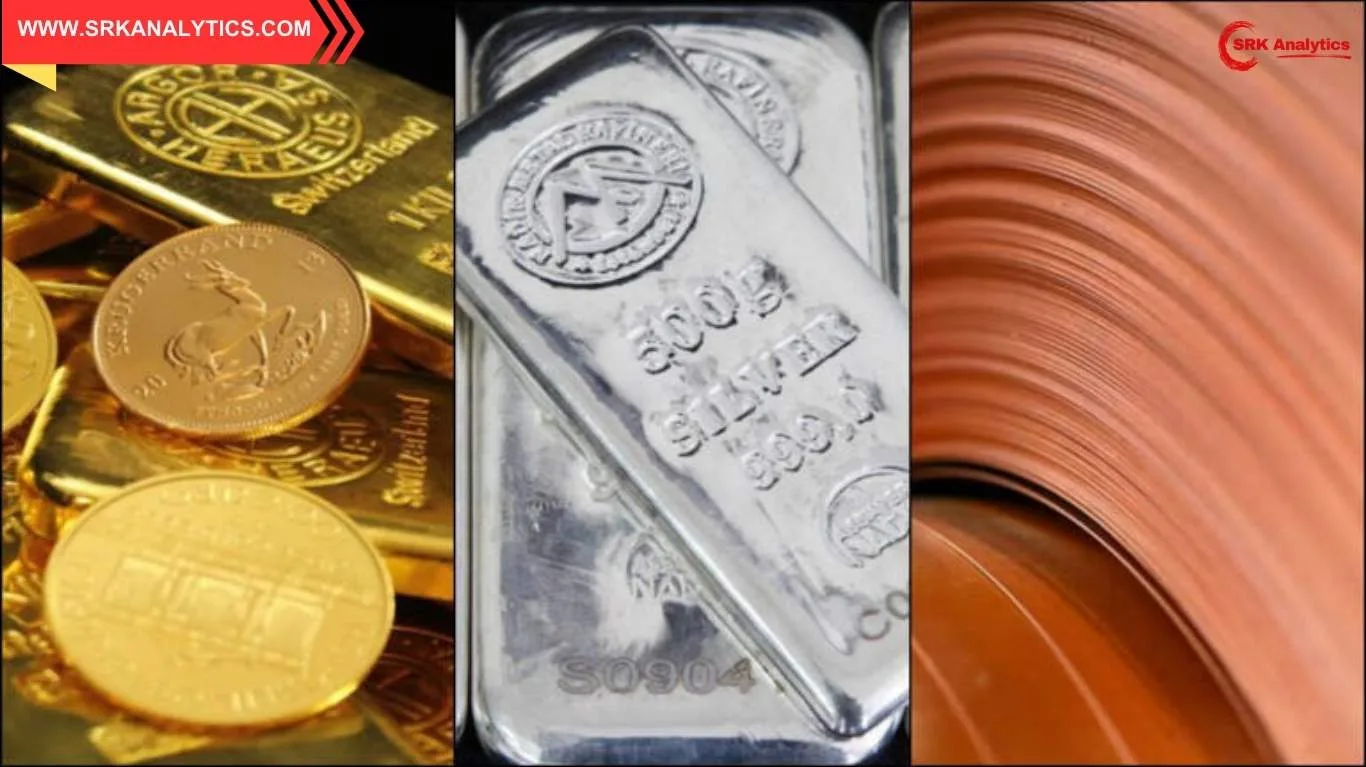
After witnessing a record-breaking rally in recent months, the prices of gold, silver, and copper have now declined sharply, with losses of up to 13% across global and domestic markets. This sudden correction has caught the attention of investors, traders, and policymakers, sparking debates about the sustainability of the earlier surge and the factors driving the current downturn.
Background of the Commodity Rally and Decline
- Gold and silver had surged to multi-year highs, driven by safe-haven demand amid global uncertainties.
- Copper, often seen as a barometer of industrial growth, had rallied on expectations of strong demand from infrastructure and renewable energy sectors.
- However, the recent decline highlights the volatility of commodity markets, influenced by global macroeconomic trends, investor sentiment, and supply-demand dynamics.
- Analysts point to four major reasons behind the fall, ranging from profit booking to currency fluctuations.
Key Highlights of the Decline
| Indicator | Details |
|---|---|
| Commodities Affected | Gold, Silver, Copper |
| Decline Percentage | Up to 13% |
| Previous Trend | Record rally in recent months |
| Current Sentiment | Cautious, corrective phase |
| Broader Impact | Investors re-evaluating strategies |
4 Key Reasons Behind the Fall
| Reason | Impact on Commodities | Investor Reaction | Market Implication |
|---|---|---|---|
| Profit Booking | Sharp sell-off after rally | Short-term exits | Prices corrected downward |
| Stronger US Dollar | Reduced appeal of gold/silver | Shift to currency assets | Pressure on precious metals |
| Global Economic Signals | Slower industrial demand | Reassessment of copper outlook | Weakness in base metals |
| Interest Rate Trends | Higher yields reduce gold’s appeal | Portfolio rebalancing | Commodities lose safe-haven demand |
Reason 1: Profit Booking After Record Rally
- Investors who had benefited from the earlier surge in gold, silver, and copper prices engaged in profit booking.
- This led to a wave of selling pressure, pushing prices lower.
- Profit booking is a natural market phenomenon after extended rallies, ensuring corrections and stabilizations.
Reason 2: Strengthening of the US Dollar
- A stronger US dollar has historically weighed on commodity prices, particularly gold and silver.
- As the dollar gained against major currencies, investors shifted towards currency assets, reducing demand for precious metals.
- The dollar’s strength also made commodities more expensive for holders of other currencies, dampening global demand.
Reason 3: Global Economic Signals
- Copper prices are closely tied to industrial demand and economic growth.
- Recent signals of slower global growth, particularly in manufacturing and construction, have reduced optimism about copper demand.
- Concerns over China’s industrial activity and global trade tensions further pressured base metal prices.
Reason 4: Interest Rate Trends
- Rising interest rates globally have reduced the appeal of gold as a safe-haven asset.
- Higher yields on bonds and other instruments diverted investor interest away from precious metals.
- Silver, often seen as both an industrial and precious metal, was impacted by both weaker industrial demand and reduced safe-haven appeal.
Detailed Analysis of Commodity Movements
| Commodity | Recent Trend | Decline Percentage | Key Driver |
|---|---|---|---|
| Gold | Fell after multi-year highs | ~10% | Stronger dollar, higher interest rates |
| Silver | Sharp correction | ~12% | Profit booking, weaker industrial demand |
| Copper | Decline after rally | ~13% | Global growth concerns, weaker demand outlook |
Expert Opinions
- Market Analysts: Emphasize that corrections are healthy after extended rallies.
- Investment Advisors: Suggest cautious strategies, focusing on long-term fundamentals.
- Traders: Highlight volatility as an opportunity for short-term gains.
- Economists: Point to global macroeconomic factors as key drivers of commodity cycles.
Challenges Ahead
- Volatility: Commodity markets are expected to remain volatile in the near term.
- Global Growth Concerns: Slower industrial activity could weigh on base metals.
- Currency Fluctuations: Continued strength of the US dollar may pressure precious metals.
- Policy Uncertainty: Geopolitical tensions and trade policies could impact demand.
Opportunities for Investors
- Long-Term Positioning: Corrections provide opportunities to enter at lower levels.
- Diversification: Balancing portfolios across commodities, equities, and bonds.
- Industrial Demand: Copper’s long-term outlook remains strong due to renewable energy and infrastructure.
- Safe-Haven Appeal: Gold may regain demand during geopolitical uncertainties.
- Silver’s Dual Role: Industrial and precious metal demand could support recovery.
Broader Context of Commodity Markets
- Commodity prices are influenced by a complex interplay of global economic trends, investor sentiment, and policy decisions.
- The recent decline underscores the importance of monitoring macroeconomic indicators such as interest rates, currency movements, and industrial demand.
- While short-term corrections are inevitable, long-term fundamentals for metals like copper remain strong due to structural demand drivers.
- Precious metals like gold and silver continue to play a critical role in investor portfolios, balancing risk and returns.
Public Sentiment
- Retail investors expressed concern over the sharp decline, questioning the sustainability of earlier gains.
- Institutional investors viewed the correction as a healthy adjustment, aligning prices with fundamentals.
- Social media discussions reflected mixed reactions, with some highlighting opportunities to buy at lower levels.
- Overall sentiment remains cautious but optimistic about long-term prospects.
Conclusion
The decline of up to 13% in gold, silver, and copper prices after a record rally reflects the natural cycle of commodity markets. Driven by profit booking, a stronger US dollar, global economic signals, and interest rate trends, the correction highlights the volatility inherent in these assets. While short-term challenges persist, long-term fundamentals remain supportive, offering opportunities for investors to strategically position themselves in the commodity space.
Disclaimer
This article is intended for informational purposes only and does not constitute financial advice. Commodity prices, market trends, and investor sentiments are subject to change based on evolving circumstances. Readers are encouraged to consult financial experts before making investment decisions. The author and publisher are not responsible for any decisions made based on this article.