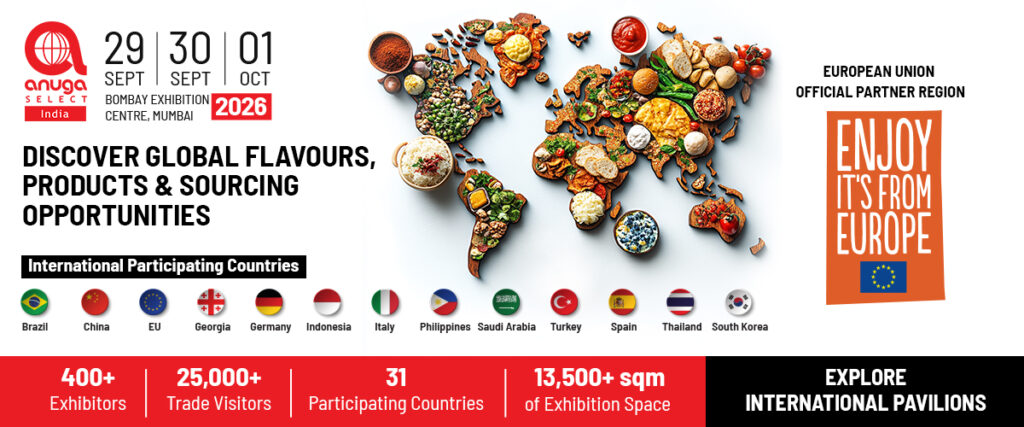

India’s growing importance in the global food and beverage industry will take centre stage at Anuga Select India 2026, as international food businesses, country pavilions, buyers and industry stakeholders come together for three days of sourcing, trade, innovation and business networking.
 |
India’s Food & Beverage Growth Story Attracts Strong Global Participation as Anuga Select India 2026 Strengthens International Trade Partnerships
A key highlight of the 2026 edition is the European Union (EU) participating as the Official Country Partner, bringing Europe’s diverse agri-food ecosystem to India and creating opportunities for greater market access, sourcing and business collaboration between European suppliers and the Indian food and beverage industry.
Europe Takes Centre Stage as Official Partner Region
The EU Pavilion will showcase the breadth of European agri-food excellence, highlighting the quality, authenticity, food safety, traceability, sustainability and innovation associated with European food systems.
The pavilion will present a diverse range of food categories, including dairy and cheese, bakery and confectionery ingredients, meat and processed meat products, cereals and grain-based products, specialty agricultural products, premium food ingredients, sustainable food solutions and authentic regional European foods.
Through product showcases, tastings and knowledge-sharing opportunities, the EU presence will give Indian buyers, importers, distributors, retailers and HoReCa professionals an opportunity to discover European products, understand their provenance and explore new sourcing possibilities.
The participation of the European Union further strengthens Anuga Select India’s role as a platform connecting international food suppliers with India’s expanding food and beverage market, while providing businesses with opportunities to build long-term commercial relationships.
A Truly International Food & Beverage Showcase
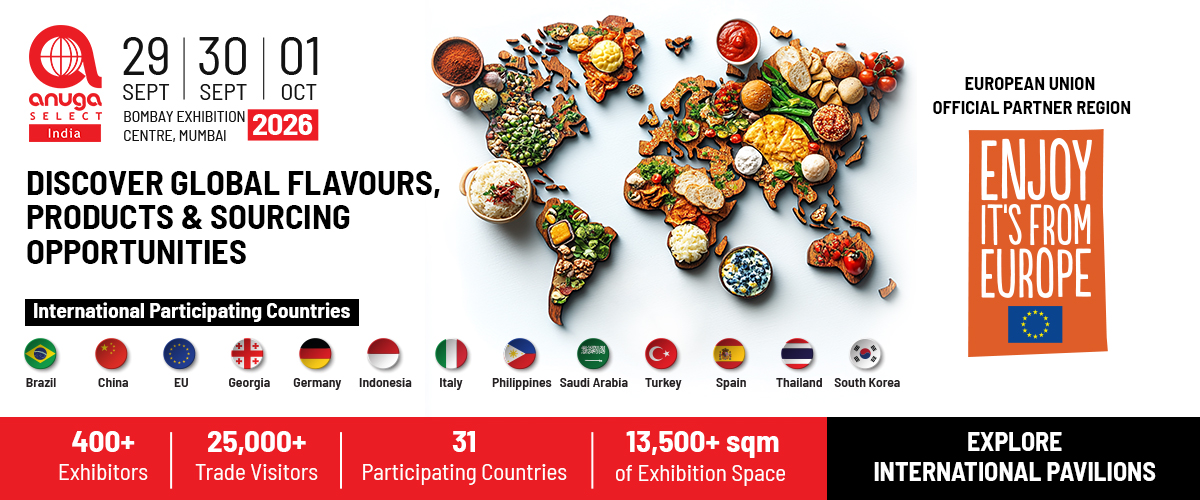
Alongside the EU, 12+ countries will participate through international country pavilions and exhibitors, bringing a wide spectrum of global food products, ingredients, innovations and sourcing opportunities to Mumbai.
Participating countries include Saudi Arabia, Thailand, the Philippines, South Korea, China, Türkiye, Spain, Indonesia, Brazil, Italy, Germany and Georgia.
From Asian food innovation and tropical and processed food products to European culinary heritage, Middle Eastern food and agricultural initiatives, and the diverse agricultural strengths of Latin America, the international pavilions will give Indian buyers direct access to suppliers and products from some of the world’s key food-producing and exporting markets.
The international presence also reflects the growing demand for global food products, premium ingredients, international cuisines and new sourcing opportunities across India’s retail, food service, hospitality and food manufacturing sectors.
Anuga Select India 2026: Connecting Global Suppliers with India
With 400+ exhibitors, representation from 45+ countries and more than 13,500 sqm of exhibition space, Anuga Select India 2026 will bring together the key segments of the food and beverage value chain at Bombay Exhibition Centre, Mumbai.
The exhibition is designed to connect importers and exporters, distributors and wholesalers, retail chains and modern trade buyers, HoReCa professionals, food manufacturers, food service operators, industry associations, policymakers, investors and entrepreneurs.
Beyond product discovery and international sourcing, Anuga Select India will provide a platform to identify emerging food trends, discover innovative products and ingredients, explore new markets and develop strategic business partnerships.
Dedicated industry features, curated networking opportunities and buyer-focused initiatives will further support meaningful connections between exhibitors and decision-makers across the food and beverage ecosystem.
A Growing Global Platform for Food Trade
The increasing international participation at Anuga Select India 2026 reflects the growing opportunities within India’s food and beverage market and the importance of creating platforms that connect domestic demand with global supply.
With the European Union as Official Partner Region and international participation spanning Europe, Asia, the Middle East and the Americas, the 2026 edition will offer buyers a concentrated view of global food markets while giving international suppliers access to one of the world’s most dynamic and diverse food economies.
Anuga Select India 2026 will take place from 29 September to 1 October 2026 at Bombay Exhibition Centre, Mumbai, bringing the international food and beverage community together to discover products, build partnerships and shape the future of food trade.
To be part of this leading food and beverage industry gathering, register as a visitor – register.anuga-india.com/?utm_source=DigitalPR.
Explore more about Anuga Select India 2026, including its exhibitors, features and programme – anuga-india.com.
Anuga Select India 2026
29 September – 1 October 2026
Bombay Exhibition Centre, Mumbai