



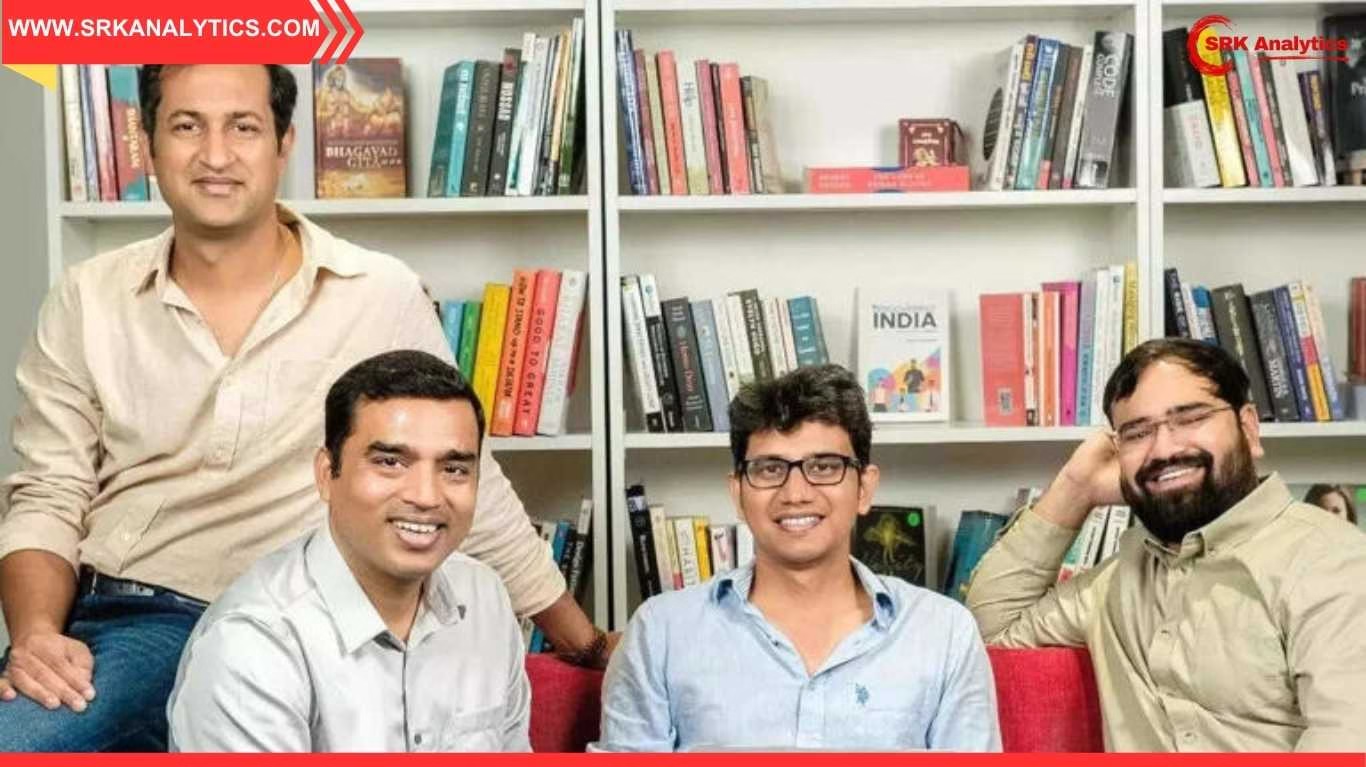
As wealth-tech platform Groww made its public market debut, the moment triggered more than just investor enthusiasm—it ignited a spirited debate among India’s top startup voices on the sustainability of growth models, profitability, and the role of IPOs in the startup ecosystem. The conversation was led by Zerodha CEO Nithin Kamath, Ixigo chairman Aloke Bajpai, and Stellaris Venture Partners’ Ritesh Banglani, each offering sharply contrasting views on how Indian startups scale and spend.
Kamath, known for his bootstrapped approach at Zerodha, took to social media to argue that India’s tax system incentivizes startups to prioritize rapid expansion over profitability. He suggested that many founders burn cash to avoid taxes, creating unsustainable business models. Bajpai and Banglani pushed back, asserting that venture capital is designed to fund growth—not evade taxes—and that profitability must be contextualized within sector dynamics.
🧠 Key Perspectives from the Groww IPO Debate
| Leader | Position Summary |
|---|---|
| Nithin Kamath | Criticized cash burn culture, said tax incentives distort startup priorities |
| Aloke Bajpai | Disagreed with Kamath, emphasized strategic capital deployment for scale |
| Ritesh Banglani | Argued VC is not a tax avoidance tool, but a growth enabler |
| Pravin Jadhav (Dhan) | Congratulated Groww, called for balanced discourse |
The debate reflects deeper tensions between bootstrapped founders and VC-backed entrepreneurs in India’s evolving tech landscape.
📊 Groww IPO Snapshot
| Metric | Value/Status |
|---|---|
| IPO Launch Date | November 4, 2025 |
| Issue Size | ₹2,800 crore |
| Price Band | ₹268–₹274 per share |
| Valuation at Upper Band | ₹28,000 crore |
| Subscription Status | Oversubscribed 12.6x |
| Listing Date | November 11, 2025 |
| Grey Market Premium | ₹42 (as of Nov 5) |
Groww’s IPO was met with strong demand from institutional and retail investors, signaling market confidence.
📈 Timeline of Groww’s Journey
| Year | Milestone/Event | Impact on Business |
|---|---|---|
| 2016 | Founded by ex-Flipkart employees | Entry into mutual fund distribution |
| 2019 | Expanded into stock broking | Diversified revenue streams |
| 2021 | Achieved unicorn status | Valuation crossed $1 billion |
| 2023 | Turned profitable | ₹65 crore net profit FY23 |
| 2025 | Filed DRHP and launched IPO | Public market entry |
Groww’s trajectory showcases disciplined growth with a focus on product-led expansion.
🗣️ Reactions from Startup Ecosystem
| Stakeholder | Commentary Summary |
|---|---|
| Startup Founders | Mixed views on profitability vs scale |
| VCs | Emphasized long-term value creation |
| Retail Investors | Excited by Groww’s brand and user base |
| Policy Experts | Called for tax reforms to support innovation |
The IPO has reignited discussions on regulatory frameworks and startup governance.
📌 Strategic Insights from the Debate
| Theme | Key Takeaway |
|---|---|
| Profitability | Not always immediate; depends on sector maturity |
| Cash Burn | Should be strategic, not habitual |
| IPO Timing | Must align with product-market fit and scale |
| Tax Policy | Needs reform to support sustainable growth |
The debate underscores the need for nuanced understanding of startup economics.
📌 Conclusion
Groww’s IPO has become more than a financial event—it’s a cultural moment in India’s startup ecosystem. As Kamath, Bajpai, and Banglani spar over profitability, cash burn, and IPO ethics, the broader takeaway is clear: India’s tech founders are rethinking what sustainable success looks like. With Groww’s strong listing and profitability track record, the conversation now shifts to how other startups will navigate the public markets and whether the ecosystem can evolve beyond growth-at-all-costs.
Disclaimer: This article is based on publicly available financial disclosures, social media commentary, and media reports. It is intended for informational and editorial purposes only and does not constitute investment or legal advice.