









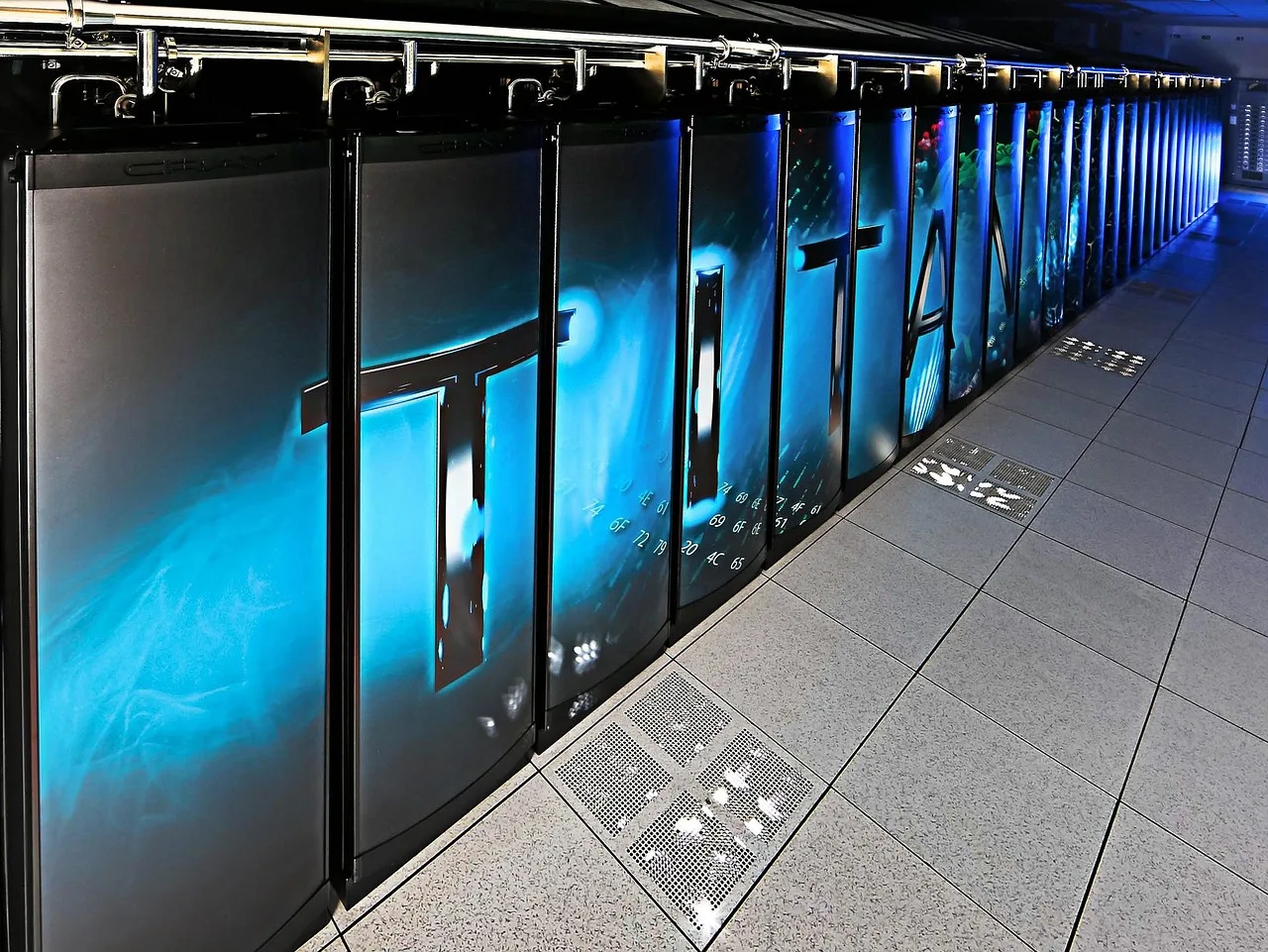
As Generative AI continues to dominate the technological landscape, a quiet shift is occurring within the industry: High-Performance Computing (HPC) is reclaiming its status as the primary infrastructure for complex decision-making. While the spotlight has remained fixed on large language models and GPU-heavy training cycles, enterprise leaders and founders are increasingly pivoting back to HPC architectures to solve specialized, data-intensive challenges that standard AI models struggle to process.
The Evolution of Computational Priorities
For the past decade, the tech industry prioritized cloud-native scalability and rapid application deployment, often at the expense of raw computational depth. The rise of GenAI initially accelerated this trend, as companies rushed to secure massive GPU clusters to power massive neural networks. However, as the limitations of black-box AI models become apparent in precision-heavy industries like pharmaceuticals, aerospace, and climate modeling, the need for deterministic, high-performance simulation has resurfaced.
HPC systems are designed for massive parallel processing and low-latency communication, which allows for the simulation of physical phenomena rather than mere statistical prediction. Unlike GenAI, which excels at pattern recognition and content generation, HPC environments provide the rigorous mathematical certainty required for engineering and scientific breakthroughs.
Bridging the Gap Between AI and Simulation
Industry analysts note that we are entering an era of hybrid infrastructure. Recent reports from Gartner indicate that organizations are increasingly seeking to integrate AI-driven insights into existing HPC workflows to reduce time-to-market for complex products. This integration allows companies to use AI to narrow down a search space, while relying on traditional HPC simulations to validate the final results with high accuracy.
Dr. Elena Vance, a lead researcher in computational physics, explains that the current trend is not about replacing AI, but rather contextualizing it within a broader framework. “We are seeing a move toward ‘AI-accelerated HPC,’ where machine learning models act as surrogate functions to speed up complex mathematical solvers, effectively providing the best of both worlds,” Vance stated.
Implications for Founders and Startups
For founders, the resurgence of HPC creates a new landscape for venture capital and product development. The era of ‘AI-only’ startups is facing scrutiny, with investors shifting focus toward companies that can demonstrate a proprietary advantage through specialized hardware utilization or hybrid software stacks. Those who can successfully navigate the intersection of high-performance simulation and generative AI are finding themselves with a significant competitive moat.
The shift also necessitates a change in talent acquisition. The demand for engineers who understand both distributed systems and low-level hardware optimization is skyrocketing. Companies that fail to invest in infrastructure that supports both high-level AI abstractions and low-level computational efficiency risk becoming trapped in expensive, inefficient cloud-only workflows.
Looking Ahead: The Infrastructure Horizon
As the industry matures, the distinction between HPC and AI will likely continue to blur. We can expect to see more specialized silicon designed specifically to handle the convergence of these two fields, moving beyond general-purpose GPUs toward domain-specific accelerators. The next phase of development will focus on energy efficiency and the democratization of these powerful tools, allowing smaller teams to conduct simulations that previously required supercomputer access. Market participants should monitor the development of edge-based high-performance computing, which promises to bring sophisticated simulation capabilities closer to the data source, potentially disrupting centralized cloud dominance.