


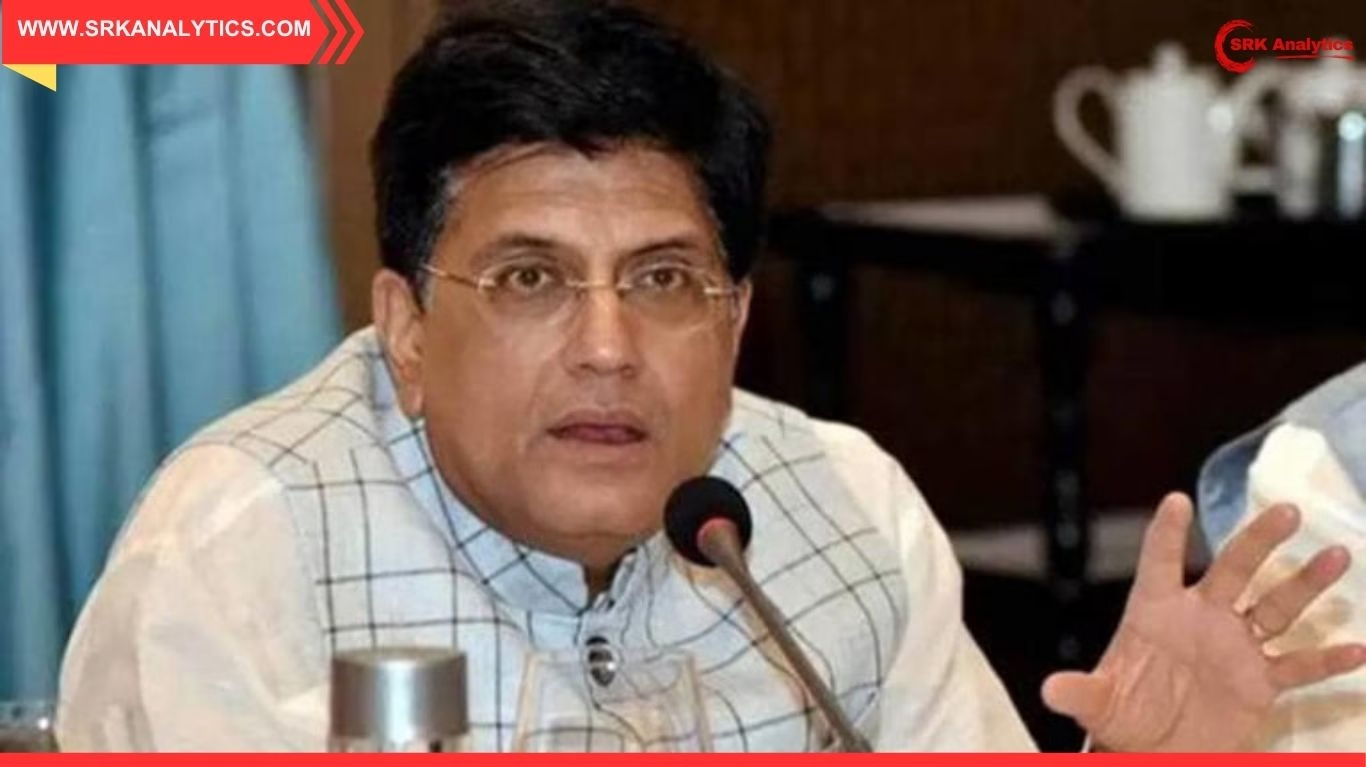
Union Commerce and Industry Minister Piyush Goyal has sharply criticized the Congress-era Free Trade Agreements (FTAs) with Japan and South Korea, stating that they have failed to deliver export growth for India while leading to a surge in imports. Speaking at the 105th Annual General Meeting of ASSOCHAM in New Delhi on October 17, 2025, Goyal said, “These FTAs have not helped our exporters. Instead, they’ve opened the floodgates for imports, hurting domestic manufacturing.”
Goyal’s remarks come amid a broader review of India’s trade strategy, especially as the country negotiates new FTAs with the European Union, UK, and Gulf Cooperation Council. He emphasized that future trade deals must be balanced, reciprocal, and aligned with India’s economic interests. The minister also questioned the previous government’s decision to enter RCEP negotiations, warning that such pacts disproportionately benefit countries like China.
🧠 Key Highlights from Goyal’s Statement on Japan and Korea FTAs
| Element | Details |
|---|---|
| Speaker | Piyush Goyal, Union Commerce and Industry Minister |
| Event | ASSOCHAM AGM, New Delhi |
| Date | October 17, 2025 |
| Criticized FTAs | India-Japan CEPA, India-Korea CEPA |
| Core Concern | Minimal export growth, rising imports |
| Policy Direction | Strategic recalibration of future FTAs |
Goyal stressed that India will no longer sign trade deals from a position of weakness and will prioritize domestic industry protection and job creation.
📊 Timeline of India’s Trade Engagements with Japan and Korea
| Year | Milestone Description |
|---|---|
| 2011 | India-Japan CEPA signed |
| 2010 | India-Korea CEPA signed |
| 2015–2022 | Trade deficit with both countries widens |
| October 2025 | Goyal criticizes FTAs, calls for review |
India’s trade deficit with South Korea stood at $14.5 billion in FY25, while with Japan it reached $8.2 billion, despite tariff concessions.
🗣️ Reactions from Industry, Economists, and Trade Experts
- ASSOCHAM President: “We support the minister’s call for balanced trade deals.”
- Trade Economist: “India must renegotiate legacy FTAs to reflect current realities.”
- Exporters’ Associations: “We need better market access and non-tariff barrier removal.”
| Stakeholder Group | Reaction Summary |
|---|---|
| Industry Leaders | Backing recalibration of trade strategy |
| Economists | Calling for FTA renegotiation |
| Exporters | Seeking structural reforms and incentives |
| Media | Highlighting trade deficit and policy gaps |
The government is expected to initiate sectoral consultations to assess the impact of existing FTAs and explore renegotiation options.
🧾 Comparative Snapshot: India’s Trade with Japan and Korea (FY25)
| Country | Exports (USD bn) | Imports (USD bn) | Trade Deficit (USD bn) |
|---|---|---|---|
| Japan | 6.8 | 15.0 | 8.2 |
| South Korea | 7.5 | 22.0 | 14.5 |
Despite tariff concessions, Indian exporters face non-tariff barriers, language hurdles, and complex certification norms in both markets.
🧭 What to Watch in India’s Trade Strategy Shift
- FTA Renegotiation: Possible review of CEPA terms with Japan and Korea
- New Trade Deals: Focus on EU, UK, GCC with stronger safeguards
- Domestic Industry Protection: Tariff recalibration and anti-dumping measures
- Export Incentives: PLI schemes and market access facilitation
Goyal concluded, “India is no longer a passive participant in global trade. We will negotiate from strength, not desperation.”
Disclaimer
This news content is based on verified government statements, trade data, and media reports as of October 18, 2025. It is intended for editorial use and public awareness. The information does not constitute trade advice, policy endorsement, or economic forecasting and adheres to ethical journalism standards.
A cozy hotels in Kolasin Montenegro for mountain lovers. Ski slopes, trekking trails, and local cuisine are nearby. Rooms are equipped with amenities, Wi-Fi, parking, and friendly staff are available to help you plan your vacation.