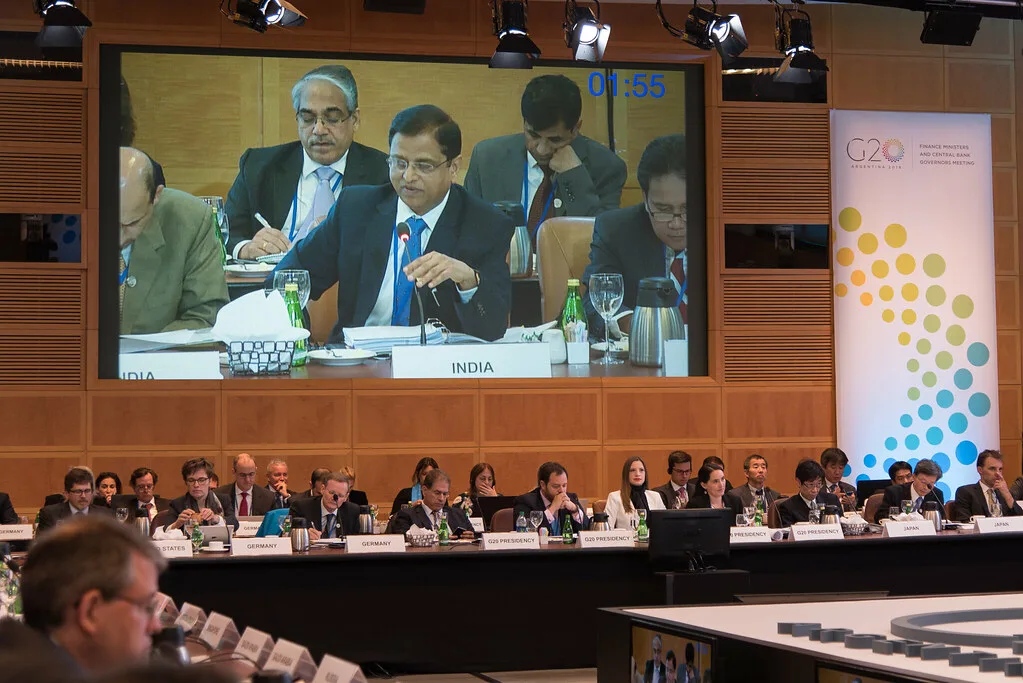






Reserve Bank of India (RBI) Governor Shaktikanta Das announced this week that India has solidified its position as a primary driver of global economic expansion, citing robust domestic consumption and resilient macroeconomic fundamentals. Speaking at a high-level financial forum, Das emphasized that despite persistent geopolitical tensions and volatile global markets, the Indian economy remains a beacon of stability and high-growth potential.
The Context of Economic Resilience
India’s current economic trajectory follows a period of aggressive post-pandemic recovery and structural policy reforms. The government has prioritized infrastructure development, digital public infrastructure, and manufacturing incentives to diversify its economic base.
These initiatives have successfully shielded the nation from the broader slowdowns affecting many advanced economies. Recent data from the National Statistical Office indicates that India has consistently outperformed major global peers, maintaining a growth rate that positions it as the fastest-growing major economy in the world.
Factors Fueling the Growth Engine
Governor Das identified several pillars supporting this growth, most notably the strength of domestic demand. Private consumption, which accounts for a significant portion of India’s GDP, has remained resilient even amidst inflationary pressures.
Furthermore, the RBI has maintained a cautious but supportive monetary policy stance, balancing the need to curb inflation with the necessity of fostering credit growth. Investment in physical and digital infrastructure has also lowered logistics costs and improved the ease of doing business.
Data from the International Monetary Fund (IMF) supports this outlook, with the organization frequently upgrading its projections for India’s GDP growth. Analysts point to the nation’s demographic dividend—a large, young, and increasingly skilled workforce—as a long-term advantage that differentiates India from aging economies in Europe and East Asia.
Expert Perspectives on Future Stability
Financial analysts highlight that India’s integration into global supply chains is accelerating. As multinational corporations adopt ‘China Plus One’ strategies, India has emerged as a top destination for foreign direct investment (FDI) in manufacturing and technology sectors.
However, experts caution that maintaining this momentum requires continued vigilance. Potential risks include volatile global energy prices and the necessity for further labor market reforms to fully capitalize on the country’s demographic potential.
Implications for the Global Market
For international investors, India’s current growth story suggests a shift in capital allocation strategies. Emerging market portfolios are increasingly overweight on India, reflecting confidence in the country’s ability to navigate global headwinds.
For the domestic industry, the focus is shifting toward scaling operations to meet both local and global demand. The upcoming quarters will be critical, as observers look for sustained momentum in capital expenditure cycles and private sector investment.
Moving forward, market participants will be closely watching the RBI’s response to global interest rate cycles and any shifts in fiscal policy ahead of the next national budget. The sustainability of this growth will depend largely on the government’s ability to maintain macroeconomic stability while navigating the complexities of a fragmented global trade environment.