





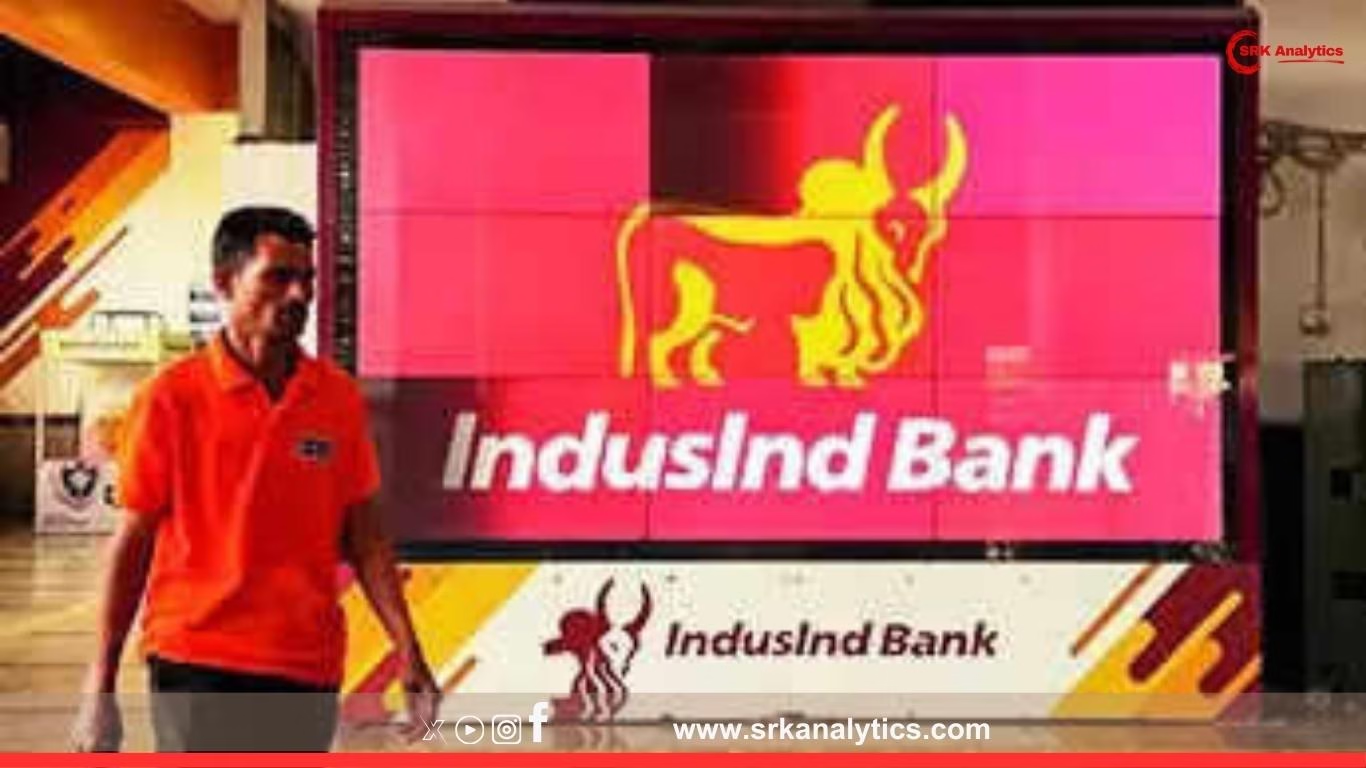
Six months after a ₹2,500 crore accounting hole surfaced at IndusInd Bank, the scandal continues to shake investor confidence and raise uncomfortable questions about corporate governance, regulatory oversight, and internal accountability. What began as “discrepancies” in the bank’s derivative portfolio has now snowballed into a full-blown investigation, with Mumbai Police launching a formal probe and forensic audits revealing systemic lapses dating back to FY16.
The scandal has triggered a leadership crisis, forced resignations, and wiped out over 50% of shareholder value. But beyond the numbers, the real story lies in the red flags that were ignored—by the board, auditors, and regulators.
IndusInd Bank Scandal – Timeline of Key Events
| Date | Event / Action | Impact / Outcome |
|---|---|---|
| March 10, 2025 | Disclosure of derivative discrepancies | ₹1,960 crore hole flagged |
| April 1, 2025 | RBI’s new investment norms kick in | Transition to FIFO method |
| April 28, 2025 | Deputy CEO Arun Khurana resigns | Forensic report implicates him |
| April 29, 2025 | CEO Sumant Kathpalia steps down | Board initiates executive search |
| May 1, 2025 | Grant Thornton forensic audit released | Emails show ignored warnings |
| May 22, 2025 | Q4 results show ₹2,329 crore net loss | FY25 profit tanks 71% |
| Sep 26, 2025 | Mumbai Police launches formal probe | Criminal investigation begins |
At the heart of the scandal is a massive misstatement of financial reports, particularly in the bank’s derivative trading book. According to the forensic audit conducted by Grant Thornton, internal alerts were repeatedly raised by the finance department—but were sidelined by senior executives, including former deputy CEO Arun Khurana. Email evidence reportedly shows Khurana was aware of the discrepancies but chose not to act.
Layers of Accountability – Who Ignored the Red Flags?
| Role / Entity | Responsibility | Lapse / Failure |
|---|---|---|
| Board of Directors | Oversight of financial reporting | Failed to detect multi-year misstatements |
| Independent Auditors | Verification of financial statements | Excluded derivatives from critical scrutiny |
| Senior Management | Operational control and disclosures | Ignored internal alerts, misled investors |
| Regulators (RBI) | Monitoring governance standards | Raised concerns but delayed action |
| Shareholders | Investor vigilance | Misled by doctored quarterly reports |
The board, which is legally and ethically responsible for ensuring accurate financial disclosures, failed to detect or act on the misstatements for several years. Analysts argue that the board’s continued silence sends a troubling signal about its commitment to shareholder protection.
Auditors, meanwhile, are under fire for excluding derivative trading from their list of critical audit areas—despite IndusInd’s disproportionately large exposure in this segment. The decision to remove derivatives from scrutiny two years ago is now being seen as a grave oversight, if not complicity.
Regulators, including the Reserve Bank of India, reportedly had concerns about governance standards at IndusInd but did not publicly disclose their findings until the scandal broke. The RBI has since authorized the board to form an executive committee to manage day-to-day operations in the absence of a CEO.
Financial Fallout – IndusInd Bank Performance Snapshot
| Metric | FY24 | FY25 (Post-Scandal) | Change (%) |
|---|---|---|---|
| Net Profit | ₹1,120 crore | ₹325 crore | -71% |
| Shareholder Value | ₹68,000 crore | ₹32,500 crore | -52% |
| Derivative Exposure | ₹9,800 crore | ₹7,200 crore | -26% |
| Auditor Fees | ₹18 crore | ₹22 crore | +22% |
| Employee Attrition Rate | 12% | 19% | ↑ |
The scandal has also exposed technology and process gaps. IndusInd relied on Calypso Technology’s platform to manage its derivatives portfolio, but poor integration and misuse of the system reportedly contributed to the accounting hole. The bank has since initiated a full review of its tech stack and compliance protocols.
Investor forums and social media platforms have erupted with criticism, with hashtags like #IndusIndScandal, #CorporateGovernanceFail, and #BankingAccountability trending across financial circles.
Public Sentiment – Social Media Buzz on IndusInd Scandal
| Platform | Engagement Level | Sentiment (%) | Top Hashtags |
|---|---|---|---|
| Twitter/X | 2.1M mentions | 76% critical | #IndusIndScandal #GovernanceFail |
| 1.9M interactions | 78% angry | #BankingAccountability #AuditFailure | |
| 1.6M views | 82% shocked | #RedFlagsIgnored #InvestorLoss | |
| YouTube | 1.4M views | 80% analytical | #IndusIndExplained #ScandalTimeline |
The bank has retained headhunting firm Spencer Stuart to identify a new CEO, while shareholders are demanding a complete overhaul of the board and audit committee. Legal experts believe criminal charges may follow if the Mumbai Police probe confirms deliberate misreporting.
As the dust settles, the IndusInd scandal serves as a stark reminder of the importance of corporate governance, transparency, and institutional accountability. The ₹2,500 crore hole is not just a financial loss—it’s a breach of trust that will take years to repair.
Disclaimer: This article is based on publicly available media reports, forensic audit findings, and regulatory disclosures. It does not constitute legal advice or financial recommendation. All quotes are attributed to public figures and institutions as per coverage. The content is intended for editorial and informational purposes only.


Simply wish to say your article is as surprising. The clearness for your publish is simply excellent and i could suppose you are a professional on this subject. Fine with your permission allow me to grasp your feed to stay updated with drawing close post. Thanks a million and please continue the enjoyable work.
byueuropaviagraonline
spark dex SparkDex is redefining decentralized trading with speed, security, and real earning potential. On spark dex, you keep full control of your assets while enjoying fast swaps and low fees. Powered by sparkdex ai, the platform delivers smarter insights and optimized performance for confident decision-making. Trade, earn from liquidity, and grow your crypto portfolio with sparkdex — the future of DeFi starts here.