




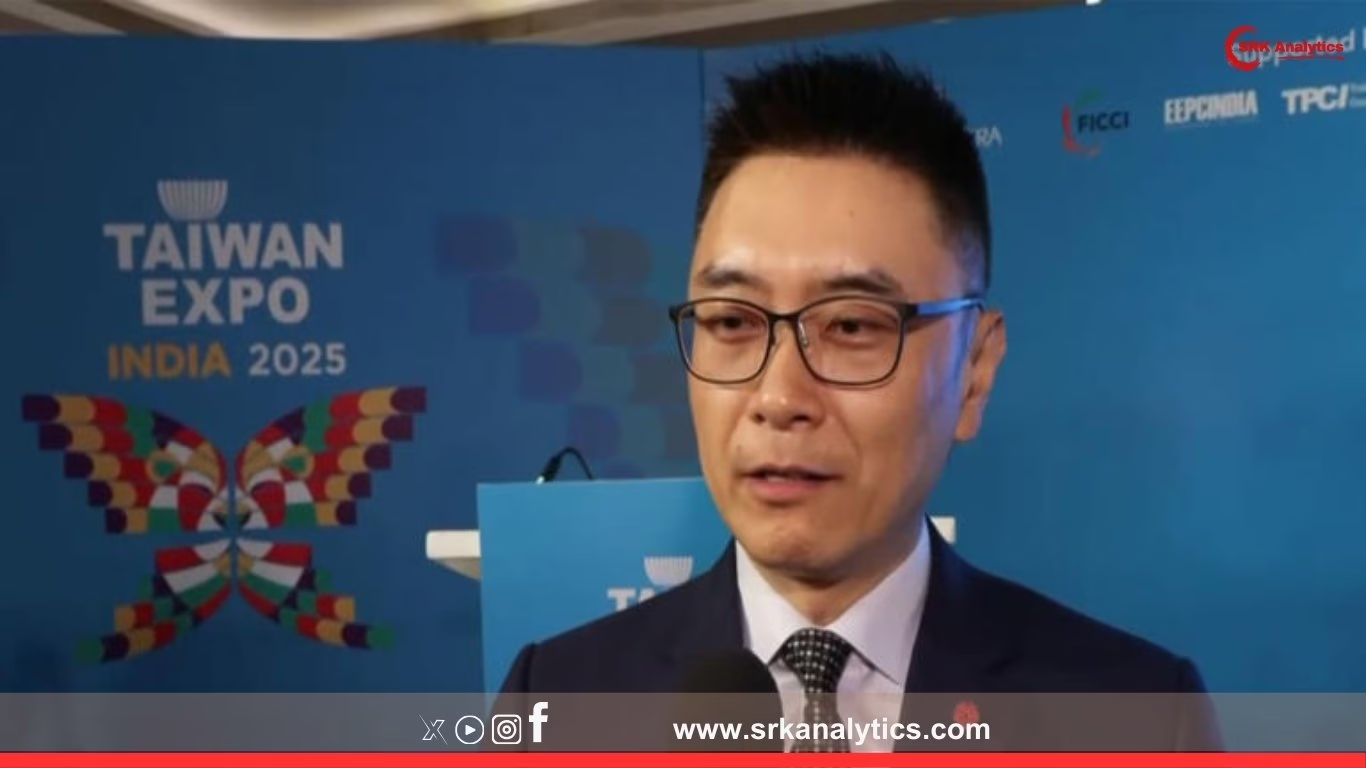
India and Taiwan are poised to deepen their strategic partnership in two critical sectors—rare earth minerals and semiconductors—marking a new chapter in Indo-Pacific industrial cooperation. The announcement came during the Taiwan Expo 2025 held in New Delhi, where Taiwanese officials emphasized their intent to source rare earths from India and invest heavily in semiconductor manufacturing.
Keven Cheng, Deputy Director of the Taiwan External Trade Development Council (TAITRA), stated that Taiwan is eager to tap into India’s vast rare earth reserves to fuel its high-tech industries, including electric vehicles, renewable energy, and defense manufacturing. In return, Taiwan is offering its cutting-edge semiconductor expertise, with plans already underway for joint ventures and mass production facilities.
Why India-Taiwan Collaboration Matters
| Strategic Asset | India’s Strength | Taiwan’s Strength |
|---|---|---|
| Rare Earth Reserves | 6.9 million metric tons (3rd largest globally) | High demand for electronics, EVs, defense |
| Semiconductor Expertise | Emerging talent pool, Tata-PSMC JV | 60% of global chip production, advanced foundries |
| Market Scale | Large domestic consumer base | Export-driven manufacturing ecosystem |
| Geopolitical Leverage | Indo-Pacific positioning, IPEF member | Tech powerhouse, China+1 strategy |
This partnership is not just transactional—it’s transformational. It aligns with global efforts to diversify supply chains, reduce dependence on China, and build resilient tech ecosystems.
Rare Earths: India’s Untapped Treasure
India holds approximately 6.9 million metric tons of rare earth reserves, ranking third globally behind China and Brazil. These minerals are essential for manufacturing permanent magnets, EV batteries, wind turbines, and advanced defense systems. Despite the abundance, India’s rare earth sector remains underdeveloped due to limited refining capacity and regulatory bottlenecks.
| Rare Earth Element | Key Applications |
|---|---|
| Neodymium | EV motors, wind turbines |
| Dysprosium | High-temperature magnets |
| Lanthanum | Camera lenses, hybrid batteries |
| Cerium | Catalytic converters, polishing agents |
Taiwan’s interest in sourcing these minerals signals a shift in global supply chain dynamics, with India emerging as a viable alternative to China’s dominance in rare earth processing.
Semiconductor Synergy: PSMC-Tata JV Leads the Way
Taiwan’s Powerchip Semiconductor Manufacturing Corporation (PSMC) is set to collaborate with Tata Group to begin mass production of chips in India by 2026. This move is part of India’s broader semiconductor mission, which includes a $10 billion incentive scheme and the establishment of chip fabrication units in Gujarat and Karnataka.
| Semiconductor Segment | Taiwan’s Role | India’s Role |
|---|---|---|
| Foundry Technology | PSMC, TSMC | Tata, ISMC |
| Design & IP | MediaTek, Realtek | C-DAC, startups |
| Packaging & Testing | ASE Group | Sahasra, SPEL |
| Talent Development | Academia-industry programs | IITs, Skill India |
Taiwan’s expertise in memory and logic chips, combined with India’s engineering talent and market scale, could create a robust semiconductor cluster in South Asia.
Multilateral Platforms Supporting the Alliance
India’s Ministry of Mines is actively engaging with global initiatives to secure critical mineral supply chains. These include:
| Platform | Objective |
|---|---|
| Minerals Security Partnership (MSP) | Diversify mineral sourcing, reduce China dependence |
| Indo-Pacific Economic Framework (IPEF) | Promote trade, supply chain resilience |
| Initiative on Critical and Emerging Technologies (iCET) | Advance tech collaboration with Quad partners |
Taiwan’s alignment with these platforms enhances the credibility and strategic depth of the India-Taiwan partnership.
Challenges and Roadblocks
While the intent is strong, execution will require overcoming several hurdles:
| Challenge | Description |
|---|---|
| Rare Earth Processing | India lacks magnet-grade refining capacity |
| Environmental Permitting | Mining and processing require strict compliance |
| Infrastructure Investment | Need for logistics, power, and water supply |
| Regulatory Clarity | Streamlining approvals and incentives |
Both governments are expected to announce joint task forces and policy frameworks to address these issues in the coming months.
Industry Reactions and Outlook
| Stakeholder | Response |
|---|---|
| Electronics and Semiconductor Association of India (ESDM) | Welcomed Taiwan’s investment, urged fast-tracking approvals |
| Federation of Indian Mineral Industries (FIMI) | Called for public-private partnerships in rare earth extraction |
| Taiwan Semiconductor Industry Association (TSIA) | Praised India’s talent pool and market potential |
| Confederation of Indian Industry (CII) | Advocated for long-term strategic roadmap |
Industry leaders see this collaboration as a game-changer that could position India as a global hub for electronics manufacturing and critical mineral supply.
What’s Next: Roadmap for India-Taiwan Tech Alliance
| Milestone | Timeline |
|---|---|
| PSMC-Tata Chip Production | Q2 2026 |
| Rare Earth Processing Pilot | Q1 2026 |
| Bilateral Tech Summit | December 2025 |
| Joint R&D Programs | 2026–2028 |
| Semiconductor Cluster Launch | 2027 |
The next few months will be crucial for translating intent into action. Bilateral agreements, investment flows, and infrastructure development will determine the success of this strategic alliance.
Conclusion: A New Era of Indo-Taiwan Tech Diplomacy
India and Taiwan’s expanding collaboration in rare earths and semiconductors is more than a bilateral partnership—it’s a strategic pivot in global tech geopolitics. As supply chains shift and technological sovereignty becomes paramount, this alliance offers a blueprint for resilient, inclusive, and future-ready industrial ecosystems.
With India’s mineral wealth and Taiwan’s manufacturing prowess, the two economies are poised to co-create value chains that power the next generation of innovation—from electric vehicles and smart grids to AI chips and quantum computing.
—
Disclaimer: This article is based on publicly available government statements, verified industry reports, and official trade announcements. It is intended for informational purposes only and does not constitute investment, legal, or policy advice. All project timelines and collaborations are subject to change based on formal agreements.