




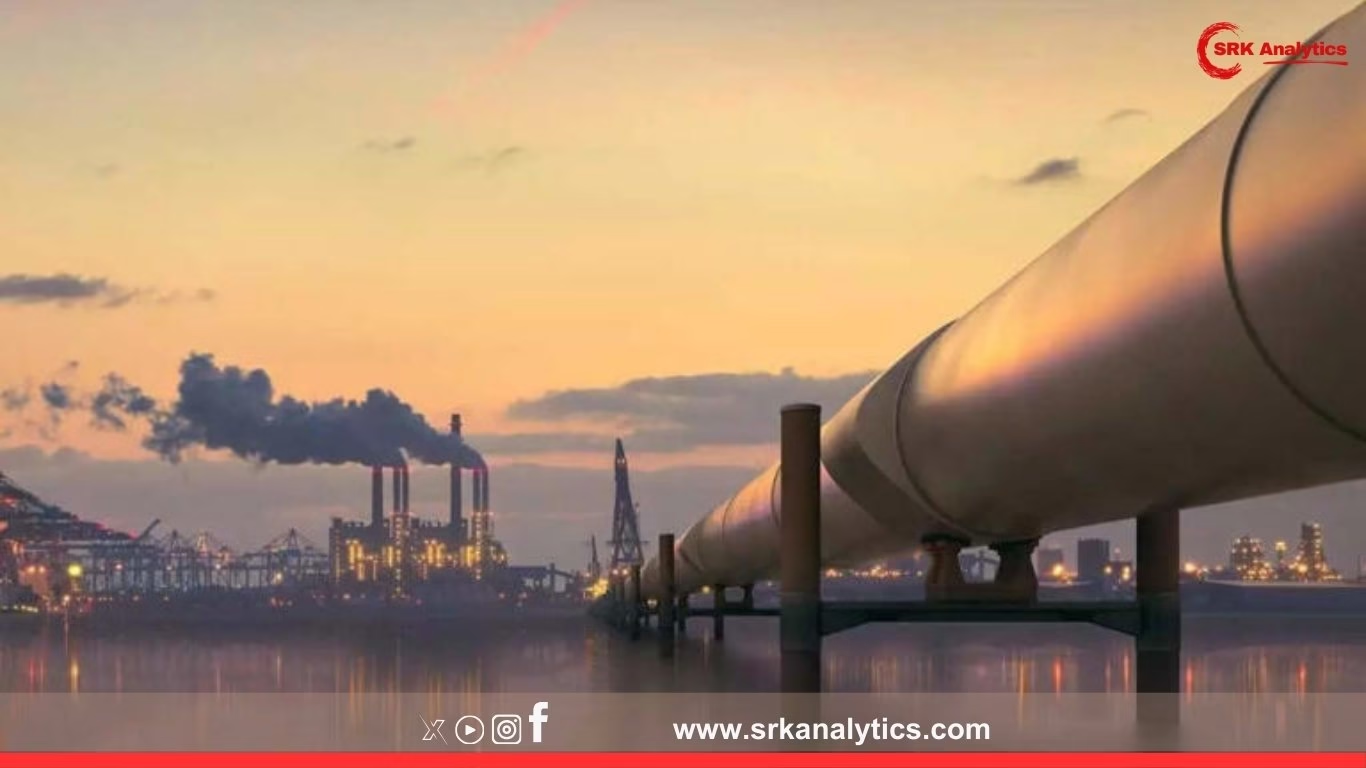
In a strategic move that could reshape energy cooperation between the United States and Japan, Tokyo has hired global energy consultancy Wood Mackenzie to assess the viability of the long-delayed Alaska LNG project, which has received renewed backing from U.S. President Donald Trump. The $44 billion initiative includes an 800-mile pipeline stretching from Alaska’s North Slope to a liquefaction terminal on the southern coast, designed to export liquefied natural gas (LNG) to Asian markets.
Sources familiar with the matter revealed that Japan’s Ministry for Economy, Trade and Industry (METI) commissioned the study to address lingering concerns among Japanese investors and LNG buyers about the project’s cost, logistics, and competitiveness. The assessment is expected to provide clarity on production timelines, pricing structures, and infrastructure readiness, although the scope and cost of Wood Mackenzie’s engagement remain undisclosed.
“We are continuing to hold close discussions with U.S. officials on the economic viability, a forecast for starting production, and the form of cooperation, in order to realize offtake in a way that benefits both Japan and the U.S.,” Japan’s Trade Minister Yoji Muto said in July.
🧭 Timeline of Key Developments in the Alaska LNG Project
| Date | Event Description | Outcome / Reaction |
|---|---|---|
| July 2025 | Trump and Japan finalize trade deal | Includes LNG cooperation clause |
| August 2025 | Japan pledges $550 billion in U.S.-bound investments | Energy and pipeline sectors prioritized |
| Sept 2025 | Japan hires Wood Mackenzie for project assessment | Signals serious interest in Alaska LNG |
| Q1 2026 | Expected release of feasibility report | May influence Japanese offtake agreements |
The project has languished for decades due to cost overruns and logistical challenges but is now gaining traction under Trump’s administration.
🔍 Strategic Objectives Behind Japan’s LNG Evaluation
| Objective | Description | Expected Benefit |
|---|---|---|
| Energy Diversification | Reduce reliance on Middle East and Russian LNG | Enhance energy security |
| Long-Term Offtake Planning | Assess pricing and delivery timelines | Secure stable supply for Japanese utilities |
| Infrastructure Viability | Evaluate pipeline and liquefaction readiness | Minimize investment risk |
| Strategic Bilateral Ties | Strengthen U.S.–Japan energy cooperation | Support broader trade and geopolitical goals |
| Green Transition Alignment | Explore low-emission LNG options | Align with Japan’s 2050 carbon neutrality plan |
Japan’s energy giants, including JERA, Tokyo Gas, Osaka Gas, Mitsubishi Corp, and Inpex, are reportedly in talks with project developers.
📉 Comparative Snapshot: Alaska LNG vs Other Global LNG Sources
| LNG Source | Estimated Cost ($/MMBtu) | Delivery Time | Political Risk | Infrastructure Maturity |
|---|---|---|---|---|
| Alaska LNG | $8.50 | 2029 (est.) | Low | Developing |
| Qatar LNG | $6.20 | Immediate | Moderate | Mature |
| Australia LNG | $7.80 | Immediate | Low | Mature |
| Russia LNG | $6.00 | Uncertain | High | Disrupted |
Alaska LNG’s cost competitiveness remains a concern, but its strategic location and political stability offer long-term advantages.
🔥 Implications for U.S.–Japan Energy Relations
- Joint Venture Potential: Trump has proposed a bilateral JV to develop the Alaska LNG project, though Japan has not officially confirmed participation.
- Investment Commitments: Japan’s $550 billion pledge includes energy infrastructure, which may support Alaska LNG if deemed viable.
- Supply Chain Security: The project could help Japan hedge against future supply disruptions from geopolitical hotspots.
- Technology Transfer: Collaboration may include advanced LNG processing and carbon capture technologies.
- Market Influence: A successful partnership could shift LNG trade dynamics in the Asia-Pacific region.
The feasibility report by Wood Mackenzie will be pivotal in shaping Japan’s final decision.
🧠 Expert Commentary on Japan’s LNG Strategy
| Expert Name | Role | Comment |
|---|---|---|
| Meera Iyer | Energy Policy Analyst | “Japan’s move signals a strategic recalibration in its LNG sourcing.” |
| Rajiv Bansal | LNG Market Consultant | “Alaska LNG could be a game-changer if cost and logistics are optimized.” |
| Dr. Rakesh Sinha | Historian of Energy Diplomacy | “This partnership reflects deeper geopolitical alignment beyond trade.” |
Experts agree that Japan’s LNG decisions are increasingly shaped by long-term security and sustainability goals.
📦 Alaska LNG Project Overview
| Component | Description |
|---|---|
| Pipeline Length | 800 miles from North Slope to Nikiski |
| Liquefaction Capacity | 20 million tonnes per annum (mtpa) |
| Estimated Cost | $44 billion |
| Developers | Glenfarne, AGDC (Alaska Gasline Development Corp) |
| Target Markets | Japan, South Korea, Taiwan |
| Environmental Measures | Carbon capture, methane leak monitoring |
The project is one of the largest energy infrastructure undertakings in North America.
📅 Upcoming Milestones and Decisions
| Event | Date | Strategic Importance |
|---|---|---|
| Wood Mackenzie Report Release | Q1 2026 | Will determine Japan’s investment stance |
| Japan–U.S. Energy Dialogue | Nov 2025 | May finalize LNG offtake agreements |
| Alaska LNG Developer Roadshow | Dec 2025 | Engage Asian buyers and investors |
| U.S. Energy Policy Update | Jan 2026 | May include incentives for LNG exports |
These milestones will shape the future of the Alaska LNG project and its role in global energy markets.
📌 Conclusion
Japan’s decision to hire Wood Mackenzie to assess the Trump-backed Alaska LNG project marks a significant step in evaluating one of the most ambitious energy ventures in recent history. With geopolitical tensions, energy security concerns, and climate goals converging, the outcome of this assessment could redefine U.S.–Japan energy cooperation. As Tokyo weighs its options, the global LNG market watches closely—because if Alaska LNG gets the green light, it could shift the balance of power in Asia’s energy landscape.
—
Disclaimer: This article is based on publicly available news reports, expert commentary, and government statements as of September 10, 2025. It is intended for informational purposes only and does not constitute investment or policy advice.