






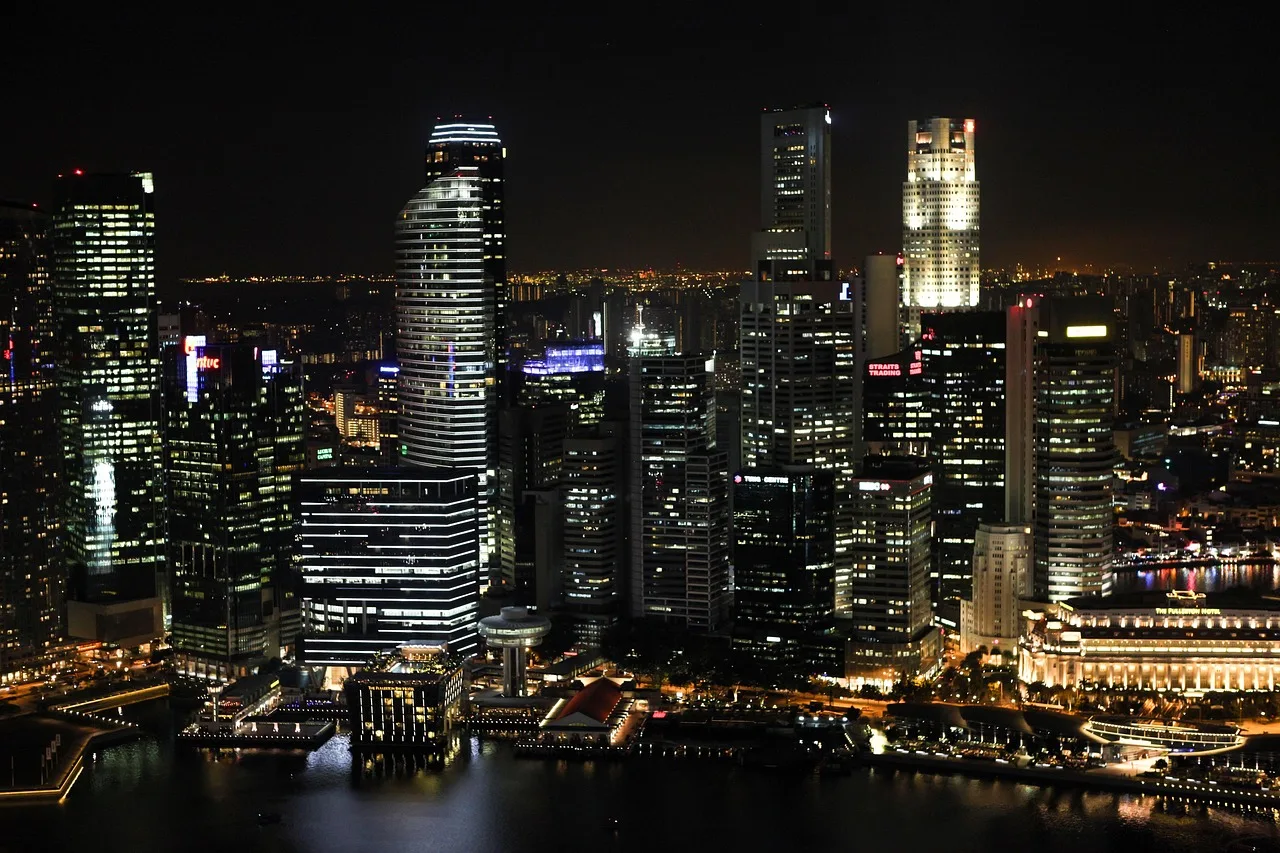
Singapore’s economy grew at a faster-than-anticipated pace in the first quarter of 2024, as a surge in global demand for artificial intelligence hardware and services bolstered the city-state’s manufacturing and professional services sectors. According to preliminary data released by the Ministry of Trade and Industry, the expansion successfully countered the inflationary pressures exerted by rising crude oil prices and geopolitical instability in the Middle East.
The Context of Economic Resilience
As a small, open economy, Singapore is highly sensitive to fluctuations in global trade and external demand. For much of the past year, the nation faced headwinds from high interest rates and a cooling manufacturing sector that struggled with sluggish global electronics demand.
However, the rapid proliferation of generative AI has fundamentally altered the export landscape. As global tech giants ramp up investment in data centers and high-performance computing, demand for semiconductors and specialized electronic components—key pillars of the Singaporean economy—has experienced a marked rebound.
Manufacturing and Services Drive Momentum
The manufacturing sector, which had contracted for several consecutive quarters, showed clear signs of stabilization and growth during the first three months of the year. This recovery is largely attributed to the semiconductor industry, which serves as a critical node in the global AI supply chain.
Simultaneously, the services sector has maintained robust performance. Financial services and information technology firms reported increased activity as businesses across the Asia-Pacific region prioritize digital transformation. This dual-engine growth has provided the necessary momentum to offset the volatility in energy markets.
Rising crude oil prices, fueled by ongoing conflicts in the Middle East, threatened to dampen consumer sentiment and increase logistics costs. Despite these inflationary pressures, the resilience of Singapore’s export-oriented industries has shielded the broader economy from a significant downturn.
Expert Perspectives on Growth
Economists at major financial institutions noted that the Q1 performance highlights Singapore’s strategic positioning within the global tech infrastructure. “The pivot toward AI-related manufacturing has provided a structural tailwind that differentiates Singapore from other regional economies currently struggling with trade weakness,” said a lead analyst at a global firm.
Data from the Economic Development Board supports this, showing that business investment commitments remain focused on high-value-added electronics and data infrastructure. While the cost of living remains a concern for local households, the macroeconomic data suggests that corporate investment is effectively insulating the nation against external shocks.
Future Implications and Market Outlook
Looking ahead, the primary risk to this growth trajectory remains the potential for prolonged geopolitical tension to disrupt global shipping lanes and supply chains. If energy prices continue to climb, they could eventually erode the profit margins of manufacturers and dampen the current industrial momentum.
Investors and policymakers will be closely watching the upcoming revisions to the full-year GDP forecast. The central bank’s stance on monetary policy will also be under scrutiny, as officials balance the need to support growth with the imperative of managing core inflation. The resilience shown in the first quarter suggests that Singapore remains well-positioned to navigate a complex global environment, provided that the current AI-driven hardware cycle maintains its velocity through the second half of the year.



