




Market Outlook and Investment Strategy
As the Indian Rupee faces significant depreciation against the US dollar in May 2026, DSP Mutual Fund has issued a strategic report arguing that current market pessimism creates a rare buying opportunity for Rupee-denominated assets. The firm asserts that betting against the local currency at its current Real Effective Exchange Rate (REER) levels is a low-probability trade, suggesting that investors should instead pivot toward equities and bonds to capitalize on structural resilience.
The REER Advantage and Valuation Floors
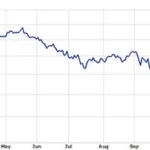
The core of the argument lies in the Rupee‘s REER, which dropped below 88 as the USD-INR exchange rate approached 96.9 in late May. Historical data from the Bank for International Settlements indicates that the currency is now at its most competitive level since the 2013 twin deficit crisis and the 2008 Global Financial Crisis, providing a significant margin of safety for long-term investors.
Simultaneously, large-cap Indian equities have undergone a quiet de-rating. While foreign institutional investors have been net sellers for two consecutive fiscal years—a phenomenon unseen since 1999—many high-quality blue-chip firms are now trading at valuations below their long-term averages. With some segments dipping toward 15x forward earnings, the valuation gap offers a potential floor for future capital inflows.
Narrowing Inflation Differentials
A critical factor supporting the Rupee’s long-term stability is the dramatic compression of inflation differentials between India and the United States. While the historical spread typically hovered between 3.5% and 4%, recent data shows the gap has narrowed to a range of 1% to 2%. Over the past year, India’s average CPI of 2.3% has actually outperformed the US CPI of 2.8%, mathematically suggesting that the rate of currency depreciation is likely to decelerate.
Balance of Payments Resilience
Despite anxieties regarding the Balance of Payments (BoP), DSP Mutual Fund highlights that India’s structural buffers remain robust. The nation’s services surplus and inward remittances provide a net invisible shield of approximately $349 billion, which is sufficient to neutralize the current merchandise trade deficit. Analysts note that while a sustained spike in crude oil prices above $120 per barrel would pose a threat, the market has already factored in significant stress, with the currency adjusting ahead of the actual macroeconomic impact.
RBI Intervention and Future Outlook
The Reserve Bank of India (RBI) continues to actively manage liquidity, with FX reserves and forward books operating within historical norms. Looking ahead, investors should monitor global crude oil price fluctuations as the primary indicator for potential currency volatility. Should oil prices remain stable, the combination of attractive equity valuations and a structurally undervalued currency positions India as a compelling destination for capital allocation in the coming quarters.