



Jacobs Solutions, the US-based engineering and infrastructure services firm, has reaffirmed its long-term commitment to India, citing robust growth opportunities in the country’s semiconductor and electronics sectors. In a recent interview, Koti Vadlamudi, Executive Vice President at Jacobs, stated that India is “a good place for us to invest long term,” pointing to the expanding project pipeline and the emergence of a full-fledged semiconductor ecosystem.
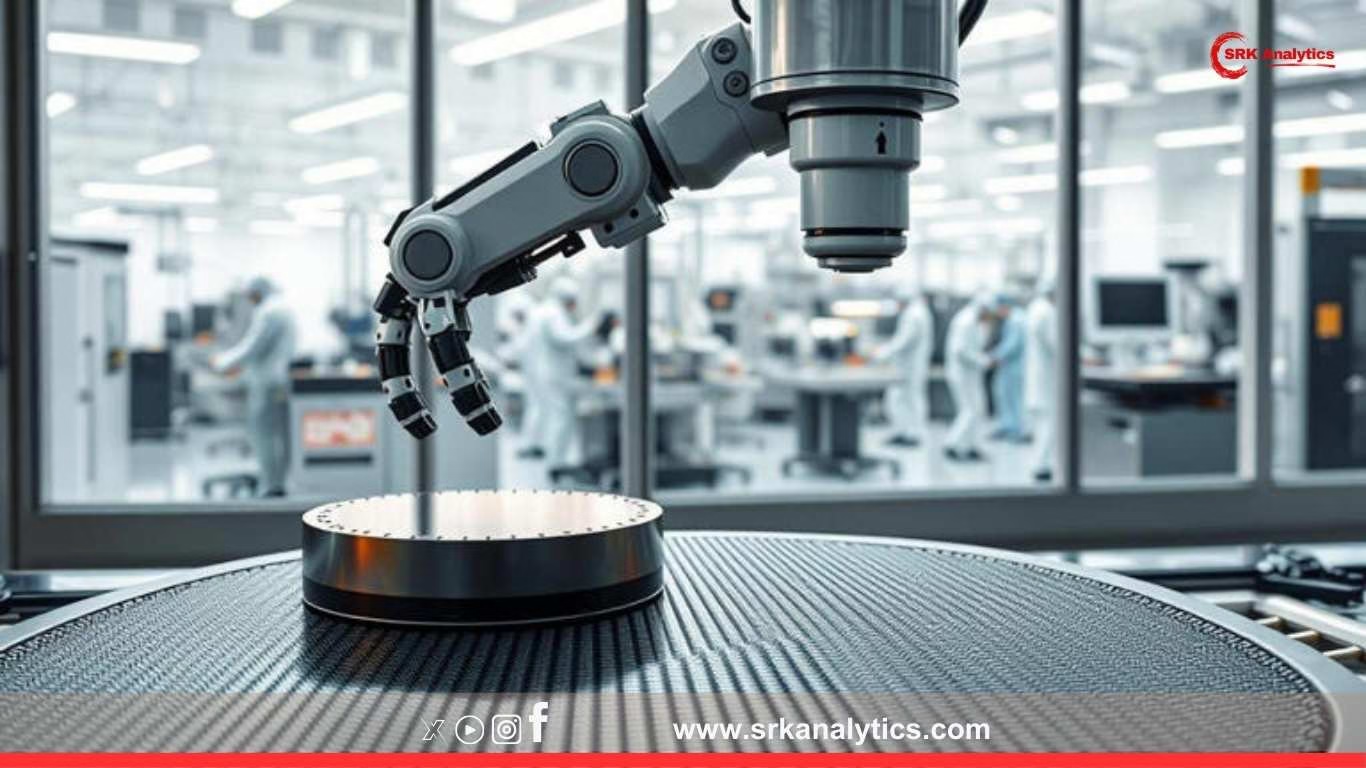
Vadlamudi’s comments come amid rising global interest in India’s advanced manufacturing capabilities, particularly in semiconductors, life sciences, and AI-driven infrastructure. Jacobs is currently involved in several high-profile projects, including the Tata Electronics semiconductor fabrication facility in Dholera, Gujarat—a cornerstone of India’s chip-making ambitions.
🧭 Key Highlights from Jacobs’ India Investment Outlook
| Focus Area | Jacobs’ Perspective | Strategic Implication |
|---|---|---|
| Semiconductor Manufacturing | Strong pipeline, ecosystem development | Long-term infrastructure and design demand |
| Electronics Sector | High growth potential | Tool suppliers and ancillary industries to expand |
| Advanced Manufacturing | India emerging as a hub | Jacobs to support design and construction |
| Geopolitical Uncertainty | Slower decision-making but inevitable investment | India seen as stable and scalable |
| Life Sciences & AI | Secular growth trends | Jacobs well-positioned to capitalize |
Vadlamudi emphasized that India’s semiconductor push is not limited to fabrication units but includes the entire value chain—from tool suppliers and specialty gases to design and construction services. “We’re at the early phases of that now, which gives us confidence this is going to be a long-term sustainable platform,” he said.
🔍 Semiconductor Ecosystem: India’s Next Growth Engine
India’s semiconductor strategy has evolved rapidly, with government incentives, global partnerships, and domestic champions driving momentum. Jacobs’ involvement in the Tata Electronics fab signals its deep integration into this ecosystem.
| Ecosystem Component | Role in Semiconductor Growth | Jacobs’ Contribution |
|---|---|---|
| Fab Facilities | Core manufacturing units | Design, engineering, and project management |
| Tool Suppliers | Equipment and machinery | Capacity planning and plant design |
| Specialty Gases | Fab consumables | Infrastructure support |
| Ancillary Manufacturing | Packaging, testing, and logistics | End-to-end facility development |
| Workforce & Training | Skilled labor pipeline | Collaboration with local institutions |
India’s semiconductor ecosystem is expected to attract billions in investment over the next decade, with Gujarat, Karnataka, and Tamil Nadu emerging as key hubs.
📉 Jacobs’ Global Strategy and India’s Role
At its 2025 Investor Day, Jacobs outlined a multi-year growth strategy focused on high-growth sectors such as water, life sciences, advanced manufacturing, and critical infrastructure. India figures prominently in this roadmap, offering a scalable platform for Jacobs’ engineering and design services.
| Sector | Global SAM (Serviceable Addressable Market) | India’s Strategic Fit |
|---|---|---|
| Water & Environment | $220 billion | Urban water infrastructure, wastewater |
| Life Sciences | $120 billion | Pharma hubs in Hyderabad, Pune |
| Advanced Manufacturing | $120 billion | Semiconductors, electronics, EVs |
| Critical Infrastructure | $390 billion | Smart cities, AI data centers, transport |
Jacobs’ Chair and CEO Bob Pragada noted that the company is “robustly positioned” to respond to global infrastructure challenges, with India offering a strong pipeline and macro tailwinds.
🔥 India’s Competitive Edge in Manufacturing
Vadlamudi highlighted several factors that make India attractive for long-term investment:
- Skilled Workforce: India’s engineering talent pool is vast and cost-effective.
- Policy Support: Government schemes like PLI (Production Linked Incentive) and Semicon India are driving capital inflows.
- Geopolitical Stability: Compared to other emerging markets, India offers a relatively stable investment climate.
- Digital Infrastructure: Rapid expansion of data centers and AI capabilities.
| Competitive Factor | India’s Advantage | Impact on Jacobs’ Strategy |
|---|---|---|
| Talent Availability | Large STEM graduate base | Local hiring and training |
| Policy Incentives | PLI, Semicon India, Make in India | Project viability and ROI |
| Market Demand | Growing domestic consumption | Long-term client engagement |
| Strategic Location | Asia-Pacific gateway | Regional project expansion |
Jacobs plans to deepen its presence in India by expanding its local teams and forging partnerships with domestic firms.
🧠 Expert Commentary and Industry Sentiment
| Expert Name | Role | Comment |
|---|---|---|
| Meera Iyer | Semiconductor Analyst | “Jacobs’ confidence reflects India’s maturing tech ecosystem.” |
| Rajiv Bansal | Infrastructure Consultant | “India’s fab ambitions are real, and global players are responding.” |
| Dr. Rakesh Sinha | Investment Strategist | “Long-term bets like Jacobs’ are crucial for ecosystem depth.” |
Industry leaders agree that India’s semiconductor and electronics sectors are entering a transformative phase, with global firms like Jacobs playing a pivotal role.
📌 Conclusion
Jacobs Solutions’ long-term investment outlook for India, as articulated by EVP Koti Vadlamudi, underscores the country’s emergence as a global hub for semiconductor and advanced manufacturing. With a robust project pipeline, supportive policy environment, and expanding ecosystem, India offers a compelling platform for infrastructure and engineering firms. As Jacobs deepens its footprint, its strategic alignment with India’s growth sectors could shape the next decade of industrial transformation.
—
Disclaimer: This article is based on publicly available interviews and media reports as of September 4, 2025. It is intended for informational purposes only and does not constitute investment, financial, or strategic advice.